WHAT IS INFLATION? 🔍
Understanding the core concept behind rising prices
Why inflation is one of the most important economic indicators today
- Inflation is the sustained increase in the general price level of goods and services over time
- It directly reduces the purchasing power of money, meaning your income buys less than before
- Even moderate inflation can significantly impact long-term savings and living standards
💡 Key Insight:
Inflation doesn’t just make things expensive—it quietly reshapes how people spend, save, and plan their future. 📊
⚙️ WHAT’S DRIVING INFLATION RIGHT NOW?
Multiple forces are interacting—not just one single cause
Today’s inflation is the result of both short-term shocks and long-term shifts
🛒 1. STRONG CONSUMER DEMAND
A surge in spending after years of restricted activity
Demand rebounded faster than supply could keep up
- Consumers increased spending after pandemic lockdowns
- Government stimulus programs injected liquidity into households
- Businesses struggled to match demand due to limited supply capacity
➡️ Result: Prices rose as demand exceeded available goods and services
⛽ 2. RISING PRODUCTION COSTS
Businesses are paying more to produce and deliver goods
These added costs are ultimately passed on to consumers
- Energy prices (fuel, electricity) increased operational expenses
- Transportation and logistics costs surged globally
- Supply chain disruptions made raw materials more expensive
➡️ Businesses raised prices to maintain profitability
👷 3. WAGE PRESSURES
Workers are demanding higher pay to keep up with inflation
Labor markets in many countries remain tight and competitive
- Companies are increasing wages to retain talent
- Higher wages raise business expenses
- This leads to a cycle where prices and wages continuously push each other upward
➡️ Known as the wage-price spiral, a key driver of persistent inflation
💰 4. MONETARY POLICY LEGACY
Easy money policies during the pandemic boosted economic activity
But they also contributed to inflationary pressure later on
- Low interest rates encouraged borrowing and spending
- Central banks expanded money supply to support economies
- Excess liquidity increased demand beyond sustainable levels
➡️ Inflation surged as too much money chased too few goods
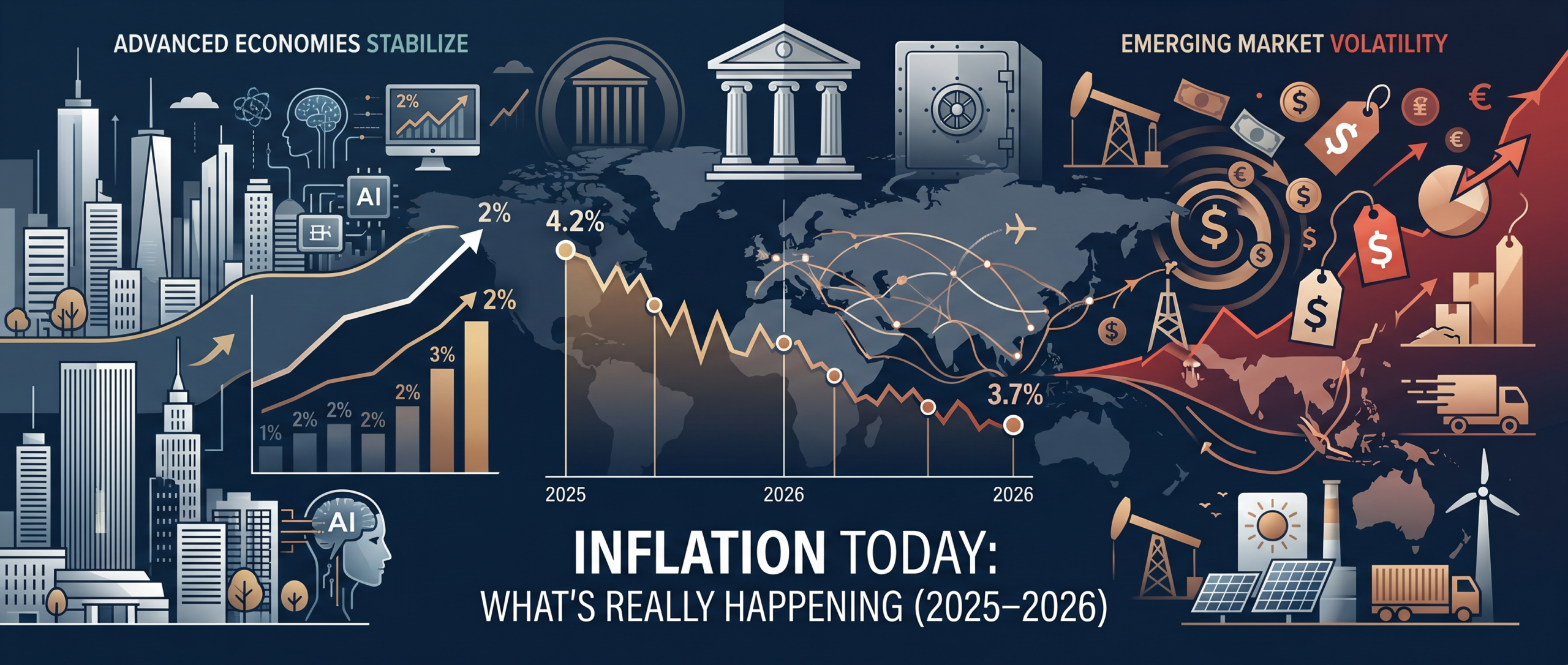
🌍 GLOBAL INFLATION SNAPSHOT
Inflation is no longer spiking—but it hasn’t fully stabilized either
The global picture shows improvement, but uneven progress
📈 THE BIG TREND
From crisis-level inflation to gradual stabilization
But still above pre-pandemic norms in many countries
- Inflation peaked globally around 2022–2023
- Central bank actions helped bring rates down
- However, inflation remains elevated compared to historical averages
💡 The world is transitioning from “high inflation” to “persistent inflation”
🌎 REGIONAL DIFFERENCES
Inflation behaves differently depending on economic structure
Not all countries experience the same level of impact
Developed Economies
- Slower inflation due to strong monetary control
- Services inflation remains stubborn
Emerging Markets
- Currency fluctuations amplify inflation
- Heavily affected by global commodity prices
Developing Countries
- More vulnerable to food and energy costs
- Inflation hits lower-income populations harder
🧾 CORE vs HEADLINE INFLATION
Two ways economists measure inflation trends
Understanding the difference reveals the real picture
- Headline Inflation: Includes all items, especially volatile food and energy
- Core Inflation: Excludes volatile sectors to show underlying trends
💡 Core inflation is often more persistent and harder to reduce
🇵🇭 PHILIPPINES: LOCAL INFLATION REALITY
Inflation has a direct and visible impact on daily life
Basic necessities are the most affected sectors
🍚 MAIN DRIVERS
Food and fuel dominate inflation in the Philippines
Supply disruptions amplify price increases
- Rice, meat, and vegetables continue to rise in price
- Fuel costs affect transportation and logistics
- Weather disturbances disrupt agricultural supply
🏦 WHAT THE CENTRAL BANK IS DOING
Balancing inflation control with economic growth
Careful adjustments to avoid harming recovery
- The Bangko Sentral ng Pilipinas raises interest rates
- Aims to reduce spending and stabilize prices
- Monitors inflation expectations closely
⚠️ WHY IT HITS HARDER LOCALLY
Structural vulnerabilities increase inflation impact
Lower-income households feel the pressure most
- High reliance on imports exposes the country to global price swings
- Food takes a larger share of household budgets
- Wage growth often lags behind inflation
🏦 HOW CENTRAL BANKS ARE RESPONDING
Global institutions are actively trying to control inflation
Their tools affect borrowing, spending, and investment
📉 INTEREST RATE HIKES
The primary weapon against inflation
Designed to reduce excess demand
- Higher interest rates make loans more expensive
- Consumers and businesses spend less
- Economic activity slows down
➡️ Helps ease price pressures over time
🔒 TIGHTER MONEY SUPPLY
Reducing liquidity in the financial system
Aims to cool down economic overheating
- Central banks reduce asset purchases
- Money circulation slows
- Investment activity declines
⚖️ THE RISK
Too much tightening can hurt the economy
Too little can allow inflation to persist
- Risk of recession if growth slows too much
- Policymakers must strike a careful balance
💡 This is one of the most complex challenges in modern economics
🧍 HOW INFLATION AFFECTS YOU
Inflation is not abstract—it affects daily decisions
Every sector of society feels its impact differently
🛍️ CONSUMERS
Households face rising costs of living
Spending habits are forced to change
- Essentials like food and housing become more expensive
- Discretionary spending declines
- Savings are reduced
🏢 BUSINESSES
Companies must navigate higher costs and uncertain demand
Profit margins are under pressure
- Increased cost of raw materials and labor
- Difficult pricing decisions
- Risk of reduced consumer demand
👨💼 WORKERS
Income struggles to keep pace with rising prices
Labor dynamics continue to shift
- Workers demand higher wages
- Job mobility increases
- Skills become more valuable
📊 INVESTORS
Inflation changes how money is managed and grown
Traditional strategies may lose effectiveness
- Real returns decline if inflation is high
- Investors seek assets that retain value
- Market volatility increases
🔥 KEY SECTORS DRIVING INFLATION
Certain industries have an outsized influence on price levels
These sectors ripple across the entire economy
⛽ ENERGY
A foundational driver of inflation across industries
Energy costs affect production, transport, and utilities
- Oil price fluctuations impact nearly all goods
- Electricity and fuel costs raise business expenses
🌾 FOOD
A critical and sensitive inflation component
Heavily influenced by climate and supply chains
- Crop failures and extreme weather reduce supply
- Distribution challenges increase costs
🏠 HOUSING
One of the largest household expenses
Prices remain elevated due to demand and supply constraints
- Rent and property prices continue to rise
- High interest rates affect home ownership
🧾 SERVICES
A major source of persistent inflation
Driven largely by labor costs
- Includes healthcare, education, hospitality
- Prices are slower to adjust downward
⚠️ INFLATION VS RECESSION
A delicate balance between stability and growth
Policy decisions can tip the economy either way
⚖️ THE TRADE-OFF
Reducing inflation often slows the economy
Growth and stability are in constant tension
📉 WHAT ECONOMISTS WATCH
Key indicators signal economic direction
These metrics guide policy decisions
- GDP growth
- Employment levels
- Consumer spending trends
🎯 GOAL: “SOFT LANDING”
The ideal but difficult outcome
Lower inflation without triggering a downturn
🔮 LONG-TERM FORCES SHAPING INFLATION
Beyond short-term shocks, structural changes are at play
These forces will influence inflation for years to come
🌐 DEGLOBALIZATION
Global supply chains are being reshaped
Efficiency is giving way to resilience
👵 AGING POPULATIONS
Labor shortages are becoming more common
Wages may continue to rise as a result
🌦️ CLIMATE CHANGE
Environmental disruptions affect supply and costs
Long-term inflationary pressure is increasing
🤖 TECHNOLOGY
Innovation can both increase and reduce costs
Automation may help offset inflation in the future
🏛️ GOVERNMENT ACTIONS
Public policy plays a key role in managing inflation
Different strategies come with trade-offs
💸 FISCAL SUPPORT
Governments provide relief to households
But spending can also fuel inflation
🚫 PRICE CONTROLS
Short-term relief for essential goods
But may distort supply and demand
🛡️ SOCIAL PROTECTION
Focused support for vulnerable populations
Helps reduce inequality during inflation periods
🔎 OUTLOOK: WHAT’S NEXT?
The future of inflation remains uncertain
Multiple factors will shape its direction
📅 SHORT-TERM (2025–2026)
Stabilization is expected but not guaranteed
Central banks remain cautious
⚠️ RISKS
Several triggers could reignite inflation
Global uncertainty remains high
- Energy price spikes
- Geopolitical conflicts
- Supply chain disruptions
🌤️ BEST-CASE SCENARIO
A gradual return to stable inflation levels
Requires favorable global conditions
💡 HOW TO PROTECT YOURSELF
Practical steps to adapt to rising prices
Financial awareness is key to resilience
📊 SMART MONEY HABITS
Control spending and prioritize essentials
Avoid unnecessary financial strain
💰 SAVING & INVESTING
Protect your money from losing value
Diversification is essential
🚀 INCOME STRATEGIES
Increase earning potential over time
Adapt to a changing economic landscape
🧠 BOTTOM LINE
Inflation has evolved into a long-term economic reality
Understanding it is essential for financial survival and growth
Inflation is no longer just a temporary spike—it is a persistent force shaping economies, policies, and everyday life.
💡 The more you understand it, the better you can adapt, protect your finances, and make smarter decisions in an uncertain economic environment.
If you want, I can next convert this into a designed Canva-style infographic layout or a LinkedIn carousel post (high engagement format).