Most Filipino families know the drill well enough to get through a storm. What catches people out isn’t ignorance — it’s one specific, widespread misunderstanding about what the warning system actually tells you, and a handful of preparation steps that only matter if you do them before the signal goes up.
Here’s the sequence that actually works, starting with the thing most guides get wrong.
Step 1: Understand that wind signals are not flood warnings
This is the most dangerous misconception in Philippine disaster preparedness, and it has cost lives. PAGASA’s Tropical Cyclone Wind Signals — the numbers 1 through 5 everyone watches — measure expected wind speed, and nothing else. They say nothing about how much rain will fall or where it will go.
The current system, in place since March 2022, works like this:
| Signal | Wind speed | Lead time |
|---|---|---|
| 1 | 39–61 km/h | 36 hours |
| 2 | 62–88 km/h | 24 hours |
| 3 | 89–117 km/h | 18 hours |
| 4 | 118–184 km/h | 12 hours |
| 5 | 185+ km/h | 12 hours |
Notice what happens as the number climbs: the danger goes up and your warning time goes down. Signal 1 gives you a day and a half. Signal 5 gives you half a day. Preparation done at Signal 1 is calm and deliberate; the same preparation at Signal 4 is a panic.
Why this matters more than anything else on this list: a slow tropical depression sitting over your province under Signal 1 can dump more rain — and kill more people through flooding and landslides — than a fast-moving typhoon that raises Signal 3 and passes through in hours. A storm that never even makes landfall can enhance the habagat and flood Luzon for days. For rain and flood risk, you need to watch PAGASA’s separate color-coded rainfall warnings (Yellow: flooding possible; Orange: flooding threatening; Red: severe flooding expected, act now) — check these directly at pagasa.dost.gov.ph or PAGASA’s official social accounts, not just the wind signal number. Never read a wind signal as a flood forecast.
Step 2: Build the go-bag now, during “peace time”
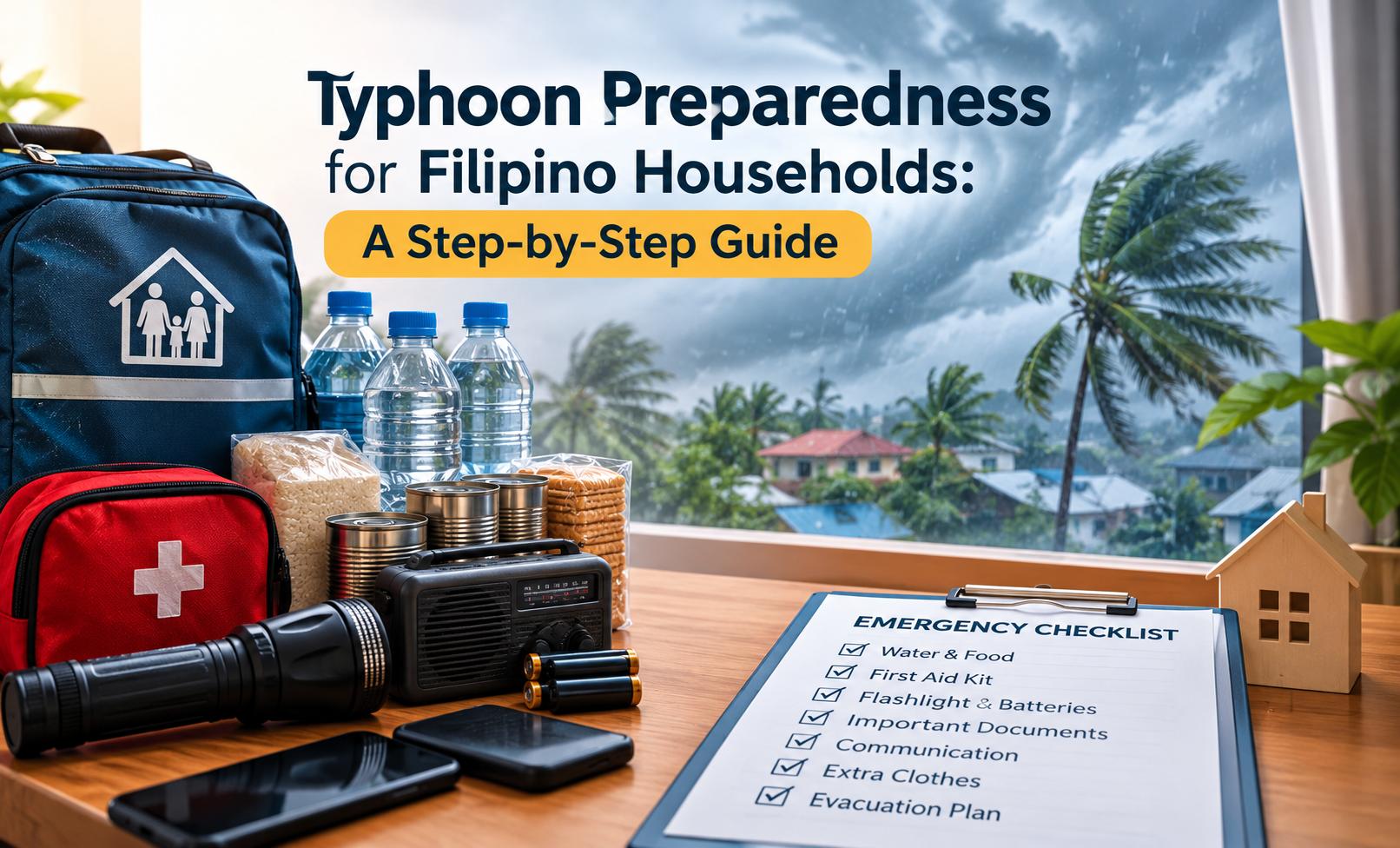
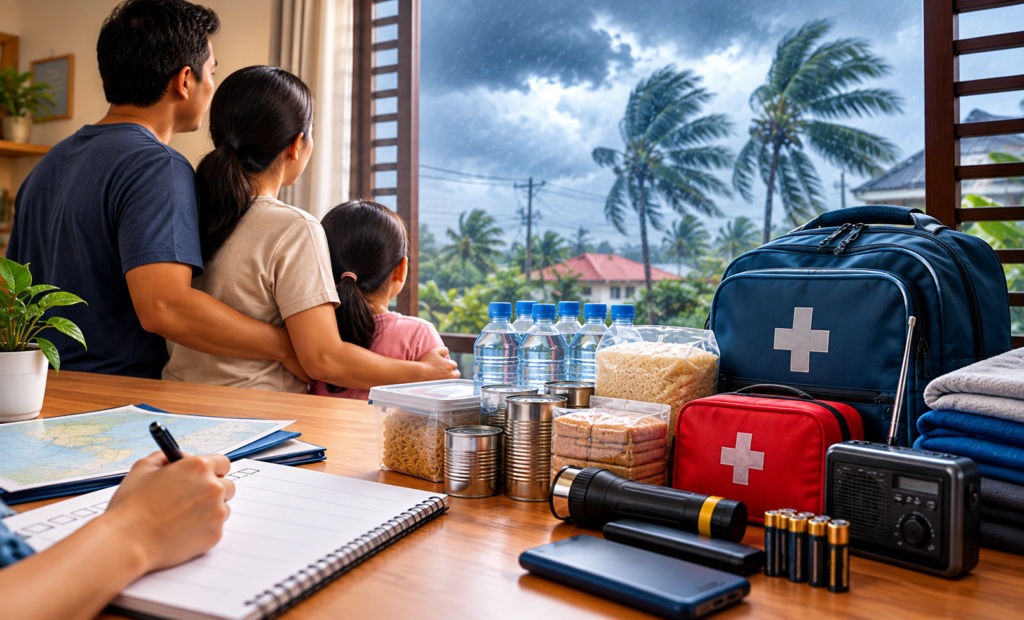
The official term for the calm period between storms is “peace time,” and it’s the only time you can prepare properly. NDRRMC and Philippine Red Cross guidance calls for a minimum 72 hours of self-sufficiency. Your bag should contain:
- Water: 3 liters per person per day (closer to 4 if you’ll also need it for washing) — the single heaviest and most-often-underpacked item
- Non-perishable food for 3 days — canned goods, biscuits, instant noodles if you’ll have a way to boil water
- Documents in waterproof pouches — IDs, birth certificates, land titles, insurance papers. This is the item people most regret skipping, because replacing them after a flood is a months-long ordeal
- Prescription medicines plus a basic first aid kit
- Flashlight with spare batteries — not just your phone, which you’ll need to conserve
- Battery-powered or hand-crank radio — when cell networks go down, FM radio keeps working, and it’s how you’ll get PAGASA and LGU updates
- Power bank, fully charged
- Cash in small bills — ATMs and card terminals fail with the power
Step 3: Know your evacuation center before you need it
Find out now — not during the storm — which specific evacuation center serves your barangay, and how to get there on foot if roads are flooded or impassable. Ask at your barangay hall. If your area floods regularly, also identify the highest safe point in your own home, because there are situations where leaving becomes more dangerous than staying put.
Agree on a family meeting point and a communication plan, including one out-of-area relative everyone can check in with. Text rather than call during a disaster — SMS gets through congested networks far more reliably than voice.
Step 4: Save the numbers that actually work
Put these in your phone now, and write them on paper in your go-bag in case your phone dies:
- 911 — national emergency hotline (NDRRMC), 24/7, confirmed via the official government hotline directory
- pagasa.dost.gov.ph and PAGASA’s official social accounts (@dost_pagasa) — your most reliable source for live signal and rainfall updates. “1555” is widely cited online as a PAGASA hotline, but couldn’t be confirmed against an official government source in our research — that same number was assigned to a Department of Health hotline as recently as 2020, so verify it’s still current before relying on it
- 143 — Philippine Red Cross, confirmed 24/7 hotline
- 160 — Bureau of Fire Protection, confirmed
- 117 — PNP emergency hotline, confirmed
- 16211 — Meralco, for downed power lines (or your local electric utility’s equivalent)
Step 5: When the signal goes up, act on the number
Signal 1–2: Stay indoors, keep away from windows and glass, avoid unnecessary travel, and check PAGASA updates hourly. Secure or bring in anything outside that could become a projectile — unsecured light objects cause a surprising share of injuries.
Signal 3–5: Evacuate immediately when your LGU or barangay orders it. Do not wait for flooding to start — roads become impassable faster than most people expect, and the window to leave safely closes early. Before you go: turn off the electricity, shut the gas tank, lock the doors.
During the storm, the single most important rule: do not go outside during the eye. The calm is temporary and deceptive — violent winds return from the opposite direction, often with no warning, and this specific mistake kills people every season.
Never attempt to cross flooded roads on foot or by vehicle. If you’re trapped by rising water, move to the highest point of your building and call 911 or signal for help.
Step 6: Treat the aftermath as still dangerous
Most preparedness guides stop at landfall. The hours after are when a lot of preventable injuries happen.
Wait for the official all-clear from PAGASA and your LGU before returning home — secondary hazards persist for 12 to 24 hours after landfall. Assume every downed power line is live. Don’t touch or approach them; report them to your utility immediately.
Inspect your home before re-entering: check for structural damage, gas leaks, and electrical hazards, and ventilate before settling back in. Document all damage with photos and video before you clean up — this matters for insurance claims and for DSWD and NDRRMC disaster assistance, and people routinely lose out by tidying first.
Boil all water before drinking, or use bottled, until authorities confirm the supply is safe. Floodwater contaminates municipal water systems, and waterborne illness after a typhoon injures far more people than the storm itself does.
Finally, check on neighbors — particularly the elderly, people with disabilities, and anyone living alone. In most Philippine barangays, the first meaningful response after a storm is neighbors, not agencies.
The bottom line
The preparation that saves you is the preparation you did before the signal went up. Build the go-bag during peace time, find your evacuation center while the weather is fine, and learn to read the rainfall warnings separately from the wind signals — because for most Filipino households, the flood is the thing that actually gets you, and the wind signal will not warn you about it.
Compiled from PAGASA’s official Tropical Cyclone Wind Signal system (current version effective March 23, 2022), the Philippine government’s official hotline directory (gov.ph), NDRRMC and Philippine Red Cross preparedness guidance, UNICEF Philippines, and MMDA disaster advisories. All emergency numbers listed were cross-checked against the official government hotline directory except where noted. Peak typhoon season runs June through November. For your specific area’s hazard profile — flood zones, landslide risk, storm surge exposure — check with your local DRRM office, since national guidance can’t account for local geography.