The Department of Health recorded 128,634 dengue cases from January 1 to August 29, 2026, about 39 percent fewer than the same period last year, according to its latest epidemiological report. That’s good news, but look closer. Through May the drop was 56 percent, so the gap has been narrowing as the rainy season builds. The national number also hides local surges: Bohol declared a province-wide dengue outbreak on September 5, and as of mid-September, dengue deaths in Cebu City had reached 20, up from 6 at the same point last year.
Most people know dengue starts with a high fever. Far fewer know that the dangerous part usually starts after the fever goes away. That one fact shapes every step below.
Step 1: Know the timeline, because the fever breaking is not the all-clear
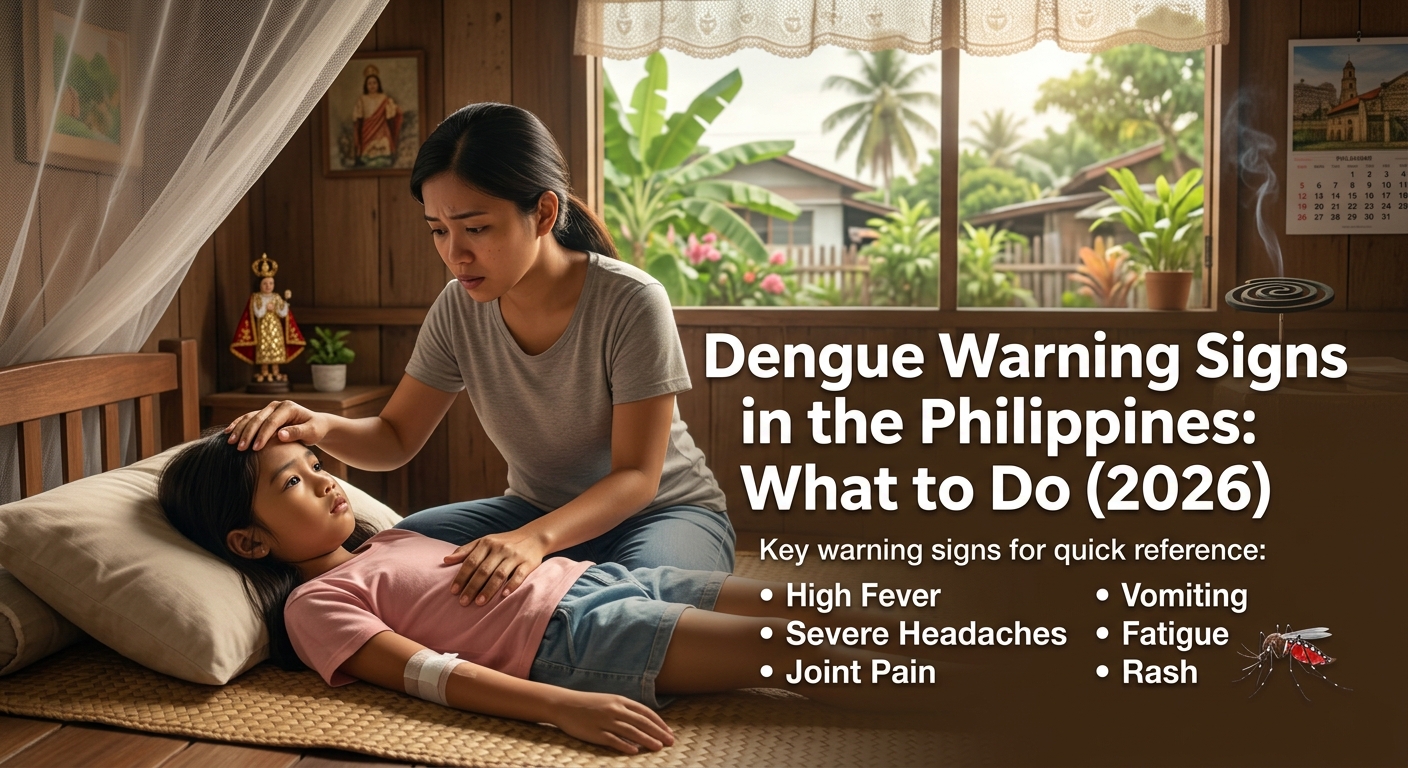
Symptoms usually begin four to ten days after a bite from an infected mosquito and the fever typically lasts two to seven days. It tends to arrive suddenly, with a severe headache, pain behind the eyes, and aching muscles and joints. Nausea, vomiting, and a rash can follow.
Then comes the critical phase. It starts around the time the fever drops, roughly days 3 to 7 of the illness, and usually lasts 24 to 48 hours. This is when fluid can begin leaking out of blood vessels, which can lead to severe bleeding, organ problems, or shock. The U.S. CDC warns that dengue can become severe quickly between the third and seventh day of illness, just as the fever is going away. Health guidance consistently names the same mistake: relaxing, skipping fluids, and stopping monitoring because the patient “seems better.”
Step 2: See a doctor early, and don’t self-diagnose
Dengue has no specific treatment, but early medical attention still matters. A doctor can confirm what you’re dealing with, check your blood counts, and spot trouble before it escalates. In 2024, the DOH noted that dengue deaths fell even as cases rose, which it linked to Filipinos seeking care sooner.
PhilHealth’s 2026 quality standards for dengue care (Circular PC2026-0009) set out the logic. Patients without warning signs may be observed at home, with follow-up visits and close monitoring that includes daily blood counts. Patients who show warning signs, or who aren’t improving, must be taken to a hospital. Severe dengue is an emergency.
The standards also single out people who shouldn’t be managed at home at all: pregnant women, infants, older adults, people with obesity, people with conditions such as diabetes, kidney disease, or respiratory disease, and anyone who lives alone or far from medical facilities. For these groups, the standards call for admission so they can be watched through the critical period. The standards are written for hospitals and doctors, but they’re a good picture of what proper dengue care should look like.
Step 3: Home care during the fever days
- Fluids come first. Fever and vomiting drain you, and the critical phase can drain you further. Aim for steady sips spread across the day rather than large amounts at once. Water, oral rehydration solution (ORS), and clear soups all count. PhilHealth’s dengue standards specifically recommend ORS and advise against sports drinks.
- Rest. Skip strenuous activity until your energy genuinely returns.
- Use paracetamol for fever and aches, and nothing else in the painkiller aisle. The WHO recommends paracetamol for dengue. Aspirin, ibuprofen, and other anti-inflammatory painkillers (NSAIDs) should be avoided because they can increase bleeding risk. Mefenamic acid and diclofenac belong to that same class. Aspirin is also avoided in children because of the separate risk of Reye’s syndrome.
- Follow the label or your doctor’s instructions on dosing. Don’t take more than one product containing paracetamol at the same time. For children, the dose depends on weight, so go by the product label or ask a doctor or pharmacist. Tepid sponging of the forehead, arms, legs, and underarms can help bring a high fever down alongside paracetamol.
- Keep the sick person away from mosquito bites with a net, screens, or repellent, so mosquitoes don’t pick up the virus and pass it on to the rest of the household.
Step 4: After the fever breaks, watch for these warning signs and go to the emergency room immediately
Don’t wait to see if it passes. Go straight to the nearest hospital if any of these appear:
- The patient seems worse as the fever fades
- Severe or persistent abdominal pain
- Persistent vomiting, or being unable to drink or keep fluids down
- Bleeding from the nose or gums, blood in the urine, black stools, or vomit that looks like coffee grounds (heavy or unusual menstrual bleeding counts too)
- Confusion, unusual drowsiness, restlessness, or irritability
- Difficulty breathing or rapid breathing
- Pale, cold, or clammy hands and feet
- No urine for more than six hours
This list follows the warning signs in PhilHealth’s 2026 dengue standards and CDC guidance. They typically show up in the day or two after the fever subsides, which is why this step matters even when everyone at home is relieved the fever is gone.
Step 5: Break the mosquito cycle at home
Dengue is spread by the female Aedes aegypti mosquito. It bites during the day, often in the hours before sunset, and breeds in clean standing water, even in small amounts. Health Secretary Ted Herbosa has noted that one female can lay up to 100 eggs, and the young can mature into disease-spreading adults in as little as seven to ten days. That’s why clearing standing water weekly works.
The DOH’s “4T” routine is the simplest version:
- Taob: turn containers over.
- Taktak: tap or shake out the last drops.
- Tuyo: let them dry.
- Takip: cover water storage.
Check flower pots and their saucers, roof gutters, clogged drains, buckets, old tires, and anything else that holds water. The broader DOH “4S” strategy adds three more habits: Search and destroy breeding sites, practice Self-protection (long sleeves, repellent, screens), Seek early consultation, and Support fogging only in hotspot areas where cases keep rising, as advised by health authorities.
After typhoons and floods, containers, gutters, and puddles multiply breeding sites, so run the 4T check as part of your cleanup. Our typhoon preparedness guide covers the rest of the aftermath checklist.
Step 6: Don’t fall for the shortcuts
There is no registered dengue vaccine in the Philippines right now. On July 9, 2026, the FDA said Takeda’s Qdenga is not registered and its application is still being processed. The same advisory warned the public about a counterfeit Qdenga product detected in the market. If someone offers you a “dengue vaccine,” don’t buy it, and report it to your local health office or the FDA. The country’s 2016 vaccination program with Dengvaxia was suspended after its maker disclosed the vaccine could raise the risk of severe dengue in people who had never been infected.
No herbal remedy is proven to cure dengue. The DOH has said there is no specific treatment for dengue and that its experts advise against using tawa-tawa, guava leaves, or siling labuyo for dengue patients, because none has proven effects on symptoms. PhilHealth’s 2026 dengue standards likewise state that herbal medicine is not recommended for dengue because of limited evidence. Tawa-tawa capsules sold in the Philippines are FDA-approved as food supplements, not as medicine. Papaya leaf extract has been studied, and one Malaysian trial of 228 patients reported higher platelet counts, but a VERA Files fact-check notes its effectiveness as a dengue treatment is still being evaluated. Whatever you choose to take alongside medical care, don’t let it delay a consultation.
The bottom line
The fever is the loud part of dengue. The quiet part, the day or two after it fades, is where people get into serious trouble. Get checked early, keep fluids going, use paracetamol only, and treat any warning sign after the fever breaks as an emergency. Then do the thing that actually prevents it: Taob, Taktak, Tuyo, Takip, every week.
Frequently asked questions
Yes. There are four dengue virus serotypes, and infection with one doesn’t protect you from the others. A second infection with a different serotype may cause severe dengue, so a past case is a reason for more vigilance, not less.
Not through everyday contact. It spreads through the bite of an infected female Aedes mosquito, which is why a sick family member should avoid further mosquito bites while ill.
These anti-inflammatory painkillers can increase bleeding risk, and dengue can already affect bleeding. WHO and CDC guidance recommends paracetamol instead, taken as directed on the label or by your doctor.
Not as far as anyone has proven. The DOH says tawa-tawa, guava leaves, and siling labuyo have no proven effects on dengue, PhilHealth’s 2026 standards advise against herbal medicine for dengue, and papaya leaf extract is still being evaluated. The proven care is fluids, paracetamol, monitoring, and prompt hospital care when warning signs appear.
Yes. PhilHealth covers dengue hospitalization at accredited facilities nationwide, and it has raised its dengue benefit packages in recent years, with severe dengue now covered up to ₱47,000. Bills for severe dengue can run higher than that, so ask the hospital’s PhilHealth desk what your coverage will and won’t pay. According to reporting, PhilHealth paid about ₱3.9 billion on roughly 236,000 dengue claims in 2025, which shows how common dengue admissions are.
Compiled and cross-checked against DOH statements and campaign materials (the 4S strategy and the 4T campaign), the DOH’s latest epidemiological report as reported in September 2026, local health office reports from Cebu and Bohol, the FDA’s July 9, 2026 advisory on counterfeit Qdenga, the full text of PhilHealth Circular PC2026-0009, the U.S. CDC’s clinical guidance for dengue, WHO guidance as reported by Philippine and international health outlets, and VERA Files’ fact-check on herbal remedies. Case counts reflect reports through mid-September 2026 and change weekly; the vaccine status reflects the FDA’s most recent public advisory. This is general health information, not medical advice. If you suspect dengue, see a doctor, and go to the emergency room immediately for any warning sign listed above.