Most people assume their internet, cable, and phone bills are fixed numbers that only ever go up. They’re not. A Consumer Reports member survey found that only 39% of bundle subscribers had ever bothered to negotiate — but among those who did, 70% succeeded in getting a discount or some other benefit. About a third landed a lower price or a new promotional rate outright; others walked away with a free speed upgrade or bonus premium channels instead. Separately, LendingTree’s most recent survey found 84% of credit card holders who asked for a lower interest rate got one — though it’s worth knowing that figure swings meaningfully year to year (as low as 70% in past surveys), so treat it as “the odds are genuinely good,” not a fixed guarantee. The companies billing you have retention teams, loyalty pricing, and unadvertised promos specifically because losing you costs them more than discounting you.
Here’s how to actually do it — with the specific catch that trips up most Filipino households before they even pick up the phone.
Step 1: Check your contract lock-in before you call, not after
This is the step almost every general guide skips, and it’s the one that matters most in the Philippines specifically. PLDT’s Fiber Unli plans carry a 36-month contract — the longest of the major providers — with a ₱100 monthly installation fee baked in across that same term (₱3,600 total, sometimes waived under specific promos). Converge’s standard contract runs 24 months, with an early termination formula based on your monthly fee times the months remaining, and no published ceiling on that charge. Know exactly where you stand in your contract term before you threaten to switch providers — walking away from month 14 of a 36-month PLDT contract could cost you real money in penalties, and that math changes your entire negotiating position.
Step 2: Review your actual bill and research what’s currently offered
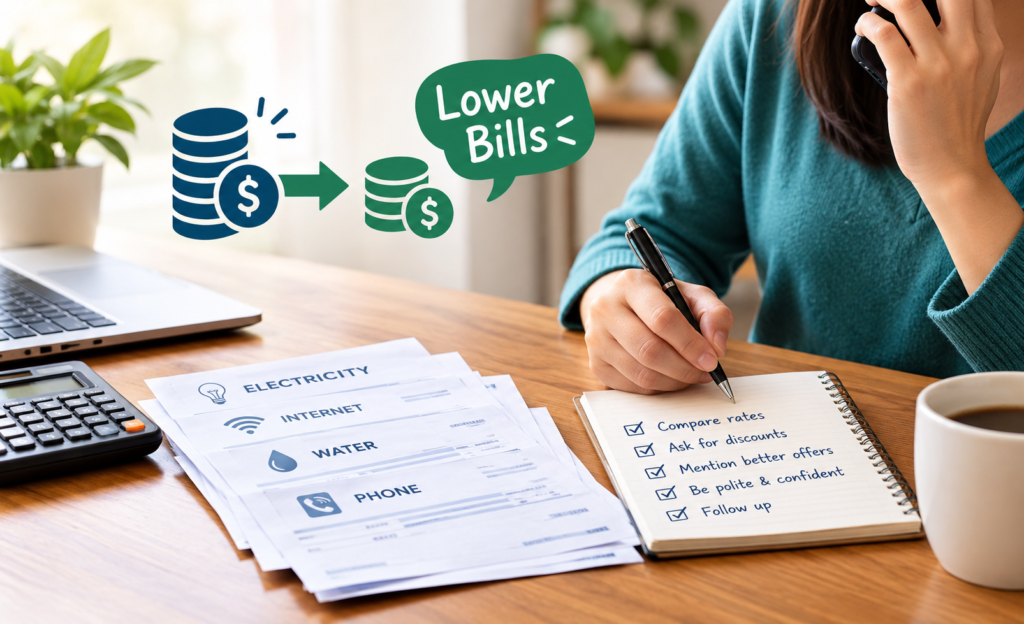
Spend 15-20 minutes before you call. Note your current rate, any promo that’s expired, hidden fees, and equipment rental charges. Then check what Globe, PLDT, and Converge are currently advertising for new customers in your area — new-customer promos are consistently more aggressive than what existing customers get charged, and that gap is exactly your leverage. Screenshot or write down the specific plan and price; vague claims like “I heard it’s cheaper elsewhere” carry far less weight than a specific number.
Step 3: Call, don’t chat — and time it deliberately
Verbal negotiation consistently outperforms live chat or email, because a real conversation lets a representative use judgment a scripted chat flow doesn’t allow. Avoid calling when you’re rushed, frustrated, or it’s late on a Friday — negotiators report noticeably better outcomes when both sides have time to actually talk. If you have flexibility, calling toward the end of the year or during major sale periods (Black Friday, back-to-school season) can work in your favor too, since companies frequently loosen retention discretion during these windows to hit their own targets.
Step 4: Lead with loyalty and payment history, not complaints
Your strongest card is being a low-risk, low-hassle customer, and you should say so explicitly: how many years you’ve been with them, and that you’ve paid on time. This is a real, quantifiable asset from the company’s perspective — acquiring a new customer costs them significantly more than retaining you at a discount. A simple, direct opening works: state your tenure, your payment history, and that you’re reviewing your household budget and want to know what options exist to lower your monthly rate.
Step 5: If the first rep can’t help, ask for retention specifically
The first person who answers is very often not authorized to offer real discounts. If they can’t help, ask directly to be transferred to the retention or loyalty department — mentioning that you’re considering switching providers is usually what triggers this transfer. A retention specialist typically has meaningfully more discretion to issue credits or lower your rate than a standard frontline agent.
Step 6: If they won’t move the price, ask for value instead
Sometimes a company genuinely can’t lower the price, but can add value at the same cost. Consumer Reports’ own survey data on this is specific: among bundle subscribers who successfully negotiated, about a third got a lower price or new promotional rate, 15% got a faster broadband speed, and 8% got extra premium channels or an extension of their existing promo rate before it expired. A speed upgrade or waived installation fee is a genuinely common outcome — expect it as often as an outright discount, and treat it as a real win rather than a consolation prize.
Step 7: Get everything in writing, with a reference number
Before you hang up, confirm the new rate, when it takes effect, and how long it lasts. Write down the agent’s name and any reference or ticket number provided. If the promised change doesn’t show up on your next bill, this record is what lets you escalate the issue instead of starting the whole negotiation over from zero.
Step 8: Set a reminder to do this again
Promotional rates expire, and most people don’t notice until months of full price have already gone by. Set a calendar reminder for 10-11 months out — before your current rate typically steps up — and repeat the process. Bill negotiation isn’t a one-time fix; it’s a habit that pays out every time you do it.
When negotiating isn’t worth it
If you’re locked into a long PLDT or Converge contract with a steep early-termination formula, and the retention team genuinely won’t move, sometimes the mathematically correct move is to wait out your contract rather than force a switch that costs more in penalties than you’d save. Do the actual math on your specific contract’s termination clause before threatening to leave — an empty threat you can’t actually follow through on weakens your position rather than strengthening it.
Frequently asked questions
No — negotiating a lower rate or asking about current promotions is a completely normal customer service request, not a dispute or complaint. Companies have entire retention departments built specifically to handle these calls.
That’s common and doesn’t mean no discount exists — the first-line representative often simply isn’t authorized to offer one. Politely ask to be transferred to the retention or loyalty department, which typically has more discretion.
Phone consistently works best. A live conversation lets a representative use judgment a scripted chat flow doesn’t allow, and tone and rapport genuinely factor into the outcome in a way text-based channels can’t replicate.
Only if you’re prepared to follow through — and only after checking your contract’s early-termination terms first. An empty threat you can’t act on weakens your position; a credible one, backed by a specific competing offer, is genuinely your strongest leverage.
About once a year works well for most people — set a reminder for 10-11 months out, before your current promotional rate typically expires, rather than waiting until you notice the higher charge on a statement.
Compiled and cross-checked against Consumer Reports’ own published member survey data, LendingTree’s most recent (June 2026) cardholder survey, and Philippine telco contract terms published directly by PLDT and Converge, current as of August 2026. Note that LendingTree’s success-rate figure has varied significantly across survey years (from 70% to 84%) — treat it as a strong directional signal, not a fixed number. Contract terms and promotional offers change frequently — always confirm current terms directly with your provider before making a decision based on this guide.