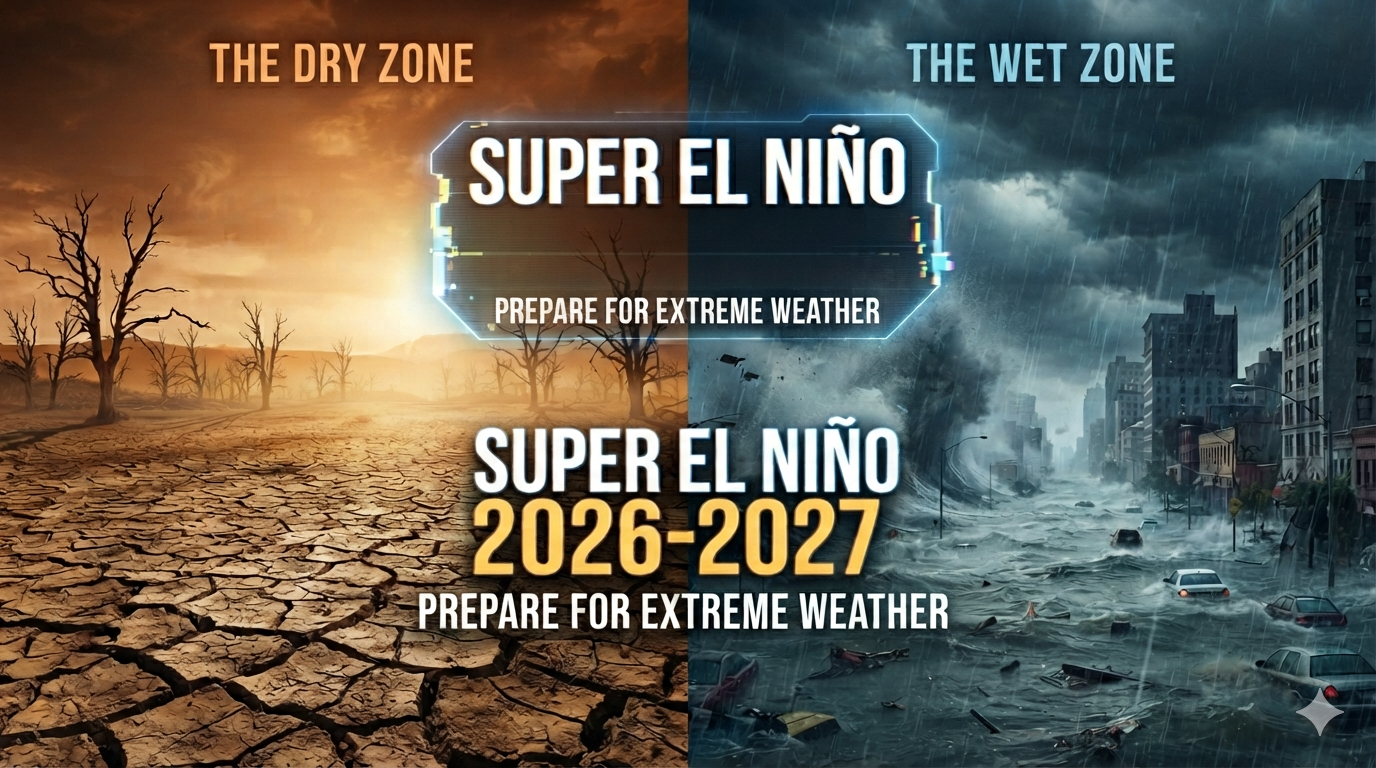
The World Meteorological Organization (WMO) and NOAA have officially issued an El Niño Advisory, confirming that the tropical Pacific has rapidly transitioned into an active El Niño state. Climate models indicate a 63% chance that this event will mature into a “Super El Niño” by the Northern Hemisphere winter of 2026–2027. A Super El Niño is defined by sea surface temperature anomalies soaring past +2.0∘C in the equatorial Pacific, a threshold reached only a handful of times in modern history.
What makes the 2026–2027 cycle distinctly dangerous is its baseline. This climate anomaly is colliding with a global atmosphere that has already logged record-breaking temperatures. Scientists warn that this combination could temporarily push global average temperatures past 1.7∘C above pre-industrial levels, adding an unprecedented thermal charge to weather systems.
Because El Niño behaves like a slow-moving climate giant, its worst impacts take months to build. This leaves a critical window of opportunity. By understanding how this global engine alters local weather, you can fortify your household, secure essential resources, and protect your family before the peak impacts arrive between December 2026 and February 2027.
The Two Faces of a Super El Niño
El Niño occurs when the prevailing trade winds across the tropical Pacific weaken or reverse. This allows a massive pool of warm ocean water to slosh eastward toward Western Europe and the Americas, shifting the global jet stream far south of its neutral position. This single oceanic shift splits the globe into two entirely different high-stakes weather zones.
                  ┌─────────────────────────────────────────┐
                  │       2026-2027 SUPER EL NIÑO           │
                  └────────────────────┬────────────────────┘
                                       │
                ┌──────────────────────┴──────────────────────┐
                ▼                                             ▼
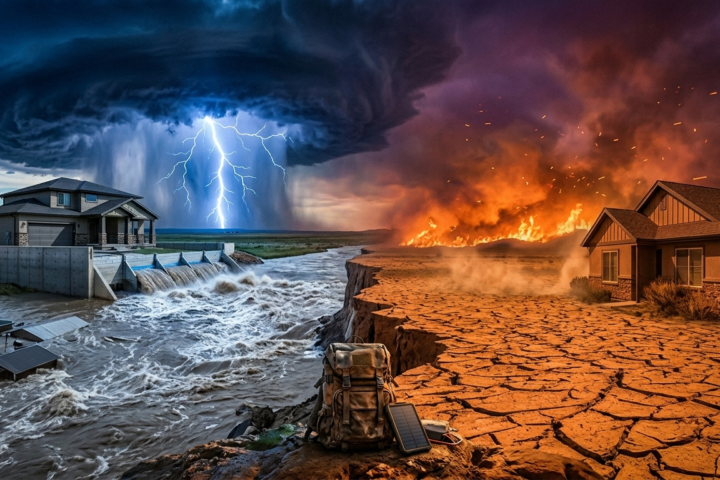
     THE DRY / DROUGHT ZONES                       THE WET / FLOOD ZONES
 ─────────────────────────────                 ─────────────────────────────
 • Southeast Asia & Philippines                • Southern Tier of the U.S.
 • Australia & India (weak monsoon)            • Peru, Ecuador & Colombia
 • Southern Africa & The Sahel                 • East Africa
 • The Amazon Basin                            • West Coast of the U.S.
Phase 1: Actionable Readiness Before the Peak
With atmospheric disruptions expected to accelerate by September, immediate anticipatory action during the mid-2026 window is vital.
For Dry and Drought-Prone Zones
The Primary Threat: Extreme water scarcity, agricultural failures, grid-straining heat waves, and unprecedented wildfire conditions fueled by dried-out biomass.
- Establish Residential Water Security: Do not wait for municipal reservoirs to dip. Install or service rainwater harvesting systems immediately while seasonal rains persist. Clean existing storage tanks and secure food-grade, opaque water containers. Aim to store a minimum two-week emergency supply of drinking water calculated at 1 gallon (3.8 liters) per person per day, plus extra for sanitation.
- Create Fire Defensible Space: If you live near grasslands or forested areas (particularly in Australia, Indonesia, or the northern Amazon), create a 30-to-100-foot (9-to-30-meter) fuel-free buffer zone around your home. Prune low-hanging tree branches, remove dead brush, and clear accumulated leaves from roofs and rain gutters to prevent ember ignition.
- Fortify Household Food Supply Chains: El Niño historically triggers crop yield declines in core staples like rice, corn, and wheat. Expect grocery price inflation by late 2026. Begin building a buffer of non-perishable food items. If you manage a smallholding or home garden, transition to drip-irrigation networks and apply heavy organic mulch to soil beds to reduce moisture evaporation.
For Wet and Flood-Prone Zones
The Primary Threat: Flash flooding, coastal storm surges driven by elevated sea levels, landslides, and high-tide “double whammies” along Pacific coastlines.
- Audit and Clear Infrastructure Drainage: Clear out household gutters, downspouts, neighborhood culverts, and storm drains. Debris-choked drainage is the single largest cause of localized residential flooding during high-intensity downpours. Ensure water moves away from your home’s foundation, not toward it.
- Structural Fortification and Elevation: Inspect your roof for existing leaks or structural compromises. Install a high-quality sump pump in your basement or crawlspace, and pair it with a reliable battery backup system to keep it operational during power grid failures. Elevate critical utilities—such as electrical panels, water heaters, and major appliances—well above historical flood levels.
- Update Specialized Hazard Insurance: Standard property insurance policies rarely cover flood or landslide damage. Because these policies routinely enforce a 30-day waiting period before coverage becomes legally active, you must update or purchase flood insurance immediately before regional storm patterns set in.
Phase 2: Survival and Response During the Active Cycle
As the Super El Niño reaches maximum intensity through winter and spills into mid-2027, daily routines must adapt to protect life and property.
1.Monitor Local Early Warning Systems:Daily Requirement.
Download emergency management apps and maintain a dedicated, battery-powered or hand-crank NOAA/weather radio. Super El Niño events create sudden, rapid-onset hazards like flash floods or wildfire flare-ups that can easily outpace traditional evening news broadcasts.
2.Deploy Heat and Air Quality Countermeasures:Drought Zones.
During severe heat waves, restrict strenuous outdoor activities to early morning or late evening. If regional wildfires contaminate the air, seal all windows and doors tightly. Run internal HEPA air purifiers continuously to scrub dangerous particulate matter (PM2.5) from your indoor living spaces.
3.Enforce Strict Water Conservation:Drought Zones.
Adhere to municipal water restrictions. Transition your home to greywater systems where safe—reusing water from washing machines or showers to flush toilets or preserve vital vegetation. This reduces strain on municipal infrastructure during prolonged grid or supply failures.
4.Execute Evacuations and Avoid Standing Water:Flood Zones.
If flash flood or landslide alerts are issued for your immediate area, evacuate via pre-mapped high-ground routes. Never attempt to walk, swim, or drive through standing or moving water. As little as 6 inche (15 cm.) of moving water can sweep an adult off their feet, and 12 inches (30 cm.)can easily float a standard passenger vehicle.
The Super El Niño Disaster Supply Kit Checklist
Standard emergency kits are insufficient for an event of this duration and magnitude. Supplement your family’s go-bag with these specific climate-resilient provisions:
| Supply Item | Purpose | Primary Target Threat |
| Oral Rehydration Salts (ORS) | Prevents dangerous dehydration during prolonged heat stress or gastrointestinal illness. | Severe heat waves / Contaminated water |
| Water Purification Tablets | Safely treats raw freshwater sources if localized infrastructure floods or runs dry. | Floods & Extreme Drought |
| High-Capacity Power Banks | Keeps primary communication devices alive during grid failures caused by high AC demand or storms. | Grid Failures / Blackouts |
| N95 or P100 Respirators | Protects respiratory tracts from thick wildfire smoke or airborne toxic mold in post-flood buildings. | Wildfires / Post-Flood Structures |
| Waterproof Document Pouch | Protects deeds, insurance policies, medical records, and passports from extreme water intrusion. | Floods & Mudslides |
Time is the Ultimate Advantage
Unlike unpredictable earthquakes or sudden volcanic eruptions, a Super El Niño gives communities months of fair warning. The atmospheric data driving the 2026–2027 cycle is transparent, and the ocean heat reservoirs are already locked in place.
By treating the current window as an urgent call to action, mapping out your specific geographical vulnerabilities, and executing targeted household or community fortifications today, you can transform a macro-climate hazard into a manageable, highly survivable event.