The Split-Screen Climate: How to Prepare for a Super El Niño
When meteorologists sound the alarm for a “Super El Niño,” the public reaction usually falls into one of two camps: people either panic buy umbrellas or brace themselves for a scorching heatwave.
The reality is that both reactions are correct—it just depends entirely on where you live.
A Super El Niño is not your run-of-the-mill seasonal weather shift. It occurs when a massive, self-sustaining loop forms in the Pacific Ocean. The easterly trade winds slacken, allowing deep pools of warm water to surge eastward toward South America. When ocean temperatures in the central Pacific spike by 2°C to 3°C above historical averages, the jet stream bends, atmospheric pressure flips, and global weather patterns fracture.
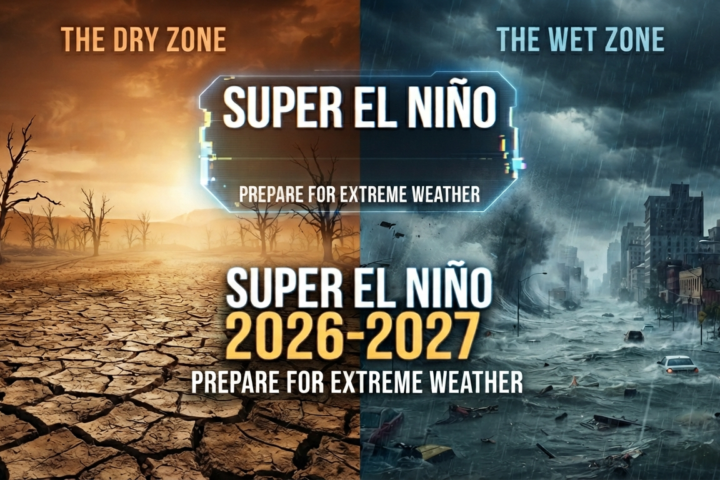
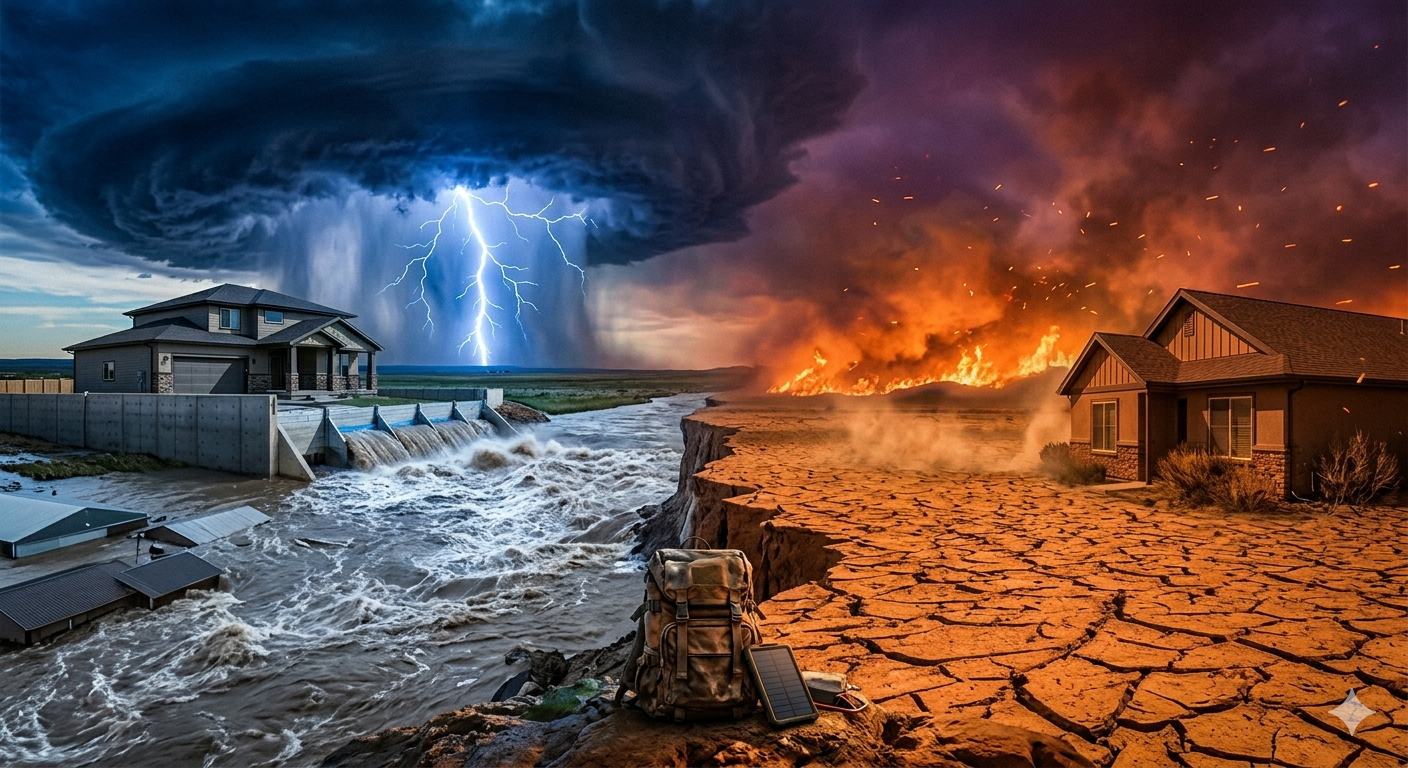
This creates a split-screen climate crisis. While one half of the planet is submerged by torrential atmospheric rivers, the other half fractures under historic, bone-dry droughts.
Because meteorologists can detect a Super El Niño months before its maximum impact hits, you have a rare commodity in natural disaster planning: time. This guide will help you identify your regional risk and execute a hyper-targeted preparation plan.
1. Know Your Threat Zone
Preparing for the wrong climate extreme is the most common mistake people make during an El Niño cycle. Before buying supplies, you must determine which side of the “split-screen” your geography sits on.
| Region | Primary El Niño Impact | Core Threat |
| Southeast Asia, Australia, Northern Brazil, Colombia, East Africa | Severe Drought & Extreme Heat | Crop failures, water utility shortages, and catastrophic wildfires/bushfires. |
| Southern US, Peru, Ecuador, Uruguay, Northern Argentina, East Asia | Torrential Rainfall & Coastal Surges | Flash flooding, mudslides, overflowing river basins, and intense high-tide coastal flooding. |
| Northern US, Canada | Unseasonably Warm, Dry Winters | Drastically reduced snowpacks, winter recreation disruptions, and early spring fire risks. |
2. The “Dry Zone” Action Plan: Surviving Drought, Heat, and Fire
If you live in a dry-zone region, your preparation revolves around resource conservation and structural defense against heat and fire.
Secure Water Security Early
When a Super El Niño chokes off seasonal rains, municipal water tables and reservoirs drop rapidly, leading to mandatory rationing or sudden utility failures.
- The Consumption Buffer: Store a minimum of 1 gallon of clean drinking water per person per day, aiming for a 7-day household reserve. Keep this water in dark, cool spaces to prevent algae growth.
- Rain and Greywater Infrastructure: Do not wait for the drought to buy water storage. Install rain-harvesting barrels to capture the last remaining legal rainfall. Transition your home habits to divert greywater (uncontaminated wastewater from washing machines and showers) toward landscaping and toilets.
- Infrastructure Audit: Inspect your property for micro-leaks. A single dripping faucet can waste up to 3,000 gallons of water a year—a luxury you cannot afford when municipal supplies are stressed.
Create a Wildfire Defensive Space
The intense heatwaves generated by El Niño turn vegetation into literal tinder. A passing ember from a miles-away fire can land on your property and ignite your home in minutes.
1.The Non-Combustible Zone:Within 0 to 5 feet of home.
Remove all dry leaves, dead twigs, pine needles, and bark mulch from your roof, gutters, and deck. Replace wood mulch next to your home’s foundation with gravel or crushed stone.
2.The Clean & Green Zone:Within 5 to 30 feet of home.
Mow lawns down to a maximum height of 4 inches. Prune low-hanging tree branches up to 6 to 10 feet from the ground to prevent ground fires from climbing into the tree canopy. Space bushes and shrubs out so fire cannot easily jump from one to the next.
3.The Ember Audit:Structural Integrity.
In wildfire conditions, flying embers cause 90% of home ignitions. Cover your attic, crawlspace, and eave vents with 1/8-inch metal wire mesh. This allows ventilation but stops wind-driven embers from entering your walls.
Prepare for Power Grid Strain
Super El Niños break global heat records. As millions of households simultaneously max out their air conditioning units, power grids face massive strain, frequently resulting in rolling blackouts.
- Optimize Thermal Efficiency: Service your HVAC system before peak summer. Clean the condenser coils and replace air filters so the unit doesn’t overwork. Install heavy, light-reflecting blackout curtains on all south- and west-facing windows to block thermal energy from entering during midday peaks.
- Secure Power Redundancy: Keep high-capacity USB power banks fully charged exclusively for cell phones and medical devices. If using a fuel-powered generator for backup fans or portable AC units, test it early and store fuel safely outside the home.
3. The “Wet Zone” Action Plan: Defending Against Floods and Storms
For those on the wet side of the split screen, a Super El Niño alters the jet stream, steering a relentless train of moisture-heavy storms over your head. Preparation here is all about structural fortification and water diversion.
Clear Critical Drainage Pathways
When an atmospheric river dumps several inches of rain in a few hours, your home’s built-in drainage is its primary line of defense. If that drainage is blocked, water immediately backs up into your ceilings or foundation.
- Gutter Clearance: Clean all leaves, debris, and nests out of your roof gutters and downspouts. Ensure your downspouts extend and discharge water at least 6 feet away from your home’s foundation.
- Community Storm Drains: Walk your street and clear debris away from municipal storm grates. A grate blocked by plastic bags or lawn clippings will flood an entire neighborhood street in minutes.
Execute Structural Waterproofing
- Inspect Foundations and Roofs: Walk your perimeter and look for hairline cracks in concrete foundations or basement walls. Seal them with hydraulic cement or heavy-duty polyurethane caulk. On the roof, replace any curled, cracked, or missing shingles.
- Sump Pump Diagnostics: If your home utilizes a basement sump pump, pour a bucket of water into the pit to ensure the float switch triggers properly. Because severe storms often knock out local power lines, a sump pump without a battery-powered backup system is a guaranteed basement flood waiting to happen.
Establish Water Diversion Barriers
If you live in low-lying areas, valleys, or near coastal lines vulnerable to El Niño-induced high-tide surges, you must secure physical barriers before the water arrives.
1.Acquire Barriers Early:Sourcing Material.
Purchase heavy-duty sandbags or modern polymer-expanding flood tubes. Do not wait for a flood warning; local hardware stores will sell out of these supplies instantly.
2.Fill Bags to Two-Thirds Capacity:Proper Filling Technique.
Fill sandbags only two-thirds full. If you overfill them, they become rigid like bricks and leave large gaps between bags where water can easily seep through.
3.Build a Pyramid Wall:Defensive Stacking.
Stack sandbags parallel to the direction of expected water flow. Overlap the joints like bricks in a wall, and stomp each bag firmly into place to eliminate gaps. Build the base of your wall twice as wide as it is high to prevent it from collapsing under water pressure.
4. The Universal “Super El Niño” Supply Chain Strategy
Beyond local weather anomalies, a Super El Niño shifts global economics. Because this climate phenomenon hits massive agricultural hubs simultaneously, its footprint will reach your wallet and your pantry regardless of your local weather.
Prepare for Global Food Price Inflation
El Niño heavily damages global yields of specific commodities. Droughts in Southeast Asia and South America often cripple the production of staples, causing global price spikes.
- Impacted Products: Coffee, sugar, cocoa, rice, and vegetable oils.
- The Strategy: If your household regularly consumes these items, build a rolling 3- to 6-month buffer in your pantry by buying non-perishable variants (like white rice, vacuum-sealed coffee, and sugar) gradually before global market prices adjust upward.
Build a Resilience Pantry
An emergency pantry during an El Niño event should account for utility failures. If a storm knocks out electricity or a drought interrupts the water grid, a pantry full of dried beans that require boiling water is useless.
- Stock up on high-calorie, shelf-stable foods that require zero cooking, zero refrigeration, and zero added water. Focus on canned meats, canned fruits, ready-to-eat stews, peanut butter, and nutrient-dense granola bars.
- Keep a manual, heavy-duty rotary can opener in your pantry kit.
Secure a 30-Day Health Reserve
Severe weather shifts alter disease vectors and logistics networks. Flooded zones frequently see spikes in waterborne illnesses, while dry zones experience respiratory strain from wildfire smoke and dust storms.
- Coordinate with your doctor or pharmacist to secure a continuous 30-day buffer supply of all critical daily medications.
- Stock your first-aid kit with electrolyte hydration packets (to combat heat exhaustion or illness-induced dehydration) and N95-rated respirators (essential for filtering out both toxic wildfire smoke and mold spores from flooded basements).
The Takeaway: A Super El Niño is a slow-moving giant. Unlike an unpredictable earthquake, we can see it coming across the ocean months in advance. By identifying your regional threat zone today and systematically fortifying your home and supply chains, you turn a potential household disaster into a manageable seasonal event.
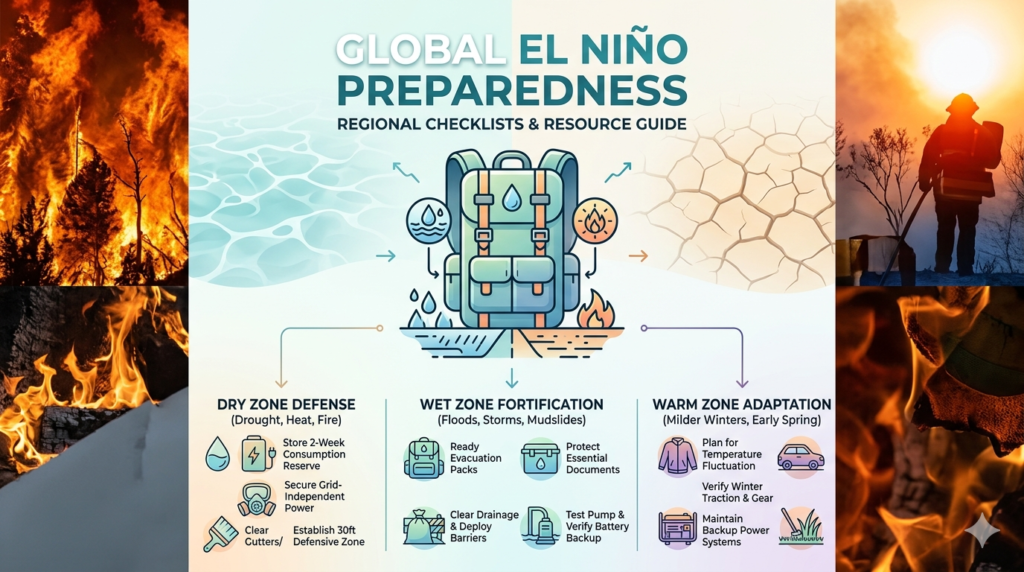
Bonus: Emergency Kit Checklist Based on Your Specific Location
1. The “Dry Zone” Checklist (Drought, Heat & Fire)
Best for: Southeast Asia (including the Philippines), Australia, Northern Brazil, and East Africa.
This kit prioritizes keeping you cool, hydrated, and safe from grid collapses or wildfires when the region bakes under an extended dry spell.
- [ ] Long-Term Water Reserves: Clean drinking water stored in a cool, dark place (aim for a 14-day supply of 1 gallon per person per day to weather utility rationing).
- [ ] Water Purification Tablets/Filters: In case low reservoir levels lead to municipal water contamination or pressure drops.
- [ ] Power Grid Redundancy: Heavy-duty, high-capacity power banks (20,000mAh or greater) and solar chargers to keep phones running during rolling blackouts.
- [ ] Battery-Powered Fans: Portable, rechargeable clip-on or handheld fans to prevent heat exhaustion when the AC cuts out.
- [ ] N95 or P100 Respirator Masks: Essential for filtering out thick airborne ash, dust, and toxic smoke from nearby bushfires or agricultural fires.
- [ ] Electrolyte Replacement Powder: Oral rehydration salts (ORS) to rapidly treat dehydration and heat cramps.
- [ ] Landscaping & Fire Tools: A reliable garden hose with a spray nozzle, a sturdy ladder to reach gutters, a rake, and heavy-duty trash bags to keep dry brush cleared away from your home’s foundation.
2. The “Wet Zone” Checklist (Floods, Storms & Mudslides)
Best for: Southern US, Peru, Ecuador, Uruguay, and East Asia.
This is your classic “Go-Bag” and home fortification kit designed to keep water out of your living space and ensure you can evacuate instantly if floodwaters rise.
A standard emergency Go-Bag layout tailored for severe storm and flood evacuations.. Source: Moneymax
- [ ] The Evacuation Go-Bag: A rugged, waterproof backpack for every family member packed with 3 days of food, water, change of clothes, and a blanket.
- [ ] Waterproof Document Pouch: A heavy-duty, zip-sealed waterproof bag to protect birth certificates, passports, insurance policies, and land titles.
- [ ] Emergency Lighting & Signals: Waterproof LED flashlights, headlamps, extra batteries, and a loud emergency whistle to signal for help if trapped by rising water.
- [ ] Sump Pump Battery Backup: A dedicated marine battery backup for your basement sump pump to ensure it keeps running even when a storm knocks out local power lines.
- [ ] Physical Water Barriers: At least 10–20 sandbags (unfilled) or modern polymer expanding flood barriers ready to deploy at doorways and garage entrances.
- [ ] Emergency Sanitation Supplies: Heavy-duty contractor trash bags, wet wipes, hand sanitizer, and plastic buckets (municipal sewage lines frequently back up or fail during major flash floods).
- [ ] Emergency Tools: A multi-tool, heavy-duty work gloves, and rubber boots for navigating water-logged areas safely.
3. The “Warm Zone” Checklist (Mild, Snow-Sparse Winters)
Best for: Northern US and Canada.
Because a Super El Niño pushes the polar jet stream further north, these regions experience unusually balmy, dry winters. This kit focuses on early-season anomalies, fluctuating heating needs, and altered winter safety.
[ ] Early-Spring Fire Defenses: Lawn maintenance tools kept accessible. A snow-sparse winter means grass and brush dry out much earlier in the spring, moving the fire season forward by several weeks.
[ ] Fluctuating Climate Gear: Layered clothing systems rather than just heavy sub-zero parkas, as winter temperatures will bounce erratically between freezing and unseasonably warm.
[ ] All-Weather Vehicle Kit: Vehicle traction mats, a compact shovel, and jumper cables. (Warm winters mean more “freeze-thaw” cycles, creating dangerous black ice on roads rather than predictable packed snow).
[ ] Pre-Season Home Efficiency: Standard HVAC air filters and weather-stripping for doors and windows to keep heating costs low during unexpected temperature swings.
[ ] Generators & Fuel Stabilizer: Backup power maintenance items. While winters are milder, the storms that dohit can bring heavy, wet ice instead of fluffy snow, which snaps power lines easily.