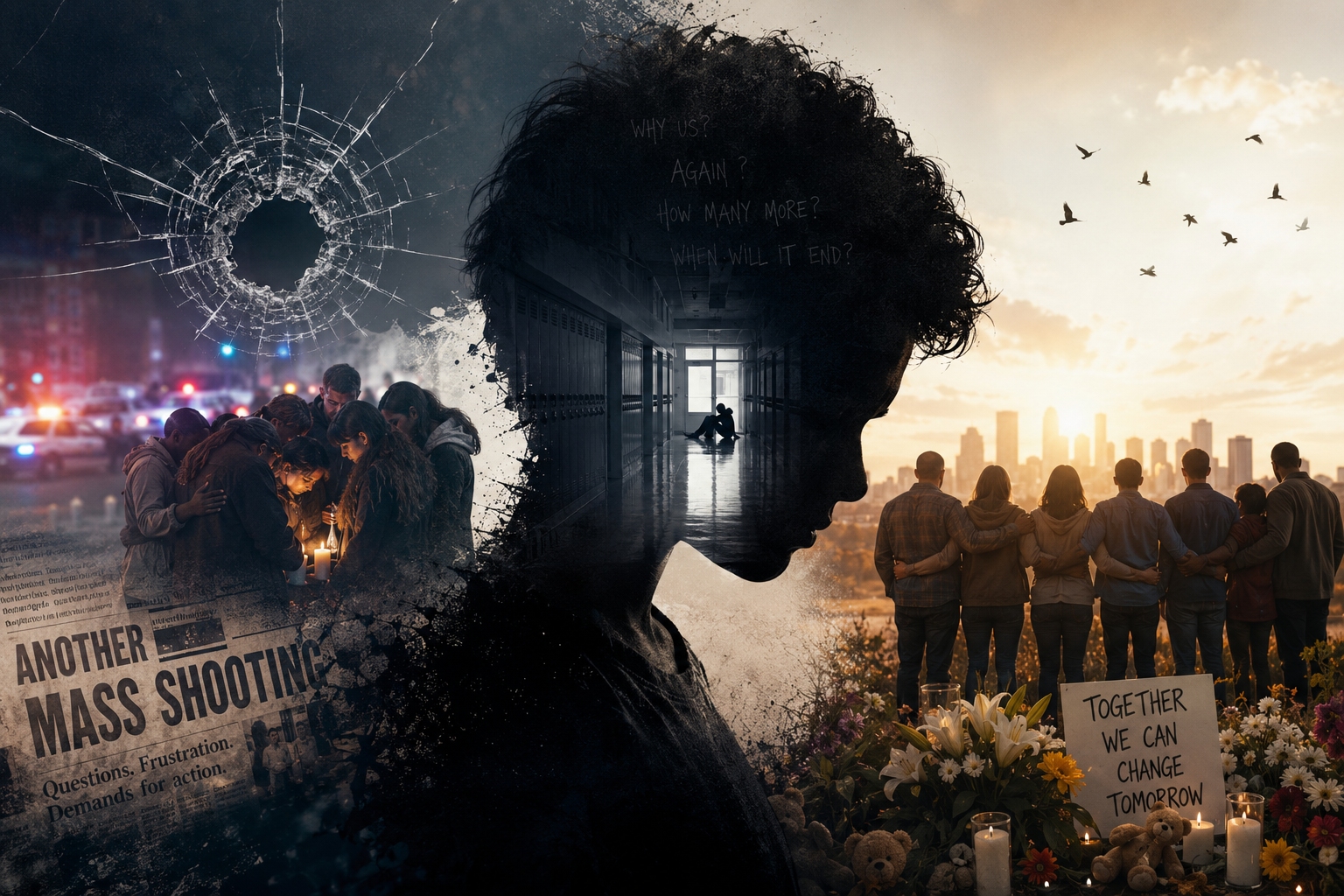
There is now a painful familiarity to the way news of a mass shooting unfolds. A few words flash across television screens and phone notifications: breaking news. Initial reports are confusing. Numbers change. Panic spreads. Families desperately call loved ones. Social media fills with fear, speculation, and grief. Authorities hold press conferences. Names and photographs of victims emerge. Candles appear at memorials. Public outrage erupts. Political arguments begin. Then, gradually, the attention fades.
Weeks later, another tragedy happens somewhere else.
The most unsettling part may not be the violence itself, but how routine the sequence has become. Something extraordinary and horrifying has started to feel disturbingly expected. Society reacts with sorrow every time, yet often with surprise only in the details rather than in the event itself.
Mass shootings are frequently described as isolated acts committed by disturbed individuals. Yet treating them as disconnected tragedies may prevent us from confronting a more uncomfortable reality: repeated acts of mass violence often expose broader failures—social, cultural, institutional, and political. The question is not merely why one person pulled a trigger. The deeper question is why these incidents continue appearing with such persistence and why solutions remain so elusive.
Defining the Problem: What Exactly Is a Mass Shooting?
Even before discussing causes and solutions, disagreement begins with definitions.
Different organizations and researchers use varying criteria when identifying a mass shooting. Some definitions focus on the number of people killed. Others include injuries. Some distinguish public attacks from domestic violence incidents. Others include gang-related shootings or crimes tied to other criminal activity.
At first glance, arguments over definitions may seem technical or even unnecessary. However, numbers influence public perception, political debate, and policy discussions. Broader definitions may produce higher annual figures, while narrower definitions may focus attention on specific forms of violence.
Statistics therefore can become political battlegrounds.
Some people use numbers to argue that society faces an epidemic requiring immediate intervention. Others argue that broader counting methods exaggerate trends or blur distinctions between different kinds of violence.
Yet amid debates over terminology, a larger truth remains difficult to dismiss: repeated incidents involving multiple victims, public terror, and devastating consequences represent a serious societal problem regardless of where exact numerical lines are drawn.
Definitions matter. Human suffering matters more.
The Human Cost Beyond Death Statistics
When mass shootings dominate headlines, attention often centers on fatalities. News outlets report death counts almost immediately, reducing tragedy into rapidly updated numbers.
But numbers reveal only part of the damage.
For every victim who dies, others survive with injuries that permanently alter their lives. Some suffer paralysis. Others lose limbs. Some endure years of surgeries and rehabilitation. Physical survival does not always mean recovery.
The emotional consequences extend even further.
Parents lose children. Children lose parents. Friends lose lifelong companions. Communities lose teachers, workers, neighbors, and classmates. Entire towns sometimes become associated forever with tragedy.
Then there are those who witnessed events unfold.
Students hiding beneath desks.
Customers trapped inside stores.
Workers barricading doors.
First responders entering scenes of chaos.
Many carry psychological wounds long after media attention disappears.
The invisible aftermath can be especially devastating. Survivors frequently report symptoms associated with trauma:
- anxiety
- depression
- recurring nightmares
- fear of public places
- hypervigilance
- post-traumatic stress
Even people geographically distant may experience emotional effects. Continuous exposure to violent imagery and repeated news cycles can create broader societal anxiety.
Children increasingly grow up conducting active shooter drills in schools. For previous generations, emergency drills largely prepared students for natural disasters or fires. Today many children rehearse scenarios involving armed attackers.
That shift raises difficult questions.
What happens when fear itself becomes institutionalized?
What psychological consequences emerge when preparation for violence becomes part of ordinary childhood?
Society often counts bodies while overlooking years of suffering that follow.
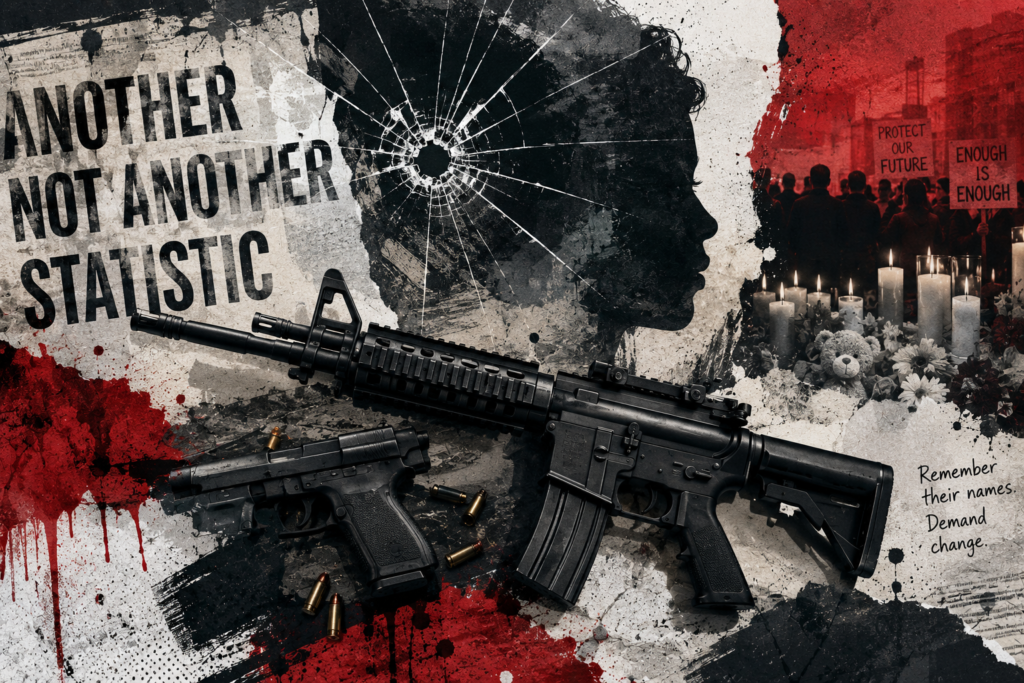
Why Do Mass Shootings Happen? Searching for Causes in a Complex Problem
People understandably want simple explanations after horrific events. Tragedies create emotional urgency. Communities seek causes because causes imply solutions.
Yet mass shootings rarely emerge from one factor alone.
The search for understanding often reveals overlapping influences rather than a single source.
Mental Health: A Partial Explanation, Not a Complete One
Mental health frequently enters public discussion after mass shootings.
Following attacks, observers often ask whether perpetrators showed signs of instability, depression, severe emotional disturbance, or other psychological problems.
While mental health issues may play a role in some cases, reducing mass shootings solely to mental illness creates several problems.
First, most individuals experiencing mental illness never commit violence.
Second, emphasizing mental illness alone can unintentionally reinforce stigma against millions of people who pose no threat to others.
Third, such explanations sometimes function as shortcuts that avoid examining wider social conditions.
Mental health may be one piece of a larger puzzle, but treating it as the entire picture risks oversimplification.
Complex events usually emerge from combinations of personal crises, social environments, access to means, and broader cultural influences.
Access to Firearms
Few aspects of the debate generate stronger disagreement than discussions surrounding firearms.
Supporters of stricter regulations often argue that easier access increases opportunities for violence. Proposed measures frequently include expanded background checks, waiting periods, restrictions on certain weapons, and stronger risk assessment systems.
Advocates believe preventive measures can reduce danger even if they cannot eliminate violence entirely.
Opponents frequently respond that firearm ownership involves constitutional rights, self-defense considerations, and concerns regarding government overreach. Some argue that determined attackers may still obtain weapons regardless of laws.
These arguments represent deeply held values and beliefs rather than simple policy preferences.
My own view is that acknowledging rights should not prevent discussions about responsibility. Society regularly regulates potentially dangerous activities while still preserving freedoms. Public safety and individual rights do not always have to exist in permanent conflict.
No single law can erase violence entirely. Yet refusing to examine possible safeguards because they are imperfect may leave societies trapped between grief and paralysis.
Social Isolation and Loneliness
Modern life has become increasingly connected digitally while often becoming more fragmented socially.
People may have thousands of online interactions yet experience profound loneliness.
Communities that once provided stronger forms of belonging—local organizations, neighborhood networks, civic groups, and extended family structures—appear weaker in many places.
For some individuals, especially young people, prolonged isolation can deepen feelings of resentment, hopelessness, or alienation.
Online spaces sometimes intensify these experiences.
Instead of finding support, vulnerable individuals may encounter extremist communities, grievance-based ideologies, or environments encouraging anger and hostility.
The danger is not loneliness itself. Millions of people experience loneliness without harming anyone.
The concern arises when isolation combines with despair, identity crises, personal instability, and environments that reinforce destructive thinking.
Modern society may be creating conditions where profound emotional disconnection grows unnoticed.
Culture and Desensitization
Another difficult question involves society’s broader relationship with violence.
Political discourse increasingly rewards outrage. Social media platforms often amplify anger. Public conversations frequently become hostile, tribal, and emotionally charged.
Violence itself also occupies enormous space within entertainment and news ecosystems.
Debates surrounding films, games, and media portrayals remain controversial. Evidence linking entertainment directly to mass shootings remains contested. Yet the broader cultural environment deserves discussion.
The concern is not simply exposure to fictional violence.
The concern is normalization.
When outrage becomes routine and aggression becomes constant background noise, societies may gradually lose sensitivity toward conflict itself.
The possibility worth considering is whether cultural environments influence how individuals understand power, anger, and recognition.
The Search for Recognition
Some attackers appear driven partly by a desire for attention.
Many leave manifestos, videos, online posts, or statements intended for public discovery.
Some study previous attackers.
Others seek notoriety.
This reality introduces troubling questions regarding media coverage.
The Media’s Difficult Role
News organizations face a genuine challenge after mass shootings.
The public needs information.
Communities need updates.
Families need facts.
Journalists therefore carry significant responsibility.
Yet continuous coverage can create unintended consequences.
Images repeat endlessly.
Perpetrators’ names become nationally recognized.
Biographical details dominate discussion.
Faces appear on television screens for days.
Researchers and observers have raised concerns regarding copycat effects—the possibility that extensive publicity may inspire individuals seeking similar attention.
Media organizations cannot ignore tragedy.
However, perhaps greater emphasis should be placed on victims, survivors, and social context rather than transforming perpetrators into infamous public figures.
Information matters.
Glorification does not.
Politics After Every Tragedy
Mass shootings frequently trigger a familiar political cycle.
Violence occurs.
Shock follows.
Public mourning begins.
Political arguments emerge.
Debates intensify.
Then legislative gridlock often returns.
Eventually attention fades.
The cycle repeats.
Political polarization has made consensus increasingly difficult. Positions frequently become tied not only to policy preferences but also to identity, ideology, and culture.
As a result, discussions often become battles between competing narratives rather than collective problem-solving efforts.
Perhaps the most unsettling possibility is this:
Repeated inaction can itself become a form of decision-making.
When societies repeatedly fail to act despite recurring tragedies, silence begins functioning as a choice.
Spaces Once Considered Safe
Schools.
Churches.
Shopping centers.
Concert venues.
Workplaces.
These are places people historically viewed as ordinary parts of life.
Mass shootings have altered perceptions of safety within many public spaces.
Children now learn emergency procedures involving armed attackers.
Workers identify exits upon entering buildings.
Crowds sometimes trigger anxiety.
Preparedness may be necessary, but preparedness also changes how people experience the world.
Safety once meant confidence.
Now safety increasingly means contingency planning.
That shift deserves reflection.
Looking Beyond Borders
International comparisons often enter discussions surrounding mass shootings.
Different countries experience different rates of gun violence and public mass casualty events.
No nation is perfectly comparable to another. Countries differ in culture, population, law, healthcare systems, and history.
Still, comparisons can provide useful lessons.
Some societies maintain stronger social support structures. Others emphasize different approaches to regulation or mental health care.
The goal should not be simplistic imitation.
The goal should be learning.
Ignoring experiences beyond national borders may limit opportunities for understanding.
Questions Society Often Avoids
Mass shootings force uncomfortable questions.
Why does outrage disappear so quickly?
Why do communities repeatedly become numb?
Why do policy debates transform into cultural wars?
Why do people sometimes argue more passionately about ideology than about preventing future suffering?
Mass shootings may reveal more than failures of security or legislation.
They may reveal failures of attention.
Failures of empathy.
Failures of community.
Failures of collective responsibility.
Perhaps the greatest danger is not merely violence itself.
The greater danger may be adaptation—the possibility that society gradually accepts recurring tragedy as part of ordinary life.
Conclusion: What Should Change?
There is unlikely to be one perfect solution.
People searching for a single explanation or one universal policy may continue finding disappointment.
Mass shootings emerge from complicated intersections involving individual choices, social environments, cultural conditions, access, mental health, media systems, and politics.
That complexity should not become an excuse for paralysis.
Short-term measures may include stronger intervention systems, accessible mental health support, improved threat reporting mechanisms, and more effective prevention efforts.
Long-term solutions may require deeper cultural work: rebuilding community connections, encouraging healthier public discourse, promoting responsible media practices, and addressing growing social isolation.
Mass shootings begin with individuals, but they rarely exist entirely apart from the societies surrounding them.
The question is not only how to stop the next tragedy.
The question may also be whether society is willing to examine itself honestly enough to understand why these tragedies continue repeating—and courageous enough to change what it finds.