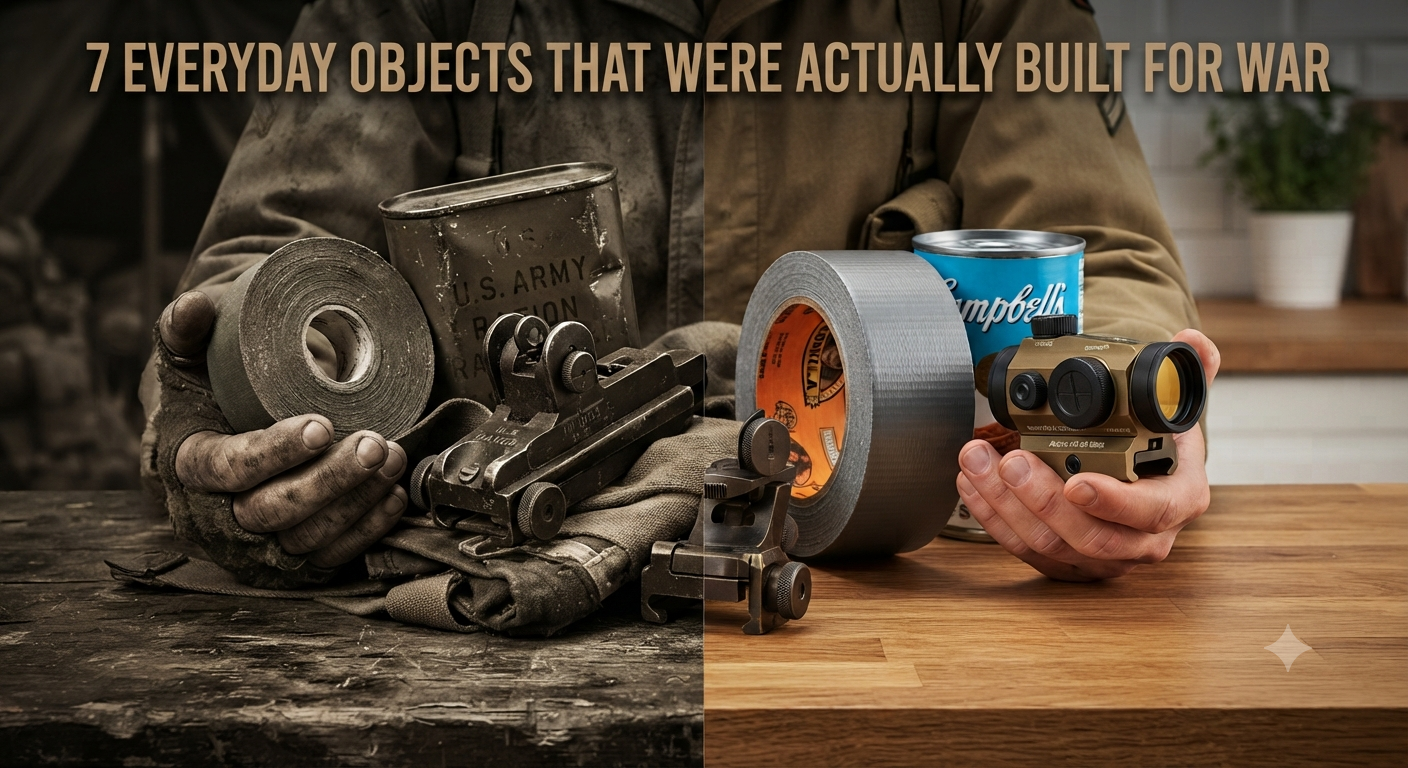
Duct tape, super glue, GPS, and four other things sitting in your house right now — all invented to solve a military problem first.
You’ve probably touched two or three of these before lunch today. None of them look dangerous. None of them feel like history. But somewhere in a lab, a factory floor, or a wartime committee room, someone built each of these for exactly one reason: to help a war effort. Then the fighting stopped, and the object just… didn’t. It stuck around and found a new job.
1. Duct Tape
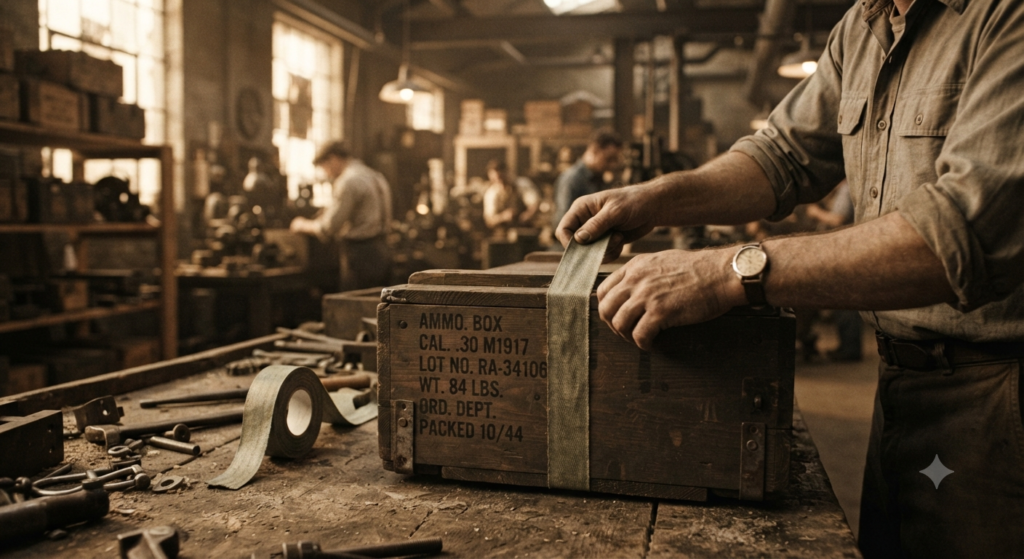
Vesta Stoudt worked at an Illinois ammunition plant in 1943, packing cartridge boxes that soldiers needed to tear open fast, sometimes under fire. The paper tape sealing those boxes kept failing at exactly the wrong moment. She had two sons in the Navy, so this wasn’t abstract to her. She pitched a fix to her supervisors — a stronger, waterproof cloth tape — and got nowhere.
So she wrote to President Roosevelt. Directly. With diagrams.
Roosevelt forwarded her letter to the War Production Board, which greenlit it within weeks and put a Johnson & Johnson operating company on the job of manufacturing it. Soldiers called the result “100 mile an hour tape,” because you could use it to fix almost anything short of a broken bone. Whether it later got nicknamed “duck tape” because it shed water like a duck, or because it was made of cotton duck cloth, is genuinely disputed — there’s no solid evidence for the water-duck story, even though it’s the one that gets repeated. Either way, it went silver, got renamed for actual ductwork after the war, and now mostly holds together Halloween costumes.
2. Super Glue
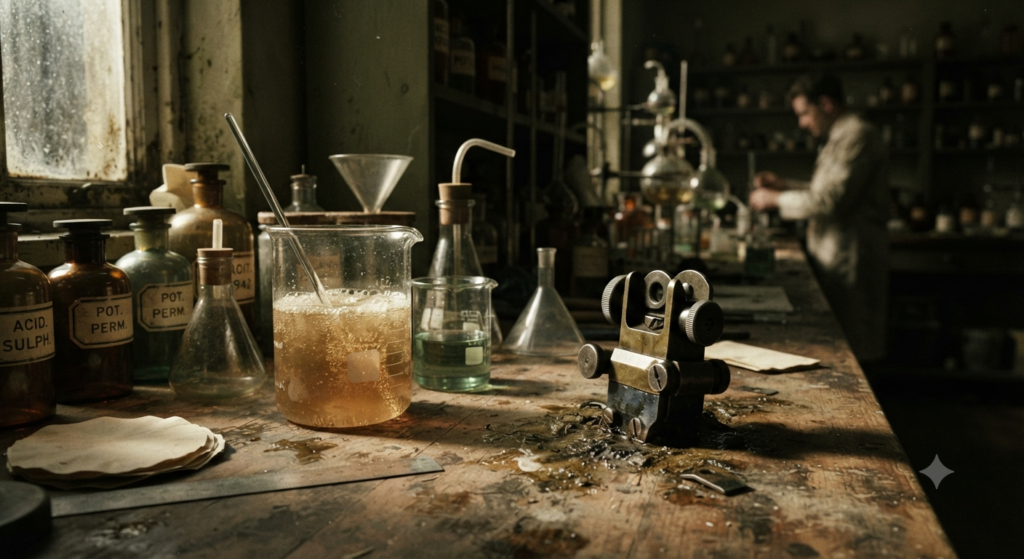
In 1942, chemist Harry Coover was trying to build clear plastic gun sights at Eastman Kodak. One of the compounds he tested — a cyanoacrylate — stuck to absolutely everything it touched, instantly. Which made it completely useless for gun sights. He shelved it.
Nine years later, a different Kodak team was testing heat-resistant materials for jet canopies, and a researcher named Fred Joyner rediscovered the same sticky compound, this time spreading it between two glass prisms that immediately welded themselves together. That’s when Coover realized what he’d actually found. Super Glue hit the market in 1958.
The stranger footnote: cyanoacrylate went back to war anyway. Field surgeons in Vietnam sprayed it directly onto open wounds to stop bleeding on the spot, buying time to get soldiers to real surgery. It’s a weirdly circular ending for a chemical that started as a failed gun sight.
3. The Microwave Oven
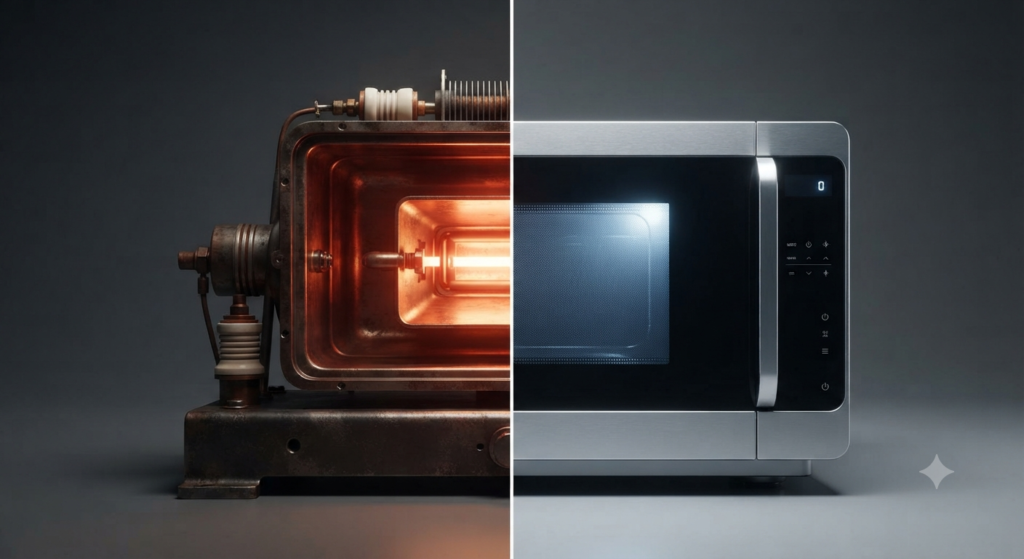
Percy Spencer never finished grammar school. He taught himself electrical engineering, trigonometry, and physics at night, working odd jobs during the day, and ended up running the magnetron production line at Raytheon during World War II — the vacuum tube that powered Allied radar, the technology that let ships and planes spot the enemy before the enemy spotted them.
In 1945, standing near an active magnetron, he noticed the candy bar in his coat pocket had melted. Most people would’ve tossed it and moved on. Spencer got curious, put some popcorn kernels near the tube instead, and watched them pop. He built a metal box around a magnetron to test the effect further, and — after one memorable incident where a test egg exploded in a colleague’s face — Raytheon had a product. They called it the Radarange, which makes a lot more sense once you know where the name came from. Spencer’s payout for the patent, per Raytheon’s standard employee bonus at the time: two dollars.
4. GPS

GPS started as a Cold War military project, full stop — a way for the Air Force, Navy, and eventually missile systems to know their exact position anywhere on Earth. Civilians could use it, but the signal they got was deliberately scrambled. A feature called Selective Availability degraded civilian accuracy down to about 100 meters, on purpose, so that adversaries couldn’t use it for precision targeting.
On May 1, 2000, President Clinton ordered Selective Availability switched off. Civilian accuracy jumped instantly from about 100 meters to 20. The Pentagon’s reasoning was that the military had since developed a way to selectively deny GPS in specific regions without degrading it globally — so the blanket scrambling was no longer necessary. Within a few years, the same system built to guide submarines and warheads was just… telling people there’s a faster way home if they leave now.
5. Canned Food
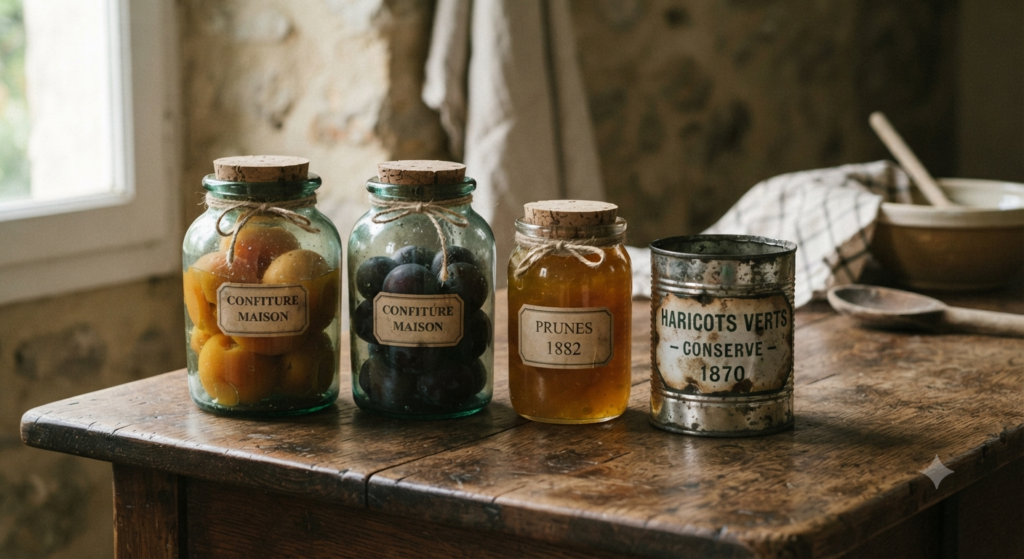
Napoleon’s armies lost more men to spoiled food and starvation than to enemy fire, so in 1795 the French government put up a 12,000-franc prize — a genuinely enormous sum — for anyone who could solve food preservation for troops on long campaigns. It took a Paris confectioner named Nicolas Appert fourteen years of trial and error to crack it: sealing food in glass bottles, then boiling them.
He didn’t understand why it worked. Nobody would, for another fifty years, until Pasteur figured out bacteria. Appert just knew it worked, and he collected his prize in 1809 (some sources say 1810). The British adapted his method into metal cans shortly after, largely to supply the navy, and canning spread from military ration to household kitchen over the following century. Appert himself, worth noting, died broke in a pauper’s grave in 1841 — the invention outlived him by a very long way.
6. Stainless Steel
In 1912, a Sheffield metallurgist named Harry Brearley got a fairly unglamorous assignment: figure out why rifle barrels were wearing out so fast from the heat of repeated firing. He spent the next year testing chromium-steel alloys, chasing erosion resistance, not corrosion resistance — those are different problems, and he was solving the wrong one for stainless steel, technically.
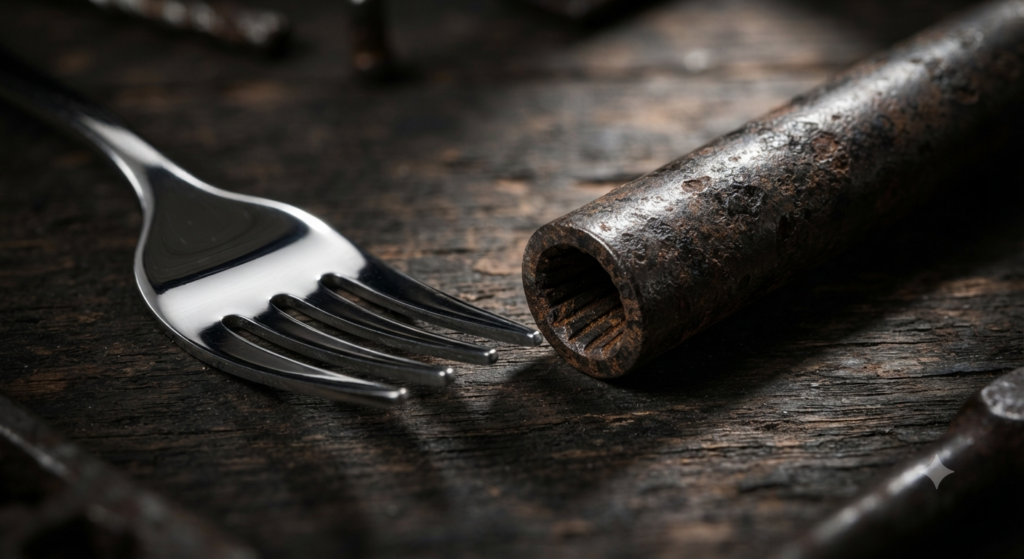
Then, in August 1913, one of his failed gun-barrel alloys sat around the lab for weeks and simply refused to rust. Brearley almost missed it. The alloy wasn’t hard enough for gun barrels, so by his own project’s standard it was a failure. But it also didn’t corrode in acid, water, or anything else he threw at it, and eventually the right person noticed. It ended up in cutlery first, then kitchens, then basically everything metal you don’t want rusting.
7. Kotex
This is the one people don’t believe until they check it themselves.
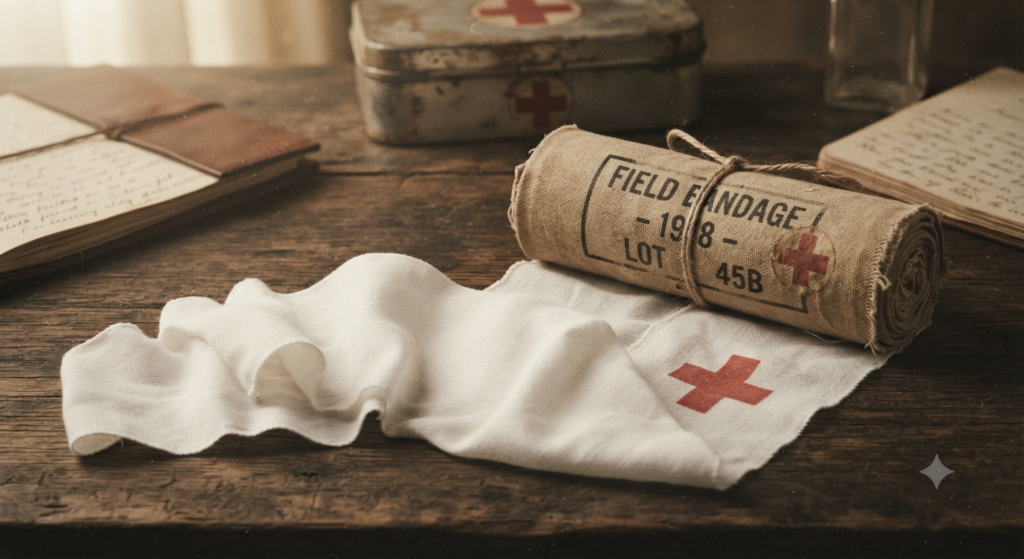
During World War I, Kimberly-Clark developed a cheap, ultra-absorbent wood-pulp material called Cellucotton — five times more absorbent than cotton, half the cost — and supplied it to the U.S. war effort as surgical bandaging. Army and Red Cross nurses on the front lines had a lot of it lying around, and they started using the surplus bandaging on themselves during their periods, since it worked better than anything else available at the time.
When the war ended, Kimberly-Clark had warehouses of Cellucotton and no more soldiers to bandage. Executives heard how the nurses had actually been using it and, in 1920, packaged it as Kotex — the company’s first-ever consumer product. It became the dominant sanitary napkin brand in the country for decades. A wartime bandage shortage workaround turned into an entire industry, and it happened almost by accident, because a few nurses solved their own problem with what was already in the supply closet.
So next time the duct tape saves your day, that’s a mom’s letter to a president holding your box together. And next time you reach for the glue, that’s a failed gun sight doing you a favor.”