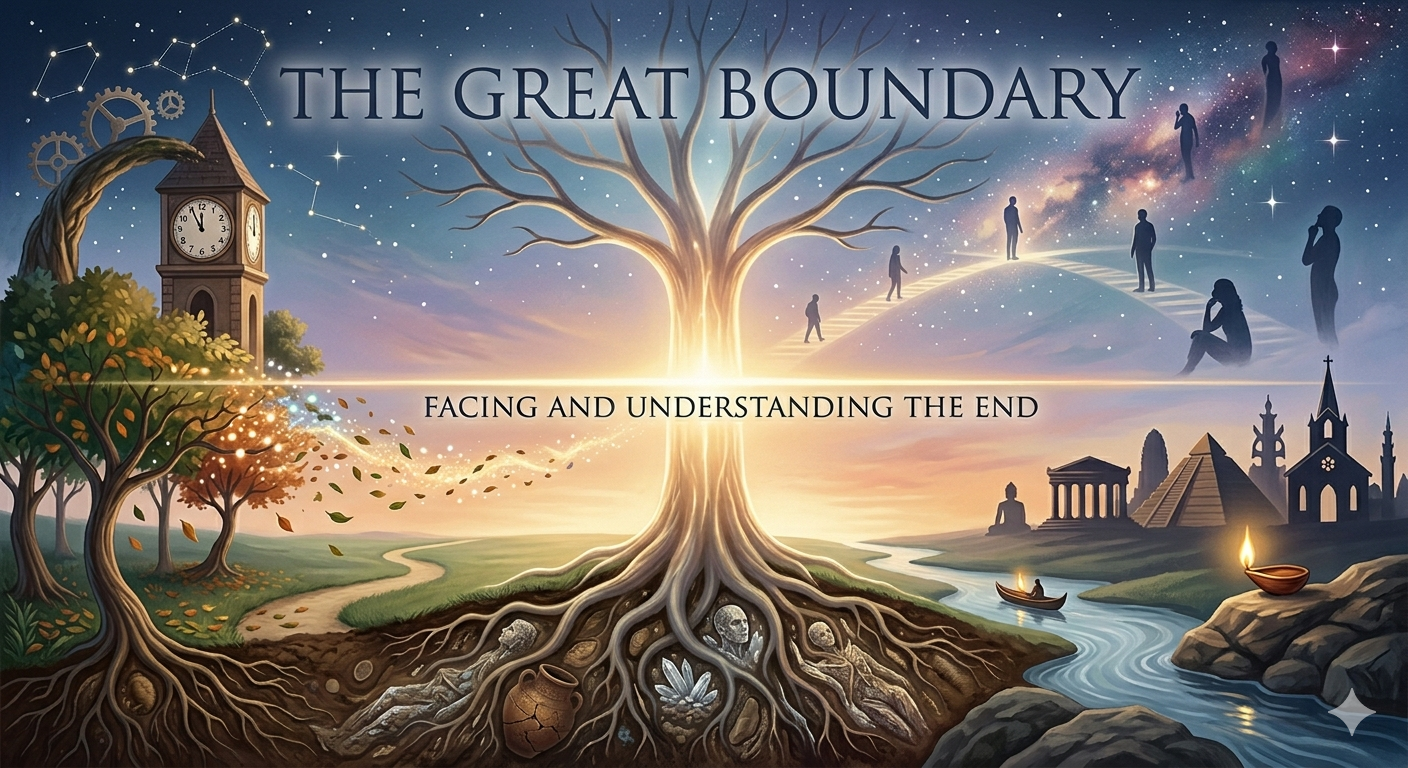
We joke about taxes, but it’s the other certainty that actually runs the show. Every single person you’ve ever met—every public figure on the news, your first-grade teacher, the person who made your coffee this morning, and you—is marching toward the exact same cliff, DEATH. It is a bizarre thing to think about while sitting in traffic or folding laundry, but much of human civilization is essentially a giant, elaborate distraction from the fact that one day, our hearts will stop.
It is the ultimate blind spot. We know it’s coming, but we physically cannot picture a world where we don’t exist. To keep from losing our minds, humanity has spent thousands of years trying to explain it, dress it up, or beat it.
The Biological Reality: A Cellular Dimmer Switch
If you ask a scientist what happens when we die, the answer is clinical, almost cold. They will tell you it’s a dimmer switch, not a light switch.
- Clinical Death: First, your heart stops pumping blood and breathing ceases. For a very brief window, medical intervention can sometimes pull a person back.
- Biological Death: Deprived of oxygen, the brain begins to starve, neurons misfire, and within a few minutes, the entire system shuts down for good.
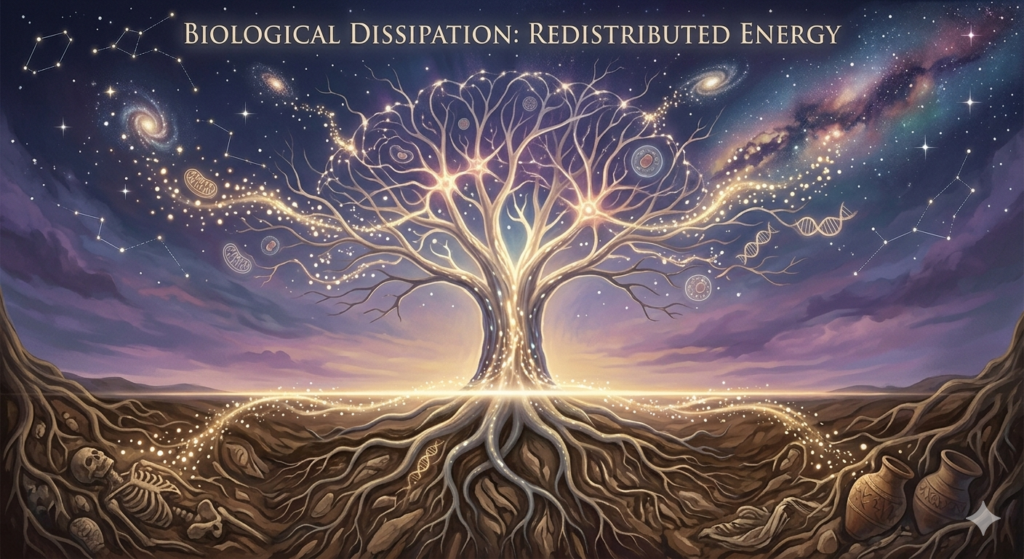
If you look at this through physics, however, it gets a little poetic. The law of conservation of energy states that energy cannot vanish; it can only change form. The thermal heat in your body and the electrical impulses that allowed you to think and feel do not evaporate into nothingness. They dissipate. They go back into the earth, feed the soil, and get recycled into the ecosystem. In a literal, non-mystical way, you don’t disappear—you are redistributed.
The problem is that scientific explanations do not do much for you when you are sitting in a hospital room holding a hand that is turning cold. The biology is too neat. It leaves a massive, echoing silence, and humans hate silence.
The Cultural Tapestry: Survival Guides for the Dark
To fill that void, we invented stories, faith, and ritual. It is fascinating how different cultures have built completely different frameworks to handle the dark.
The Linear Path (Western Traditions)
In Judaism, Christianity, and Islam, life is a straight line. You get one shot, you die, and then you face a cosmic evaluation—Heaven, Hell, or an eternal rest. This viewpoint puts an immense amount of pressure on the here and now, making our daily moral choices echo forever.
The Cyclical Wheel (Eastern Traditions)
In Hinduism and Buddhism, the whole thing is viewed like a wheel. Death isn’t the end of the book; it’s just the end of a chapter. You shed your body like an old coat, and based on your actions (karma), you are tossed back into the game in a new form, cycling until you achieve spiritual liberation.
Ancestral Continuity (Indigenous Beliefs)
In many Indigenous traditions worldwide, the dead never really leave. Ancestors remain active participants in the community, existing on a slightly different frequency. You talk to them, respect them, and treat the boundary between the living and the dead as something as thin as a pane of glass.
None of us actually know who got it right. But the fact that every corner of the earth came up with a version of an afterlife tells you everything you need to know about how desperate we are to believe this isn’t all for nothing.
The Psychological Landscape: Mortality as a Driver
There’s a concept in psychology called Terror Management Theory, which suggests that almost everything we build is driven by a subconscious panic over our own mortality.
Why do we strive to build massive corporations, write books, get famous, or have rows of kids named after us? Because we are terrified of being forgotten. We build “immortality projects” hoping that a piece of us will stick around after the physical machinery fails.
When death hits close to home, it completely upends us. We try to categorize grief into neat little stages—denial, anger, acceptance—like it’s a manual you can follow. But anyone who has actually lost someone knows that is a fiction. Grief isn’t a staircase; it’s a shipwreck. One day you are fine, and the next day a specific smell or an old song hits you, and you are drowning all over again. It is messy, painful, and the brutal tax we pay for loving other people.
The Philosophical Mirror: Why We Need the End
It is easy to slip into nihilism and think, If it all ends in dust, why bother? But philosophers usually look at it the exact opposite way.
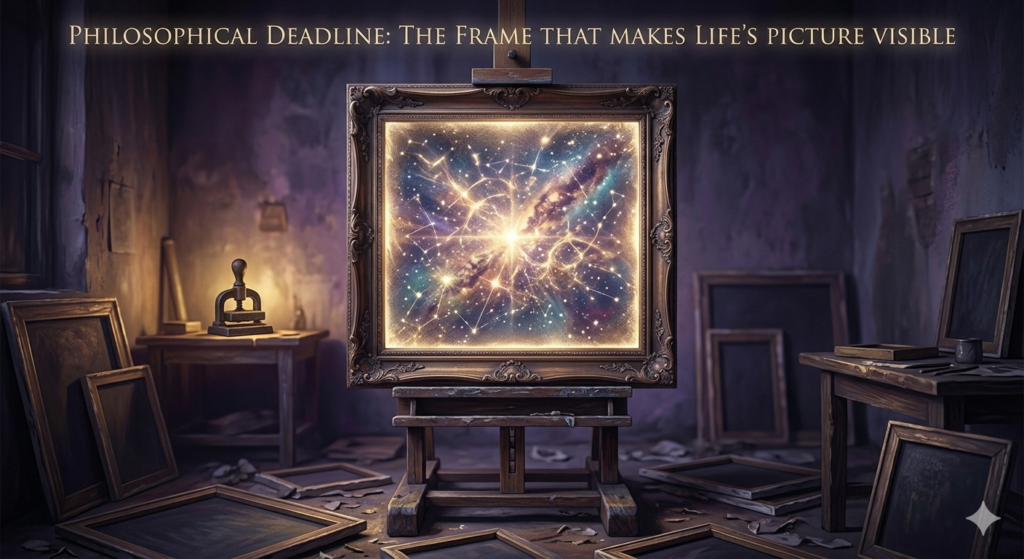
There is an old existentialist idea that death is actually the frame around the canvas. Think about it: if a movie never ended, you would eventually get bored and walk out. The plot wouldn’t matter. There would be no stakes.
The fact that our time is scarce is the only reason it has any value at all.
The deadline is what makes you apologize to a friend after a stupid fight. It’s what makes a sunset beautiful instead of boring. It is what forces us to actually live instead of just coasting through an infinite loop.
The Bottom Line
We are never going to solve death; it is the one secret the universe keeps entirely to itself. But maybe the point isn’t to understand what happens after the curtain drops. Maybe the point is just realizing that the mystery in the dark is what makes the light we have right now so incredibly bright.