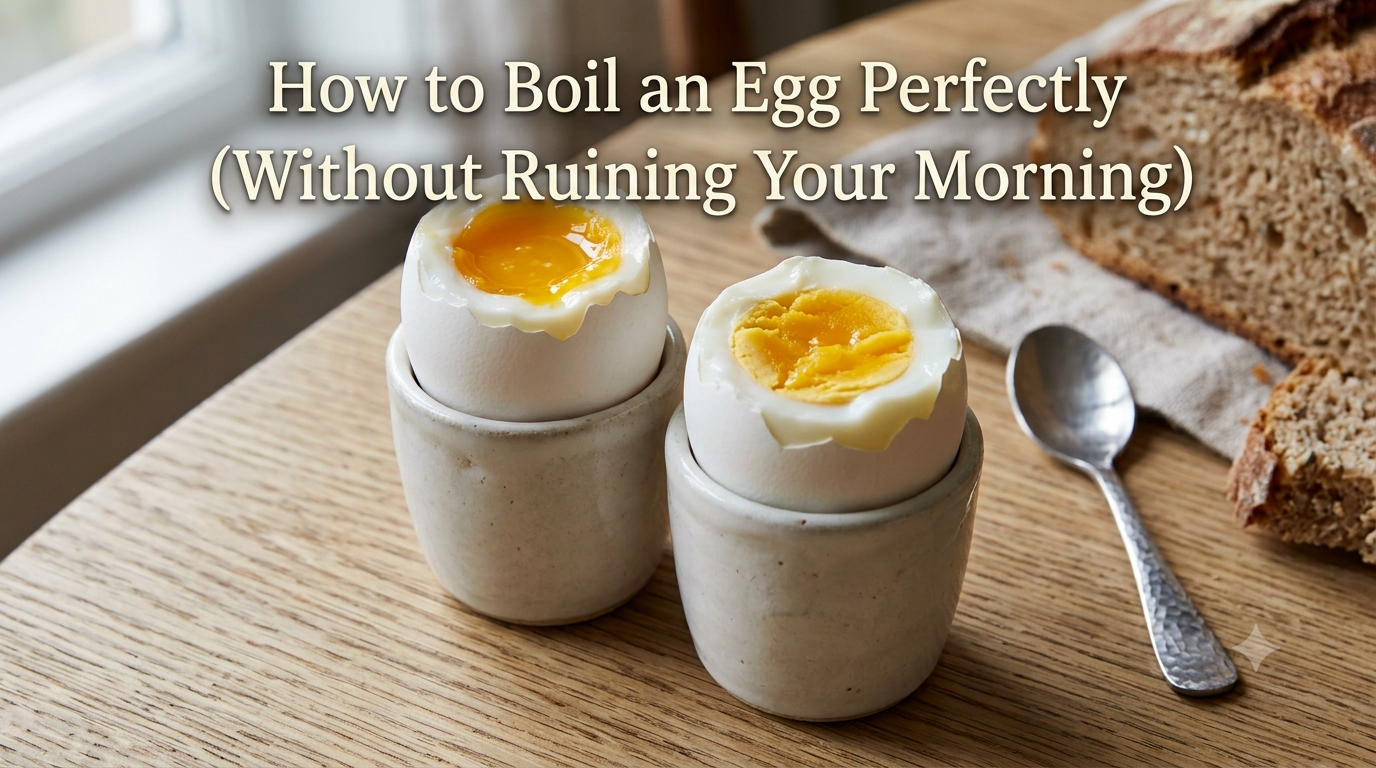
There is a highly specific brand of betrayal that only happens at 7:00 AM.
A few years ago, I was staying at a tiny bed-and-breakfast in Vermont. The host, an elegant woman named Clara who looked like she spent her weekends harvesting organic lavender, set down a single soft-boiled egg in a ceramic cup. I cracked the top shell, dipped my toast point in, and was greeted by a completely chalky, overcooked yolk surrounded by a rubbery white that tasted vaguely like sulfur. I ate it anyway—because it’s rude not to—but that morning sparked an obsession. I realized that while boiling an egg is the most basic culinary task on earth, it’s also the easiest one to completely butcher.
Cooking an egg perfectly isn’t about intuition; it’s about chemistry. The white (albumen) and the yolk are made of different proteins that coagulate at different temperatures. Cook them too long or too hot, and those proteins tightly coil, squeezing out water and leaving you with a rubbery texture and that infamous green ring (which is just iron and sulfur reacting under high heat).
If you want an egg that actually tastes good, stop guessing and start treating it like a mini science experiment. Here is the foolproof method.
The Perfect Egg Matrix
Before you light the stove, you need to decide what “perfect” means to you today.
| Egg Style | Cook Time | What it Looks Like | Best For |
| Soft-Boiled | 6 minutes | Liquid, warm yolk; just-set whites | Dipping toast soldiers |
| Medium-Boiled | 7 to 8 minutes | Jammy, custard-like center; firm whites | Ramen bowls, avocado toast |
| Hard-Boiled | 9 to 10 minutes | Fully pale-yellow, creamy but solid yolk | Egg salad, meal prep |
The Method
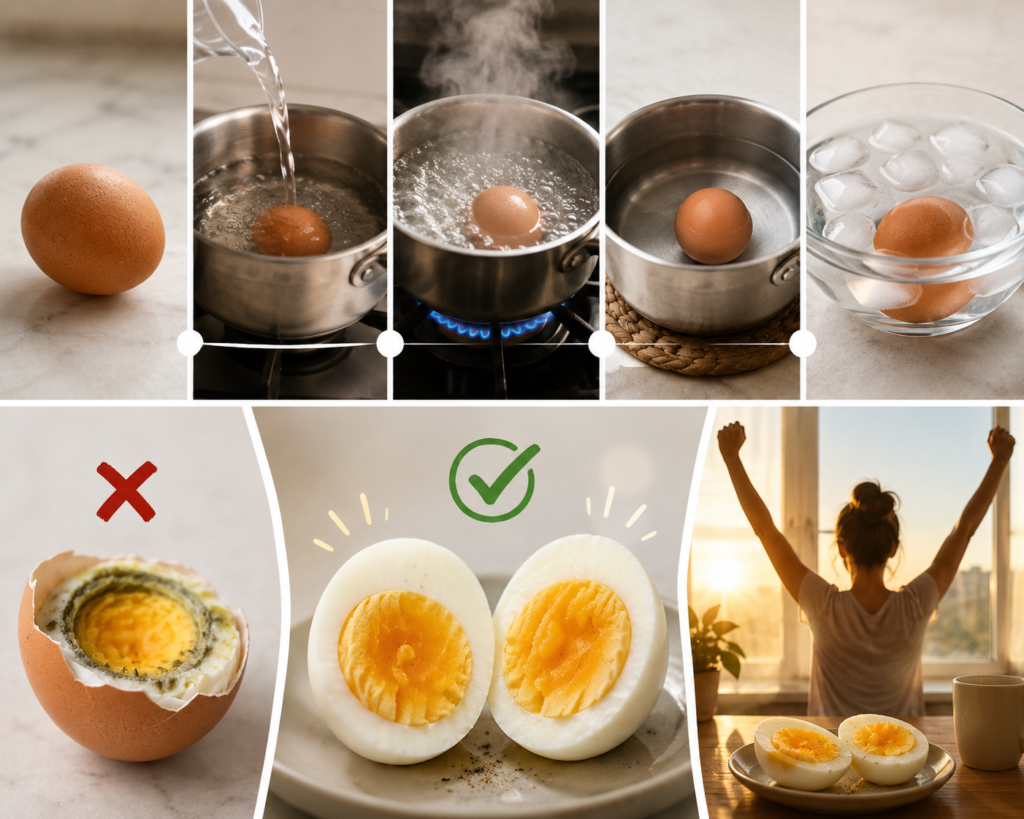
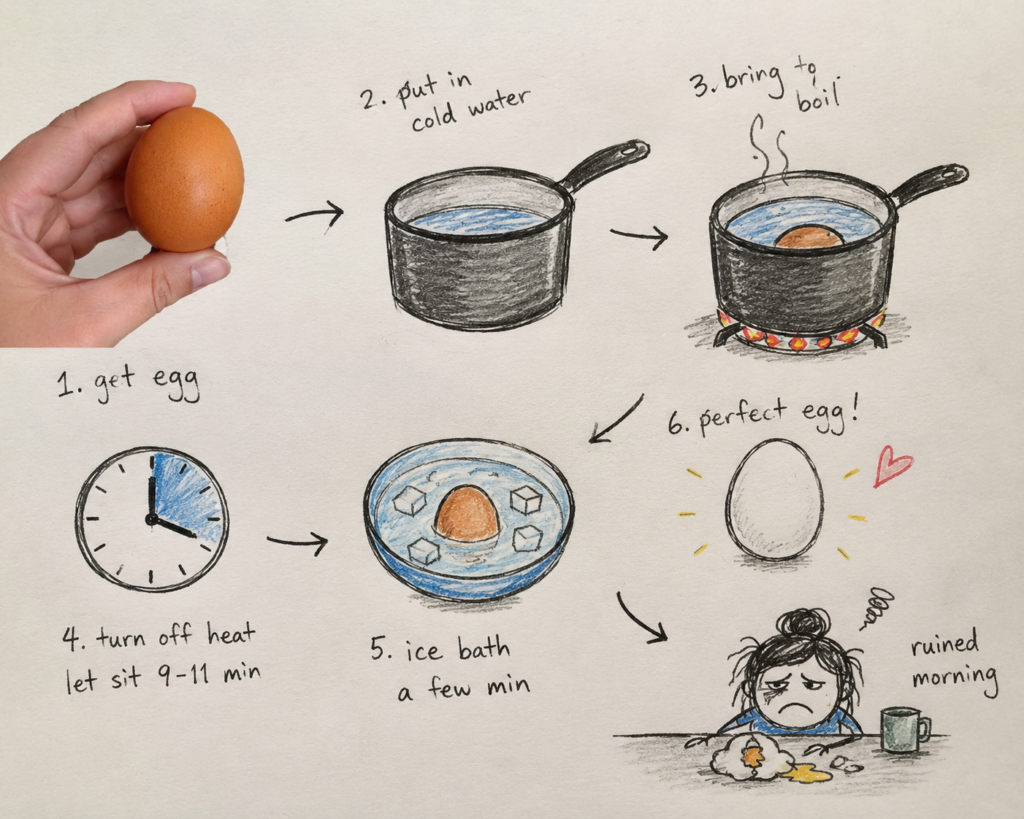
The biggest mistake people make is the “Cold Water Start”—putting eggs in cold water and bringing it all to a boil together. Don’t do this. It makes the cooking time completely dependent on your stove’s power and pan size, and it actually causes the egg whites to fuse to the inner shell membrane, making them a nightmare to peel.
Instead, use the hot-start method.
1.Bring the water to a boil:Prep time: 5 mins.
Fill a small saucepan with enough water to completely submerge your eggs by about an inch. Bring it to a rolling boil over high heat, then lower the heat slightly to a gentle, steady bubble so the eggs don’t violently crack against each other.
2.Lower the eggs gently:The critical transition.
Take your eggs straight from the refrigerator (cold eggs are actually easier to control timing-wise). Using a slotted spoon, gently lower them into the bubbling water one by one.
3.Start the timer immediately:6 to 10 minutes.
Adjust your heat to maintain that gentle boil. Set a strict timer based on the matrix above. Do not eyeball this; thirty seconds can mean the difference between a jammy yolk and a solid one.
4.The ice bath shock:Stops the cooking instantly.
While the eggs cook, fill a medium bowl with cold water and a generous handful of ice cubes. The second your timer goes off, transfer the eggs directly into the ice bath. Leave them there for at least 5 minutes.
Why the ice bath is non-negotiable: The cold shock shrinks the egg slightly inside the shell, creating a microscopic pocket of steam and water. This is the secret to shells that slide off effortlessly in two clean pieces, rather than tearing up the egg whites.
Two Quick Tips for Flawless Execution
- Age Matters: If you bought your eggs from a local farm yesterday, they will be incredibly difficult to peel because fresh eggs are less acidic. If you want easy-peel hard-boiled eggs, use the carton that’s been sitting in your supermarket fridge for a week or two.
- Peel Under Water: If you hit a stubborn egg, crack the shell all over on the counter, then submerge it back into your ice bath or hold it under a gentle stream of running tap water. The water gets under the thin membrane and helps lift the shell away.
A Final, Confessional Note
I still have that little ceramic egg cup I bought at a flea market right after my Vermont trip. It sits on my kitchen shelf as a tiny monument to my own stubbornness. For a long time, I thought being a “good cook” meant doing everything by gut instinct—tossing things into a pan and just knowing when they were ready. But the humble egg completely cured me of that ego.
Sometimes, the most human thing you can do in the kitchen is admit that a $5 digital timer is smarter than you are. There’s no shame in leaning on the clock if it means your toast actually has a jammy yolk to sink into.