Introduction: Understanding Global Warming Today
Global warming is no longer a distant or abstract concept—it is a measurable, observable reality shaping the planet in real time. At its core, global warming refers to the long-term rise in Earth’s average surface temperature, primarily driven by the accumulation of greenhouse gases in the atmosphere. While natural processes have always influenced the climate, human activity over the past century has significantly accelerated this warming trend.
Today, the urgency surrounding global warming is unprecedented. From intensifying storms to rising sea levels and shifting ecosystems, the signs are increasingly difficult to ignore. This article explores the science behind global warming, examines its current impacts, and looks ahead at the challenges and solutions that will define the coming decades.
The Science Behind Global Warming
The Greenhouse Effect Explained
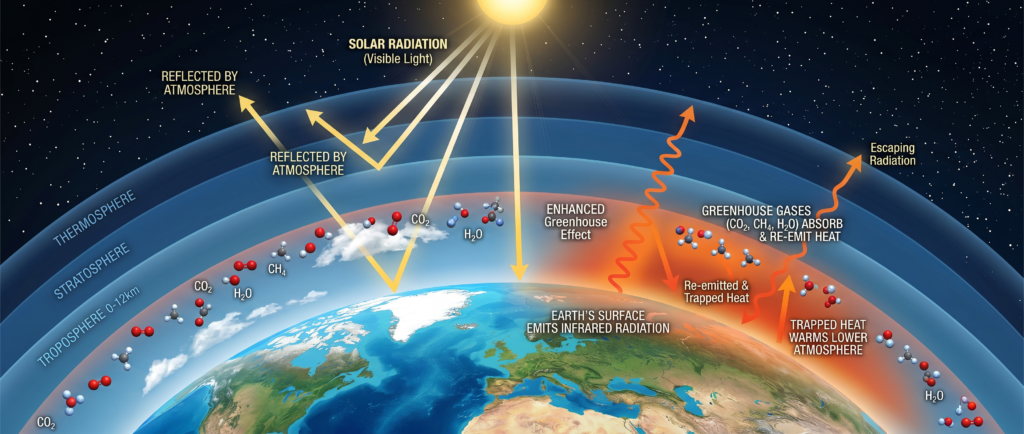
The greenhouse effect is a natural process that makes life on Earth possible. It occurs when gases in the atmosphere trap heat from the sun, preventing it from escaping back into space.
- Natural greenhouse effect
- Maintains Earth’s temperature at a level suitable for life.
- Without it, the planet would be too cold to sustain ecosystems.
- Enhanced greenhouse effect
- Human activities increase the concentration of heat-trapping gases.
- This leads to excess warming beyond natural levels.
- Key greenhouse gases
- Carbon dioxide (CO₂): Released through burning fossil fuels and deforestation.
- Methane (CH₄): Emitted from livestock, landfills, and energy production.
- Nitrous oxide (N₂O): Produced by agricultural and industrial processes.
Major Human Contributors
Human activity is the dominant driver of modern climate change.
- Fossil fuel combustion
- Power generation, transportation, and industry rely heavily on coal, oil, and gas.
- These activities release vast amounts of CO₂ into the atmosphere.
- Deforestation
- Forests act as carbon sinks, absorbing CO₂.
- Clearing forests reduces this capacity while releasing stored carbon.
- Industrial and agricultural practices
- Large-scale farming emits methane and nitrous oxide.
- Manufacturing processes contribute significantly to emissions.
Current Global Temperature Trends
Rising Average Temperatures
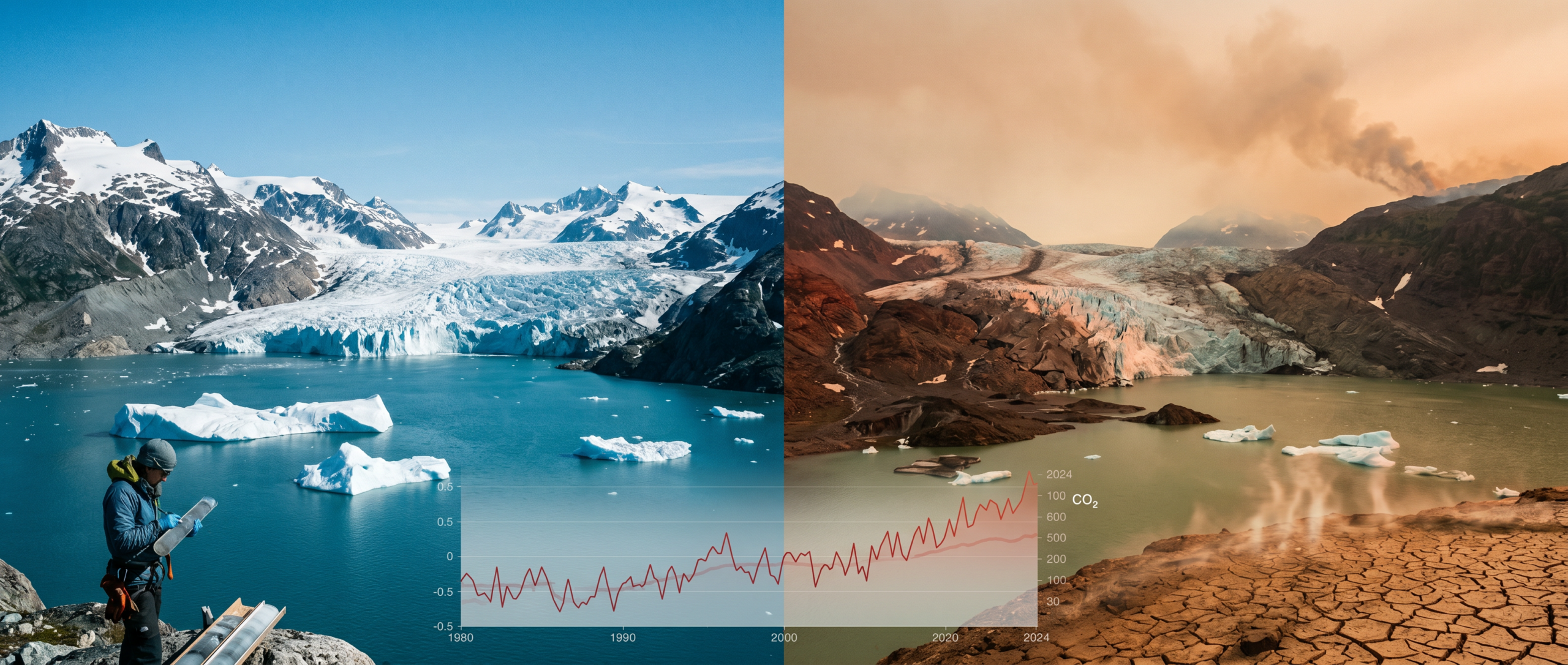
The data is clear: the planet is warming.
- Long-term warming trend
- Since the late 1800s, global temperatures have risen steadily.
- The rate of warming has accelerated in recent decades.
- Record-breaking years
- The past decade includes some of the hottest years ever recorded.
- Temperature anomalies are becoming more frequent and intense.
Regional Variations
Global warming does not affect all areas equally.
- Polar amplification
- The Arctic is warming at roughly twice the global average.
- This accelerates ice melt and disrupts global climate systems.
- Urban heat islands
- Cities experience higher temperatures due to concrete, asphalt, and limited vegetation.
- This exacerbates heat-related risks for urban populations.
Observable Effects of Global Warming
Melting Ice and Rising Sea Levels
One of the most visible signs of global warming is the rapid loss of ice.
- Glacial retreat
- Glaciers worldwide are shrinking at alarming rates.
- This threatens freshwater supplies in many regions.
- Polar ice decline
- Arctic sea ice is diminishing in both thickness and extent.
- Antarctic ice sheets are showing increasing instability.
- Sea-level rise
- Caused by melting ice and the expansion of warming seawater.
- Coastal cities and island nations face increased flooding risks.
Extreme Weather Events
Climate change is intensifying weather patterns.
- Stronger storms
- Typhoons and hurricanes are becoming more powerful due to warmer ocean temperatures.
- Heatwaves and droughts
- Extended periods of extreme heat are becoming more common.
- Droughts are affecting agriculture and water supplies.
- Flooding and heavy rainfall
- Warmer air holds more moisture, leading to intense rainfall events.
Ocean Changes
The oceans are absorbing much of the excess heat and carbon.
- Ocean warming
- Alters marine ecosystems and disrupts weather systems.
- Ocean acidification
- Increased CO₂ lowers ocean pH levels.
- This harms coral reefs and shell-forming organisms.
Impact on Ecosystems and Biodiversity
Species Migration and Extinction Risks
Climate change is reshaping habitats.
- Shifting ecosystems
- Species are moving toward cooler regions or higher altitudes.
- Extinction pressures
- Many species cannot adapt quickly enough to rapid changes.
Coral Reef Degradation
Coral reefs are among the most vulnerable ecosystems.
- Coral bleaching
- Triggered by rising sea temperatures.
- Loss of biodiversity
- Coral reefs support a wide range of marine life, now under threat.
Forest and Land Ecosystems
Land-based ecosystems are also under stress.
- Increased wildfires
- Hotter, drier conditions fuel more frequent and intense fires.
- Vegetation shifts
- Changes in rainfall and temperature alter plant growth patterns.
Human and Economic Impacts
Public Health Concerns
Global warming directly affects human health.
- Heat-related illnesses
- Rising temperatures increase cases of heat exhaustion and heatstroke.
- Disease spread
- Warmer climates expand habitats for mosquitoes and other vectors.
Food and Water Security
Essential resources are under pressure.
- Agricultural disruption
- Changing weather patterns affect crop yields and food supply.
- Water scarcity
- Melting glaciers and altered rainfall reduce reliable water sources.
Economic Costs
The financial burden of climate change is growing.
- Infrastructure damage
- Storms, floods, and rising seas damage homes and infrastructure.
- Rising costs
- Governments face increasing expenses for disaster response and adaptation.
Global Response and Climate Policies
International Agreements
Global cooperation is critical.
- Paris Agreement
- Aims to limit global temperature rise to well below 2°C above pre-industrial levels.
- Climate summits
- Regular meetings where nations set targets and review progress.
National and Local Actions
Countries are taking steps to address emissions.
- Renewable energy expansion
- Increased use of solar, wind, and hydroelectric power.
- Emission reduction policies
- Regulations, carbon pricing, and sustainability initiatives.
Corporate and Individual Roles
Efforts extend beyond governments.
- Sustainable business practices
- Companies adopt environmentally responsible strategies.
- Lifestyle changes
- Individuals reduce energy use and waste.
Technological Innovations and Solutions
Clean Energy Technologies
Innovation is key to reducing emissions.
- Advances in renewables
- Solar and wind energy are becoming more efficient and affordable.
- Energy storage
- Battery technologies help stabilize energy supply.
Carbon Capture and Removal
Removing carbon from the atmosphere is increasingly important.
- Direct air capture
- Technologies designed to extract CO₂ directly from the air.
- Nature-based solutions
- Reforestation and ecosystem restoration.
Climate Adaptation Technologies
Preparing for impacts is equally crucial.
- Smart agriculture
- Climate-resilient crops and efficient irrigation systems.
- Early warning systems
- Improved forecasting for extreme weather events.
Future Projections and Scenarios
Best-Case Scenario
- Rapid and sustained emission reductions.
- Strong global cooperation and innovation.
- Stabilization of global temperatures.
Worst-Case Scenario
- Continued high emissions leading to severe warming.
- Widespread environmental and societal disruptions.
- Irreversible damage to ecosystems.
Middle-Ground Outlook
- Gradual progress with ongoing challenges.
- Some mitigation success, but continued risks.
Challenges and Barriers to Progress
Despite growing awareness, significant obstacles remain.
- Political and economic constraints
- Differing national priorities complicate global action.
- Dependence on fossil fuels
- Many economies still rely heavily on traditional energy sources.
- Misinformation and skepticism
- Public misunderstanding can delay meaningful action.
What Can Be Done Moving Forward
Policy Recommendations
- Stronger climate policies
- Enforce stricter emissions regulations.
- Increased funding
- Support developing nations in climate adaptation.
Community and Individual Action
- Sustainable lifestyles
- Reduce consumption and embrace eco-friendly practices.
- Awareness and advocacy
- Educate others and support climate initiatives.
Conclusion: A Defining Moment for Humanity
The current state of global warming presents a clear and urgent challenge. Scientific evidence shows that the planet is warming at an accelerating pace, with widespread impacts on ecosystems, economies, and human lives.
Yet, the future is not predetermined. The choices made today—by governments, businesses, and individuals—will shape the trajectory of global warming for generations to come. The window for meaningful action is narrowing, but it remains open.
Addressing global warming is not just an environmental necessity; it is a defining test of global cooperation, innovation, and responsibility.