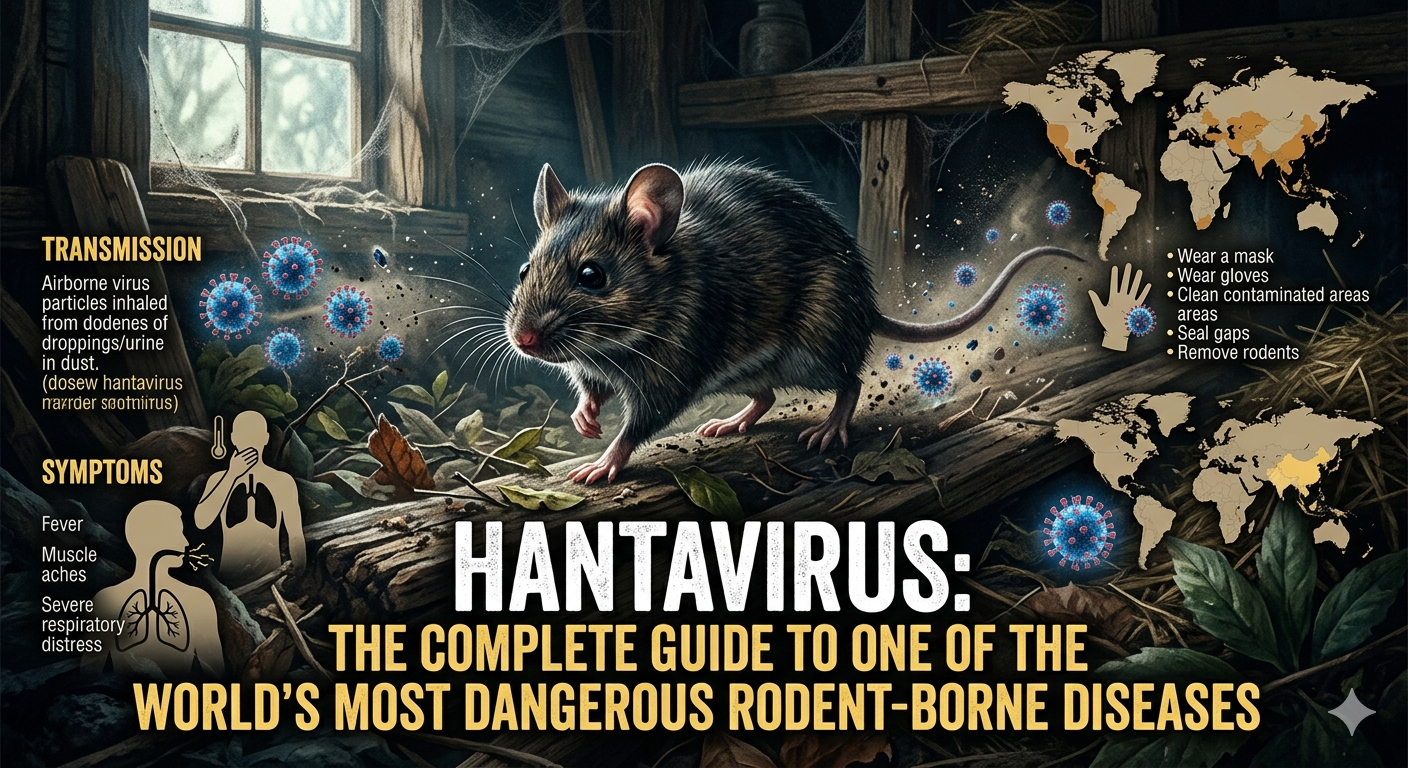
Hantavirus is one of the most feared rodent-borne diseases in the world because of its ability to rapidly turn a mild flu-like illness into a life-threatening medical emergency. Although relatively rare compared to diseases such as influenza or COVID-19, hantavirus infections are known for their high mortality rates, severe respiratory complications, and sudden outbreaks that can alarm public health authorities worldwide.
The disease is caused by a group of viruses carried primarily by rodents. Humans usually become infected through exposure to contaminated rodent urine, droppings, saliva, or airborne particles released into the air. In severe cases, hantavirus can attack the lungs, kidneys, blood vessels, and cardiovascular system, often requiring intensive hospital care.
Over the decades, hantavirus has been linked to deadly outbreaks in Asia, Europe, North America, and South America. Scientific interest in the disease increased dramatically after the 1993 Four Corners outbreak in the United States, where healthy young adults suddenly died from unexplained respiratory failure. Since then, global surveillance systems have improved, but the disease continues to pose a serious threat, particularly in rural and flood-prone regions where human contact with rodents is common.
Recent outbreaks and scientific discussions have also raised concerns about how climate change, environmental disruption, urban expansion, and ecological imbalance may contribute to the spread of rodent-borne diseases like hantavirus. As researchers continue studying the virus, the world remains alert to the possibility of future outbreaks and emerging strains.
Understanding Hantavirus
Hantavirus refers to a group of viruses belonging to the Hantaviridae family. These viruses are classified as zoonotic diseases, meaning they are transmitted from animals to humans. Unlike many infectious diseases that spread primarily from person to person, hantaviruses are mainly carried and spread by rodents.
Different strains of hantavirus exist across the world, and each strain is usually associated with a specific rodent host. Deer mice, cotton rats, rice rats, and bank voles are among the most common carriers. Interestingly, infected rodents generally do not become sick from the virus, allowing them to spread the disease naturally in the environment.
The name “hantavirus” originated from the Hantan River area in South Korea, where thousands of United Nations soldiers during the Korean War developed a mysterious hemorrhagic fever later linked to hantavirus infection. Scientists eventually isolated the virus in the 1970s, leading to decades of research into its biology, transmission, and effects on humans.
Hantaviruses are RNA viruses, meaning their genetic material is composed of ribonucleic acid. RNA viruses are known for their ability to mutate and evolve, which partly explains why numerous strains of hantavirus exist globally.
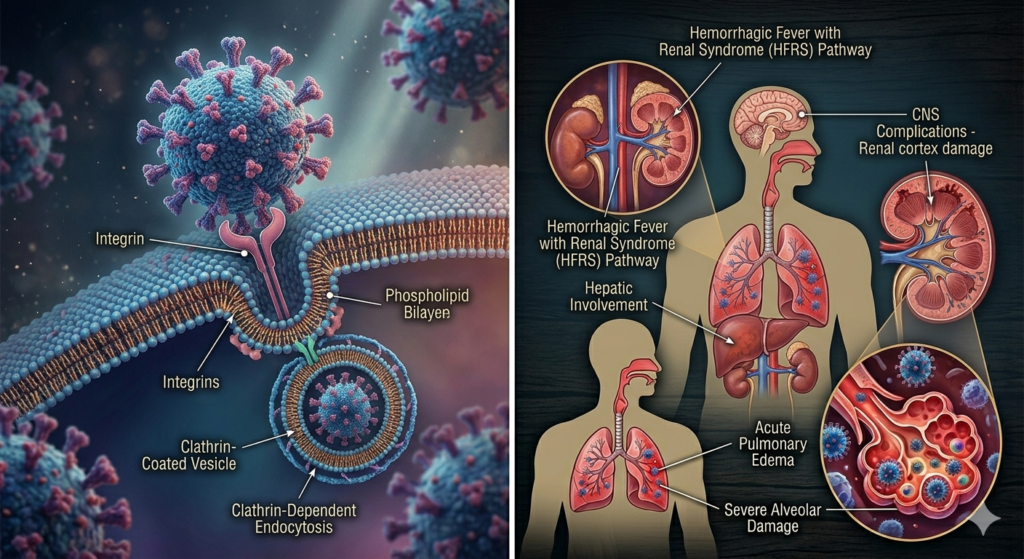
The Two Major Forms of Hantavirus Disease
Hantavirus Pulmonary Syndrome (HPS) or Hantavirus Cardiopulmonary Syndrome (HCPS)
Hantavirus Pulmonary Syndrome is the most widely recognized form of the disease in the Americas. It primarily attacks the lungs and cardiovascular system and is considered extremely dangerous because symptoms can worsen rapidly within hours.
The disease often begins with symptoms that resemble common viral infections, including fever, fatigue, muscle pain, headaches, chills, nausea, and vomiting. Because the early stage resembles influenza or other respiratory illnesses, many cases are initially misdiagnosed.
As the infection progresses, the lungs begin filling with fluid, causing coughing, severe shortness of breath, chest tightness, and respiratory distress. Patients may quickly require oxygen support or mechanical ventilation. In severe cases, blood pressure drops dangerously low, and organ failure may occur.
HPS has one of the highest fatality rates among infectious respiratory diseases. Depending on the strain and healthcare response, mortality rates may range from 30% to 50%.
Hemorrhagic Fever with Renal Syndrome (HFRS)
Hemorrhagic Fever with Renal Syndrome is more common in Europe and Asia. Unlike HPS, which primarily affects the lungs, HFRS mainly damages the kidneys and blood vessels.
Symptoms include high fever, abdominal pain, bleeding tendencies, blurred vision, low blood pressure, and kidney dysfunction. Some patients may develop shock or severe internal bleeding.
Although HFRS generally has a lower mortality rate compared to HPS, severe forms can still be deadly, particularly when diagnosis and treatment are delayed.
How Hantavirus Spreads
The primary source of hantavirus infection is exposure to infected rodents or environments contaminated by rodent waste. Humans most commonly become infected by inhaling tiny airborne particles contaminated with rodent urine, saliva, or droppings.
This often occurs when:
- sweeping or cleaning rodent-infested areas,
- entering abandoned buildings,
- handling contaminated materials,
- disturbing nests,
- or working in poorly ventilated spaces.
Rodent bites can also transmit the virus, although this is less common.
Most hantavirus strains do not spread easily from person to person. However, the Andes virus strain found in South America has shown rare cases of human-to-human transmission, particularly among close family members or intimate contacts.
Occupations and activities associated with increased risk include:
- farming,
- forestry work,
- military exercises,
- pest control,
- camping,
- and disaster cleanup operations.
Flooding events are especially concerning because rising waters often displace rodents into human communities, increasing the likelihood of exposure.
The History of Hantavirus
The history of hantavirus dates back centuries, although scientists only formally identified the virus in the modern era.
Korean War Cases
During the Korean War in the 1950s, more than 3,000 United Nations soldiers developed a mysterious illness characterized by fever, kidney failure, and internal bleeding. Researchers later identified the disease as an early form of Hemorrhagic Fever with Renal Syndrome.
Discovery of the Virus
In the 1970s, scientists successfully isolated the Hantaan virus near the Hantan River in South Korea. This discovery marked a major milestone in virology and infectious disease research.
The 1993 Four Corners Outbreak
One of the most important events in hantavirus history occurred in 1993 in the Four Corners region of the United States, where Arizona, New Mexico, Colorado, and Utah meet.
Healthy young adults suddenly developed severe respiratory failure and died within days. After extensive investigation, scientists identified a previously unknown hantavirus strain later named Sin Nombre virus.
The outbreak shocked the public because of its high fatality rate and mysterious nature. It also dramatically increased global awareness of hantavirus diseases.
Major Hantavirus Outbreaks Around the World
United States
Since 1993, the United States has reported hundreds of hantavirus cases, primarily in western states where deer mice are common. Most infections have occurred in rural or wilderness settings.
Argentina and Chile
South America has experienced multiple outbreaks involving the Andes virus, one of the few hantavirus strains capable of person-to-person transmission. Several outbreaks in Argentina and Chile involved clusters among families and close contacts.
China
China carries one of the largest global burdens of HFRS, reporting thousands of cases annually. Because of this, China has implemented vaccination campaigns and extensive disease monitoring programs.
Europe
Countries such as Finland, Germany, Sweden, France, and Russia regularly report hantavirus infections associated with bank voles and field rodents. Seasonal outbreaks often occur after increases in rodent populations.
Panama and Brazil
Central and South American countries continue reporting sporadic hantavirus outbreaks linked to agriculture, deforestation, and rural exposure.
Recent 2025–2026 Cases
Recent outbreaks in Argentina and South America have renewed global concern. Health authorities have investigated rising infections potentially linked to environmental and climate-related changes affecting rodent populations.
In 2026, international health agencies monitored reports connected to a cruise ship outbreak involving suspected hantavirus exposure, leading to multinational contact tracing efforts and heightened public attention.
Symptoms and Disease Progression
The incubation period for hantavirus may range from one to eight weeks after exposure.
Early Symptoms
Initial symptoms usually resemble common viral illnesses and may include:
- fever,
- muscle aches,
- fatigue,
- headache,
- chills,
- dizziness,
- nausea,
- vomiting,
- abdominal pain.
Advanced Symptoms
As the disease worsens, patients may develop:
- coughing,
- severe breathing difficulty,
- chest tightness,
- fluid accumulation in the lungs,
- kidney failure,
- internal bleeding,
- shock,
- cardiovascular collapse.
Because early symptoms resemble flu, COVID-19, dengue, or pneumonia, diagnosis can sometimes be delayed until the disease becomes severe.
Diagnosis and Medical Testing
Diagnosing hantavirus can be difficult because its symptoms overlap with many other illnesses.
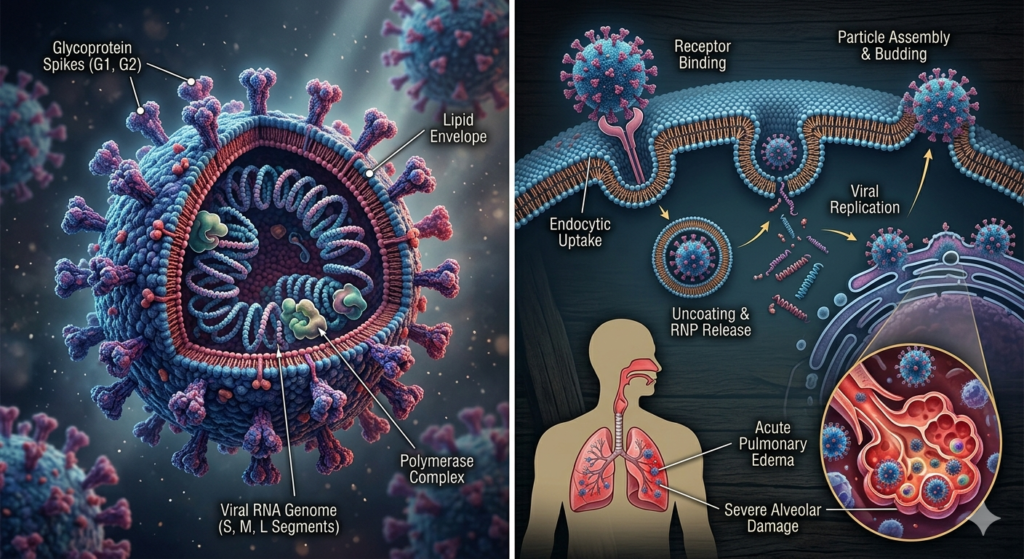
Doctors usually consider:
- recent rodent exposure,
- occupation,
- travel history,
- environmental conditions,
- and symptom progression.
Laboratory testing includes:
- antibody tests,
- serology,
- RT-PCR testing,
- viral RNA detection.
Healthcare workers handling suspected hantavirus samples must follow strict biosafety precautions because of the virus’s potential severity.
Treatment and Medical Management
Currently, there is no universally approved antiviral cure specifically for hantavirus infection.
Treatment focuses primarily on supportive care, including:
- oxygen therapy,
- intravenous fluids,
- intensive monitoring,
- mechanical ventilation,
- kidney support,
- cardiovascular stabilization.
Early hospitalization significantly improves survival chances. Patients who receive intensive care before severe respiratory failure develops often have better outcomes.
Researchers continue studying experimental antiviral drugs, immune therapies, and vaccine candidates.
Mortality Rates and Public Health Impact
Hantavirus is considered one of the deadliest rodent-borne diseases because of its high fatality rate and rapid progression.
HPS cases may kill up to half of infected patients in severe outbreaks, while HFRS mortality rates vary depending on the viral strain involved.
Beyond physical illness, outbreaks also create:
- economic burdens,
- healthcare strain,
- public fear,
- misinformation,
- and psychological stress.
Communities affected by outbreaks often face social disruption and anxiety due to the disease’s sudden and severe nature.
Prevention and Safety Measures
Preventing hantavirus primarily involves reducing exposure to rodents and contaminated environments.
Rodent Control
Key prevention methods include:
- sealing holes and gaps in buildings,
- removing food sources,
- proper garbage disposal,
- safe food storage,
- controlling rodent infestations.
Safe Cleaning Procedures
Experts strongly advise against dry sweeping rodent droppings because this can release contaminated particles into the air.
Recommended cleaning practices include:
- spraying disinfectant first,
- wearing gloves and masks,
- using proper ventilation,
- disposing contaminated materials safely.
Community Awareness
Public education campaigns are essential, especially in:
- rural areas,
- flood-prone communities,
- farms,
- and disaster zones.
Climate Change and Environmental Concerns
Scientists increasingly study how climate change may affect hantavirus outbreaks.
Changes in rainfall, temperature, and food availability can increase rodent populations and alter their migration patterns. Deforestation, urban expansion, and habitat destruction may also force rodents into closer contact with humans.
Some researchers believe climate-related ecological disruptions may contribute to increasing exposure risks in certain regions.
Hantavirus in the Philippines
The Philippines has reported limited confirmed hantavirus cases compared to other countries in Asia and the Americas. However, rodent-borne diseases remain a significant public health concern due to:
- flooding,
- dense urban populations,
- poor sanitation in some communities,
- and tropical environmental conditions.
Flood-prone areas are particularly vulnerable because displaced rodents may invade homes and evacuation centers during disasters.
Philippine health authorities continue monitoring emerging infectious diseases while strengthening surveillance and disaster-response systems.
Hantavirus Compared to Other Diseases
Hantavirus is often confused with other illnesses because of overlapping symptoms.
Hantavirus vs COVID-19
Both diseases can cause respiratory symptoms, but hantavirus does not spread nearly as easily between humans.
Hantavirus vs Dengue
Both may involve fever and body pain, but dengue is mosquito-borne while hantavirus is rodent-borne.
Hantavirus vs Leptospirosis
Both diseases are associated with rodents and flooding, but leptospirosis is caused by bacteria rather than viruses.
Myths and Misinformation
Public fear often leads to misinformation during outbreaks.
Common myths include:
- “All rodents carry hantavirus.”
- “Hantavirus spreads like COVID-19.”
- “Every hantavirus infection is fatal.”
In reality:
- not all rodents carry the virus,
- most strains rarely spread person-to-person,
- and early medical care greatly improves survival.
Reliable information should come from reputable medical institutions such as:
- the World Health Organization (WHO),
- the Centers for Disease Control and Prevention (CDC),
- the Mayo Clinic,
- and peer-reviewed scientific journals.
Current Research and the Future of Hantavirus Studies
Scientists continue studying hantavirus in hopes of developing:
- effective vaccines,
- targeted antiviral drugs,
- faster diagnostic tools,
- and improved outbreak prediction systems.
Global surveillance efforts now focus heavily on environmental monitoring, rodent population studies, and early detection systems.
Researchers also continue examining how climate change, ecological disruption, and urbanization may influence future outbreaks.
Conclusion
Hantavirus remains one of the world’s most dangerous and mysterious rodent-borne diseases. Although relatively rare, its ability to cause sudden respiratory failure, kidney damage, and high mortality makes it a major concern for global public health authorities.
The history of hantavirus outbreaks demonstrates the importance of scientific research, rapid medical response, environmental awareness, and public education. From the Korean War to modern outbreaks in the Americas and Europe, the disease has repeatedly shown how closely human health is connected to environmental conditions and wildlife ecosystems.
As climate change, urban expansion, and ecological disruption continue reshaping the world, experts warn that rodent-borne diseases may become increasingly important in global health discussions. Prevention, early diagnosis, accurate public information, and international cooperation will remain essential in reducing the risks posed by hantavirus in the future.