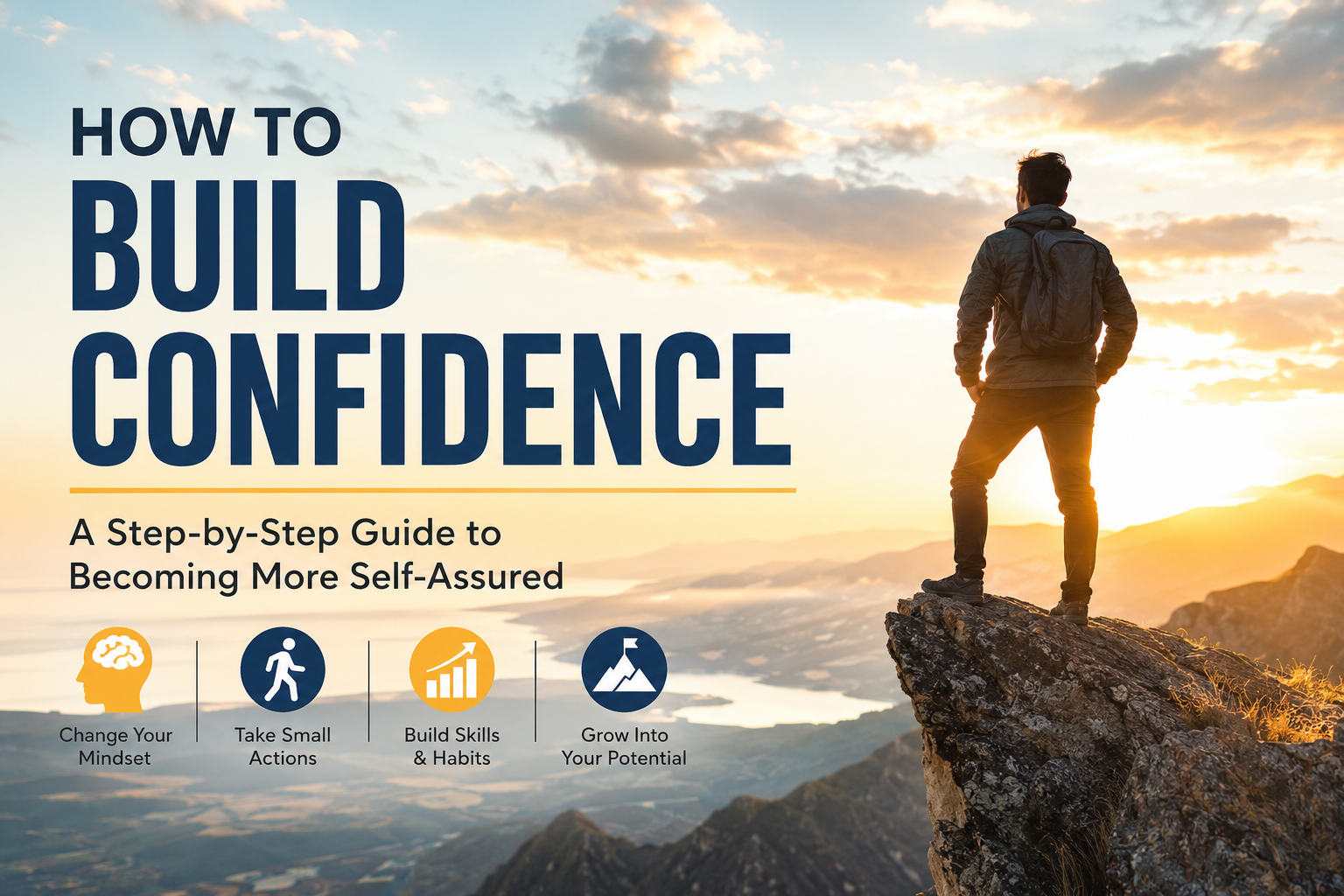
Confidence often looks mysterious from the outside. We see people speaking comfortably in front of crowds, introducing themselves without hesitation, expressing opinions with certainty, or walking into unfamiliar situations with apparent ease. It can seem as if some people were simply born with confidence while others were not.
But confidence rarely works that way.
Many people who appear naturally confident once struggled with insecurity, fear, and self-doubt. The difference is not that they were born with some invisible advantage. More often, they gradually developed habits, experiences, and ways of thinking that strengthened their belief in themselves.
Confidence affects nearly every area of life. It influences relationships, career growth, communication, decision-making, and even mental well-being. People with healthy confidence often take more opportunities because they trust themselves enough to try.
The encouraging truth is this: confidence is not a personality trait. It is a skill.
And like any skill, it can be developed.
This guide will walk through practical, research-backed methods and step-by-step strategies to help build confidence in a realistic and sustainable way.
Part I: Understanding Confidence Before Trying to Build It
What Confidence Really Means
Before learning how to build confidence, it helps to understand what confidence actually is.
Confidence is trust in your ability to handle situations, solve problems, and adapt when things become difficult.
Notice that confidence is not the belief that everything will go perfectly.
Confident people do not assume they will always succeed. Instead, they believe:
“Even if things go wrong, I can handle it.”
That distinction matters.
Confidence vs. Arrogance
Confidence and arrogance are often confused.
Confidence says:
“I know my strengths and weaknesses.”
Arrogance says:
“I am better than everyone else.”
Confident people do not need to constantly prove themselves because their self-worth is not dependent on appearing superior.
Confidence vs. Self-Esteem
Self-esteem refers to how much value you place on yourself.
Confidence refers to how much trust you have in your abilities.
Someone can think they are a worthwhile person yet still feel nervous about public speaking.
Likewise, a person may feel highly confident at work but struggle socially.
Confidence can change depending on the situation.
Confidence vs. Competence
Confidence without skill often disappears under pressure.
Imagine someone who feels confident about playing piano without practicing. Once they perform in front of an audience, reality may quickly expose weaknesses.
Real confidence often grows from competence.
The more capable you become, the stronger your confidence becomes.
The Science Behind Confidence
Human brains are designed for survival.
Long ago, social rejection could threaten survival because humans depended on groups for protection. Because of this, our brains became highly sensitive to embarrassment, criticism, and judgment.
Even today, many fears involve social situations:
- Fear of speaking publicly
- Fear of rejection
- Fear of criticism
- Fear of failure
Our brains often interpret these experiences as threats.
This explains why confidence can feel difficult.
The Confidence Cycle
Many people believe confidence comes first.
But confidence usually develops in a different order:
Action → Small success → Evidence → Increased confidence → Bigger action
This cycle explains why waiting to feel confident before acting rarely works.
Confidence often arrives after action.
Not before.
Why People Lose Confidence
Confidence problems often have roots.
Negative childhood experiences
Repeated criticism or discouragement can shape beliefs about ourselves.
Children who constantly hear:
“You always mess things up.”
may begin carrying that message into adulthood.
Constant criticism
Harsh environments can slowly erode self-belief.
Over time, criticism becomes internalized.
Eventually, people criticize themselves even when nobody else does.
Social comparison
Modern life encourages constant comparison.
Social media presents edited highlights rather than ordinary reality.
People compare their behind-the-scenes struggles with other people’s best moments.
This almost always damages confidence.
Failure and embarrassment
Painful experiences can create fear of repeating mistakes.
People sometimes conclude:
“I failed once, so I must be incapable.”
But single events rarely define ability.
Perfectionism
Perfectionists often believe:
“Anything less than perfect equals failure.”
Because perfection is impossible, confidence becomes fragile.
Part II: Step-by-Step System to Build Confidence
Step 1: Identify Where Your Lack of Confidence Comes From
Confidence problems are rarely universal.
Someone may feel confident at work yet anxious socially.
Others may feel confident with friends but struggle during presentations.
Start by identifying patterns.
Ask yourself:
- When do I feel insecure?
- What situations do I avoid?
- Who makes me feel smaller?
- What am I afraid will happen?
Confidence inventory exercise
Write answers to:
- Situations that make you nervous
- Fears connected to them
- Evidence supporting those fears
- Evidence against them
Awareness creates clarity.
Clarity creates change.
Step 2: Catch Negative Self-Talk
Every person has an internal voice.
Unfortunately, that voice can become harsh.
Examples:
“I always fail.”
“Nobody wants to hear my opinion.”
“People will laugh at me.”
The problem is that thoughts often feel true even when they are inaccurate.
Thoughts are not facts.
Try this exercise:
| Negative Thought | Reality Check | Better Alternative |
|---|---|---|
| I always mess up | I succeeded before | I am still learning |
| People dislike me | I have supportive friends | Not everyone has to like me |
This process trains the brain to challenge automatic assumptions.
Step 3: Stop Waiting to Feel Ready
Many people secretly believe:
“Once I become confident, then I will act.”
Unfortunately, this creates paralysis.
Because confidence often comes after action.
Think of riding a bicycle.
Nobody becomes confident before starting.
Confidence develops after practice.
The same applies to:
- Speaking publicly
- Applying for jobs
- Meeting people
- Learning skills
Take action before confidence arrives.
This is the courage-before-confidence principle.
Step 4: Use the Small Wins Strategy
Large goals can overwhelm the brain.
Instead of:
“Become socially confident.”
Try:
Day 1:
Say hello to one person.
Day 2:
Ask a simple question.
Day 3:
Join a short conversation.
Tiny successes create evidence.
The brain starts thinking:
“Maybe I can do this.”
Small wins gradually reshape identity.
Step 5: Build Competence
Confidence becomes stronger when supported by ability.
If someone wants confidence during interviews, preparation matters.
Possible actions:
- Practice common questions
- Improve communication skills
- Research employers
- Learn through repetition
Skill-building removes uncertainty.
The better prepared you become, the less fear controls you.
Step 6: Become Comfortable With Discomfort
Growth often feels awkward.
Many people assume discomfort means:
“Something is wrong.”
Not necessarily.
Discomfort often means:
“Something is new.”
Examples:
- First presentation
- First interview
- First date
- First public speech
Create weekly discomfort challenges:
- Ask a question in class
- Start conversations
- Try a new hobby
- Volunteer for responsibilities
Confidence expands beyond comfort zones.
Step 7: Stop Comparing Yourself to Everyone Else
Comparison creates distorted thinking.
Someone else’s success does not reduce your value.
Social media especially creates unrealistic standards.
You may see:
- Promotions
- Vacations
- Achievements
- Relationships
You rarely see:
- Failures
- Rejections
- Anxiety
- Doubt
Compare yourself to your past self instead.
Ask:
“Am I stronger than I was six months ago?”
That comparison is healthier and more useful.
Step 8: Improve Body Language
The body influences emotions more than people realize.
When nervous, many people:
- Look downward
- Avoid eye contact
- Shrink physically
- Speak quickly
Small adjustments matter.
Practice:
- Standing upright
- Maintaining comfortable eye contact
- Relaxing shoulders
- Speaking slower
- Taking deeper breaths
Body language affects both how others see you and how you feel internally.
Step 9: Build Physical Habits That Support Confidence
Mental confidence and physical habits are connected.
Exercise
Movement improves mood and energy.
Regular activity often reduces stress and creates feelings of accomplishment.
Sleep
Lack of sleep affects emotions.
People who are exhausted often become more anxious and self-critical.
Nutrition
Energy levels influence thinking.
Poor nutrition can contribute to low energy and decreased motivation.
Personal care
Simple habits matter:
- Hygiene
- Grooming
- Wearing clothes that make you feel comfortable
Self-care sends a message:
“I matter.”
Step 10: Create a Confidence Routine
Confidence grows through repetition.
Morning routine ideas:
- Review goals
- Read encouraging reminders
- Exercise briefly
- Visualize success
Evening routine:
Write:
Three small wins today
Examples:
- Spoke up during a meeting
- Introduced myself
- Finished difficult work
Small evidence accumulates.
Part III: Confidence in Specific Areas of Life
How to Build Social Confidence
Social confidence improves through practice.
Helpful strategies:
- Ask questions
- Focus on listening
- Stay curious
- Shift attention outward
People often become anxious because they focus excessively on themselves.
Instead of:
“How am I being judged?”
Try:
“What can I learn about this person?”
How to Build Confidence at Work
Ways to improve:
- Speak once during meetings
- Volunteer ideas
- Learn new skills
- Ask questions
Confidence at work grows through contribution.
How to Build Confidence in Public Speaking
Gradual exposure works best:
Step 1: Practice alone
Step 2: Practice with friends
Step 3: Speak in small groups
Step 4: Increase audience size
Progressive steps reduce fear.
How to Build Confidence in Dating and Relationships
Many people fear rejection.
But rejection does not determine worth.
Healthy confidence in relationships comes from authenticity.
Trying too hard to impress people often creates pressure.
Being genuine creates stronger connections.
Common Mistakes People Make
Expecting overnight results
Confidence develops gradually.
Small improvements matter.
Seeking validation from everyone
No one receives approval from everyone.
Trying to please everybody creates exhaustion.
Trying to eliminate fear
Confidence does not eliminate fear.
Confident people often feel afraid too.
They simply act anyway.
Believing setbacks erase progress
Bad days happen.
Failure happens.
Embarrassment happens.
Temporary struggles do not erase growth.

Expanded Guide: The 30-Day Confidence Challenge
The purpose of a confidence challenge is not to transform your personality in a month or force yourself into uncomfortable situations all at once. Its goal is to create repeated experiences that teach your brain an important lesson:
“I can do difficult things, and I can survive discomfort.”
Confidence develops through evidence. Every challenge below is designed to help create that evidence gradually.
Week 1: Awareness Week — Understand Your Confidence Patterns
Before fixing a confidence problem, you first need to understand it. Many people simply say, “I lack confidence,” but confidence struggles are often more specific than that.
You may feel:
- Confident with close friends but anxious around strangers
- Confident at work but uncomfortable in meetings
- Confident online but shy in person
This week focuses on observing yourself instead of judging yourself.
Goal:
Identify what triggers insecurity and understand the thoughts behind it.
Day 1: Create a Confidence Journal
Find a notebook or use your phone.
Write:
- Situations where you felt confident
- Situations where you felt uncomfortable
- Your emotions during those moments
Example:
Situation: Team meeting
Feeling: Nervous
Thought: “Everyone probably knows more than I do.”
Do not attempt to change anything yet.
Simply collect information.
Think of yourself as a researcher studying your own habits.
Day 2: Notice Negative Self-Talk
Throughout the day, pay attention to your inner dialogue.
Examples:
- “I always say stupid things.”
- “People probably think I am awkward.”
- “I am not good enough.”
Most people never notice how often they criticize themselves.
Awareness is important because you cannot change thoughts you do not recognize.
Day 3: Identify Your Confidence Triggers
Ask:
- Who makes me feel small?
- What environments make me uncomfortable?
- What situations cause anxiety?
Examples:
- Large groups
- Authority figures
- Social gatherings
- Public speaking
- Interviews
Patterns often appear quickly.
Day 4: List Your Strengths
Many insecure people can quickly list weaknesses but struggle to identify strengths.
Write at least:
- Skills
- Positive qualities
- Achievements
- Personal traits
Examples:
- Good listener
- Responsible
- Helpful
- Creative
- Hard-working
No strength is too small.
Day 5: Ask Someone You Trust
Ask a friend, family member, or colleague:
“What strengths do you think I have?”
People often notice positive qualities we overlook.
You may discover strengths you never considered.
Day 6: Identify Avoidance Behaviors
Write situations you avoid.
Examples:
- Speaking in meetings
- Introducing yourself
- Asking questions
- Joining conversations
Avoidance protects comfort temporarily but often strengthens fear.
Day 7: Weekly Reflection
Answer:
- What situations repeatedly triggered insecurity?
- Which thoughts appeared often?
- What surprised me?
Awareness creates a map for improvement.
Without a map, progress becomes random.
Week 2: Small Actions Week — Build Momentum Through Tiny Wins
Now that you understand your patterns, it is time to act.
This week uses small, manageable challenges.
Many people fail because they attempt huge changes immediately.
Tiny actions build confidence more effectively.
Goal:
Train your brain to associate action with success.
Day 8: Make Eye Contact More Often
During conversations:
Maintain eye contact slightly longer than usual.
Not staring.
Just comfortable attention.
Eye contact communicates:
- Presence
- Engagement
- Confidence
Start with short interactions.
Day 9: Smile and Say Hello First
Initiate interaction.
Examples:
- Greet coworkers
- Say hello to neighbors
- Thank service staff warmly
Many people wait for others to act first.
Today you become the initiator.
Day 10: Ask One Question
Questions reduce pressure because attention shifts away from yourself.
Examples:
- “How was your weekend?”
- “How long have you worked here?”
- “What got you interested in that?”
Curiosity builds social confidence.
Day 11: Share One Opinion
Express a small opinion.
Examples:
- Recommend a movie
- Share a thought in class
- Offer input during a discussion
The goal is to practice taking up space.
Day 12: Compliment Someone
Offer a genuine compliment.
Examples:
- “That presentation was really clear.”
- “You explain things well.”
Giving compliments creates positive interaction and reduces social fear.
Day 13: Start a Short Conversation
Even 30–60 seconds counts.
Examples:
- Ask a cashier about their day
- Talk to a coworker
- Speak with a classmate
Do not focus on performance.
Focus on participation.
Day 14: Reflection Day
Write:
- Which actions felt easiest?
- Which felt uncomfortable?
- What happened compared to what you feared?
Often reality turns out less frightening than expected.
Week 3: Skill-Building Week — Build Real Confidence Through Competence
Confidence becomes stronger when supported by ability.
This week focuses on improving something meaningful.
Goal:
Develop proof that you can improve.
Choose one skill:
- Speaking
- Writing
- Fitness
- Leadership
- Communication
- Learning
- Creativity
Day 15–16: Learn the Basics
Spend time studying your chosen skill.
Examples:
- Watch educational videos
- Read articles
- Practice fundamentals
Knowledge reduces uncertainty.
Day 17–18: Practice Imperfectly
Do not wait for ideal conditions.
Start immediately.
Examples:
- Speak despite nervousness
- Write despite imperfections
- Exercise even if beginner level
Action matters more than perfection.
Day 19–20: Seek Feedback
Ask:
“What is one thing I can improve?”
Feedback can feel uncomfortable.
But growth often lives outside comfort.
Day 21: Reflection
Write:
- What improved?
- What felt difficult?
- What did I learn?
Progress—not perfection—is the goal.
Week 4: Bigger Challenges Week — Expand Your Comfort Zone
This week increases difficulty slightly.
You are not trying to become fearless.
You are teaching yourself:
“I can handle more than I thought.”
Goal:
Take meaningful action despite uncertainty.
Day 22: Speak Up Once
Examples:
- Ask a question
- Share an idea
- Participate during discussion
One contribution is enough.
Day 23: Introduce Yourself First
Initiate interaction.
Examples:
“Hi, I’m ______.”
Simple actions often feel larger than they actually are.
Day 24: Try Something New
Examples:
- Attend an event
- Join a club
- Take a class
- Visit a new place
Novel experiences stretch comfort zones.
Day 25: Face a Small Fear
Examples:
- Make a phone call
- Ask for help
- Speak publicly
Choose something mildly uncomfortable—not overwhelming.
Day 26: Do Something Alone
Examples:
- Eat at a café
- Watch a movie
- Explore somewhere new
Being comfortable alone strengthens independence.
Day 27: Attempt Something You Usually Avoid
Return to your Week 1 avoidance list.
Choose one item.
Take one step.
Day 28–30: Final Reflection
Answer:
- What challenges surprised me?
- What fears became smaller?
- Which strengths did I discover?
- What actions felt easier compared to Day 1?
Then write one final sentence:
“Confidence for me now means…”
You may realize confidence is not becoming fearless.
It is becoming willing to act despite uncertainty.
That realization changes everything.
Final Thoughts: Confidence Is Built, Not Discovered

People often imagine confidence as something hidden deep inside, waiting to be uncovered.
But confidence is usually built—not found.
You do not become confident and then act.
You act.
You survive discomfort.
You collect evidence.
You improve.
And over time, confidence slowly becomes part of who you are.
The most confident people are not necessarily fearless.
They simply learned something important:
Fear does not always need to disappear before you move forward.