Introduction
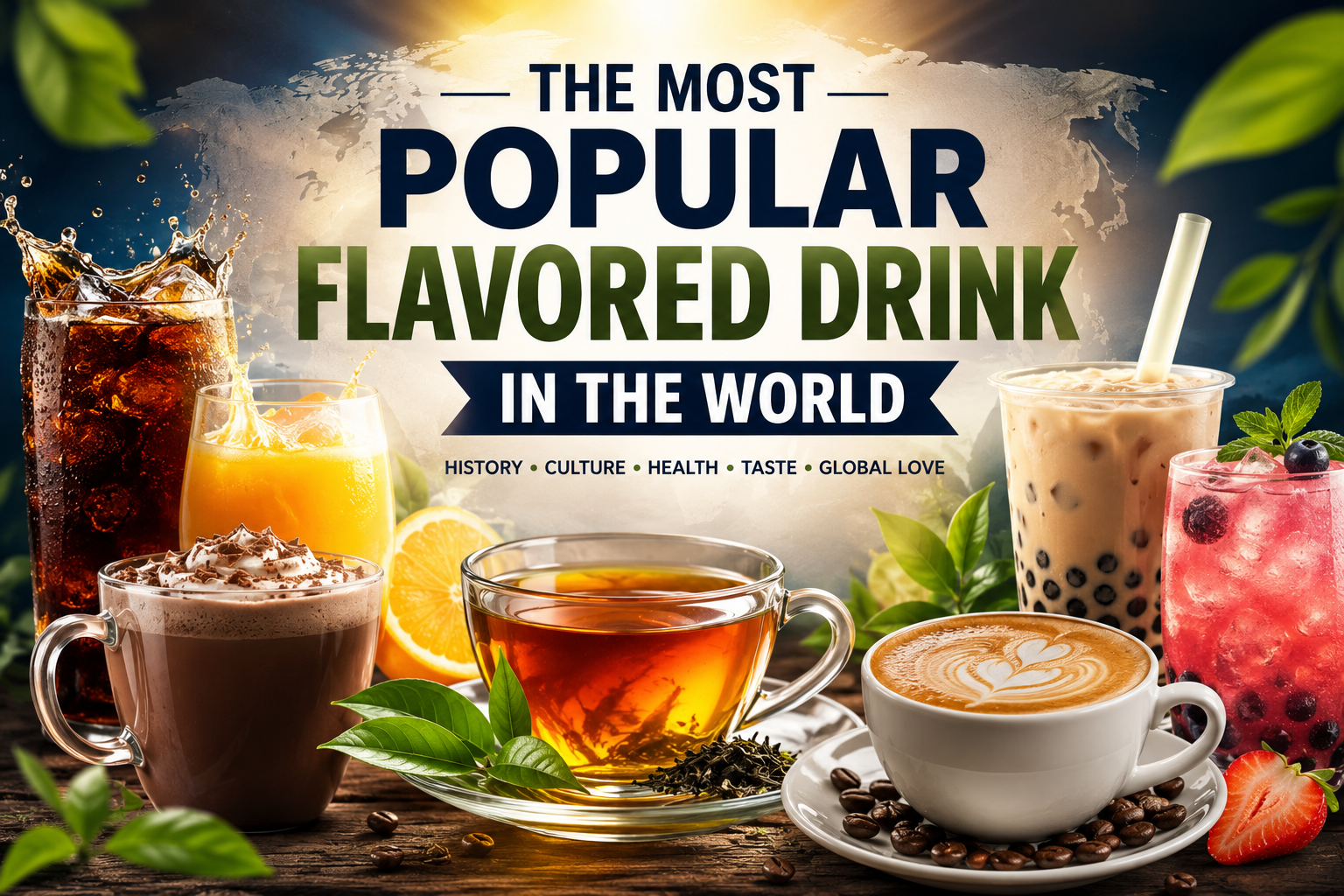
From the earliest human civilizations to the modern digital age, flavored drinks have played an essential role in daily life. They refresh the body, stimulate the mind, create social connections, and even symbolize cultural identity. Across continents and generations, people gather around drinks to celebrate, relax, negotiate, worship, and connect with others. A simple cup of tea, coffee, juice, or soda often carries centuries of history and tradition within it.
Today, the global beverage industry is one of the largest and most influential industries in the world. Billions of people consume flavored beverages every day, creating a market worth trillions of dollars. Beverage companies shape economies, agriculture, advertising, entertainment, and even international trade. Drinks have become more than simple refreshments—they are cultural icons.
Yet one question continues to spark debate worldwide: What is the best and most popular flavored drink in the world?
The answer depends on how popularity and quality are measured. Some beverages dominate through sheer global consumption, while others earn recognition because of their flavor, health benefits, cultural value, or emotional connection to people. Tea, coffee, soft drinks, juices, and many other beverages all compete for this title in different ways.
This article explores the history, science, culture, business, and global influence of flavored drinks in order to determine which beverage truly deserves to be called the world’s best and most popular flavored drink.
Understanding Flavored Drinks
What Is a Flavored Drink?
A flavored drink is any beverage enhanced with taste beyond plain water. These flavors may come naturally from plants, fruits, herbs, spices, milk, or fermentation, or they may be artificially created through chemical flavoring and sweeteners.
Flavored beverages exist in countless forms:
- Hot drinks
- Cold drinks
- Carbonated beverages
- Dairy-based beverages
- Fruit-based drinks
- Alcoholic beverages
- Energy and wellness drinks
Unlike plain water, flavored drinks stimulate multiple senses simultaneously. Taste, aroma, color, texture, and temperature combine to create a more complex experience.
Modern beverages generally fall into two categories:
Natural Flavored Drinks
These include beverages flavored by real ingredients such as:
- Tea leaves
- Coffee beans
- Fruits
- Herbs
- Cocoa
- Milk
- Spices
Natural drinks are often associated with authenticity and health benefits.
Artificially Flavored Drinks
These beverages rely heavily on:
- Artificial sweeteners
- Chemical flavor compounds
- Preservatives
- Synthetic coloring
Many sodas and commercial beverages fall into this category because they are cheaper to mass-produce and have longer shelf lives.
The History of Flavored Beverages
Human beings have flavored drinks for thousands of years. Ancient civilizations quickly discovered that adding herbs, fruits, or leaves to water improved both taste and medicinal value.
Ancient Civilizations
In ancient China, tea drinking emerged more than 4,000 years ago. According to legend, tea was discovered accidentally when leaves fell into boiling water prepared for Emperor Shen Nong.
Ancient Egyptians created flavored drinks using herbs and fermented grains. The Greeks and Romans mixed water with fruits, spices, and wine.
Rise of Tea and Coffee Cultures
Tea became deeply rooted in Asian cultures, especially in China and Japan, where elaborate tea ceremonies developed. Coffee emerged later in Ethiopia and spread through the Middle East into Europe.
Coffeehouses became centers of politics, philosophy, and intellectual discussion during the 17th and 18th centuries.
Industrial Revolution and Mass Production
The Industrial Revolution transformed beverages from local traditions into massive industries. Carbonated drinks, bottled juices, and canned beverages became available worldwide.
Modern Beverage Innovation
Today, beverage innovation includes:
- Sugar-free drinks
- Functional wellness beverages
- Plant-based milk
- Energy drinks
- AI-developed flavor combinations
Modern consumers now seek drinks that provide not only flavor but also health, convenience, and lifestyle identity.
Why Humans Love Flavored Drinks
Humans are biologically wired to enjoy pleasurable flavors. Sweetness signals energy-rich food, while bitterness often warns against toxins. Beverage companies and traditional drink makers have long understood this psychology.
Taste and Emotion
Drinks are strongly linked to memory and emotion. A cup of tea may remind someone of family traditions, while coffee may symbolize productivity and adulthood.
Social Rituals
Many societies use beverages as social tools:
- Tea ceremonies in Japan
- Coffee gatherings in Europe
- Wine at celebrations
- Cocktails at social events
Drinks often represent hospitality, friendship, and community.
Sensory Experience
Temperature, aroma, texture, and flavor complexity make beverages emotionally satisfying. This explains why flavored drinks became deeply embedded in human culture.
Criteria for Determining the “Best” and “Most Popular” Drink
Popularity Factors
A beverage’s popularity can be measured through:
- Daily consumption
- Number of countries where it is consumed
- Brand recognition
- Economic value
- Cultural presence
Tea and coffee consistently rank among the most consumed flavored beverages worldwide.
Quality and “Best” Factors
Determining the “best” drink is more subjective. Important factors include:
- Flavor complexity
- Health benefits
- Cultural significance
- Accessibility
- Consumer satisfaction
- Versatility
A drink consumed by billions may not necessarily be considered the “best” by taste enthusiasts.
The Role of Marketing and Media
Advertising has transformed beverages into global cultural symbols.
Soft drink companies use:
- Celebrity endorsements
- Sports sponsorships
- Social media campaigns
- Emotional storytelling
Coffee chains market lifestyle and identity, while tea brands increasingly focus on wellness and mindfulness.
Modern popularity is heavily influenced not only by taste but also by branding and social influence.
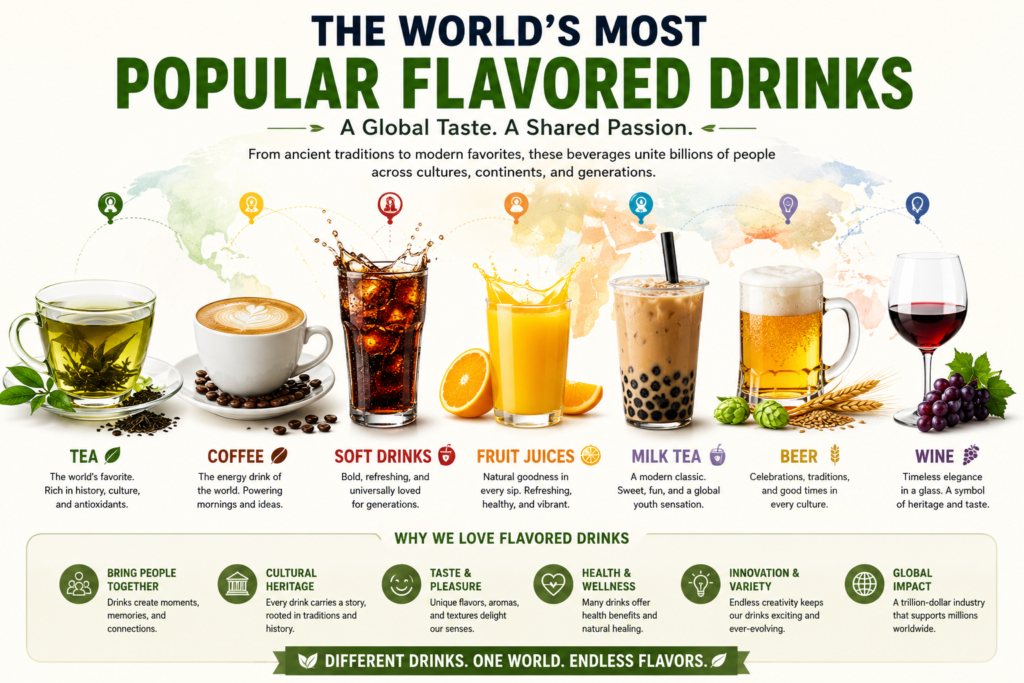
The World’s Most Popular Flavored Drinks
Tea: The Global Champion
History and Origins of Tea
Tea began in ancient China and eventually spread throughout Asia, Europe, Africa, and the Americas. It became deeply woven into religion, medicine, politics, and trade.
The tea trade helped shape world history and even contributed to wars and colonization.
Types of Tea
Tea exists in extraordinary variety:
Green Tea
Known for freshness and antioxidants.
Black Tea
Strong, bold, and widely consumed globally.
White Tea
Lightly processed and delicate in flavor.
Oolong Tea
Complex and partially fermented.
Herbal Tea
Technically not true tea but herbal infusions.
Milk Tea and Bubble Tea
Modern variations especially popular among younger consumers.
Why Tea Is So Popular
Tea is arguably the most globally consumed flavored drink because:
- It is affordable
- It exists in nearly every culture
- It offers endless flavor variety
- It has strong health associations
- It can be consumed hot or cold
Tea appeals to both traditional and modern consumers.
Countries with Strong Tea Culture
China
Tea is deeply tied to philosophy and hospitality.
India
Chai is a national daily tradition.
Japan
Tea ceremonies emphasize discipline and mindfulness.
United Kingdom
Tea symbolizes comfort and social interaction.
Turkey and Morocco
Tea represents hospitality and cultural identity.
Tea as the “Best” Flavored Drink
Tea combines:
- Flavor complexity
- Cultural richness
- Health benefits
- Relaxation
- Accessibility
For many experts, tea represents the strongest candidate for the world’s best flavored drink.
Coffee: The World’s Energy Drink
Origins and Global Expansion
Coffee originated in Ethiopia before spreading through the Arab world into Europe and eventually the Americas.
Coffeehouses became major centers of intellectual life during the Enlightenment period.
Different Coffee Styles
Coffee evolved into numerous styles:
- Espresso
- Cappuccino
- Latte
- Americano
- Cold brew
- Flavored coffee beverages
Each preparation method creates unique flavor experiences.
Why Coffee Dominates Many Markets
Coffee became essential to modern productivity culture. Millions of people begin their day with caffeine.
Coffee’s popularity comes from:
- Energy stimulation
- Rich aroma
- Social café culture
- Premium artisan movements
Coffee also benefits from powerful global branding.
Health Benefits and Concerns
Studies suggest coffee may:
- Improve alertness
- Contain antioxidants
- Support cognitive performance
However, excessive caffeine may lead to:
- Anxiety
- Insomnia
- Heart palpitations
Moderation remains important.
Coffee vs Tea Debate
The debate between coffee and tea reflects cultural and personal differences.
Tea is often associated with:
- Calmness
- Tradition
- Wellness
Coffee is linked with:
- Productivity
- Urban lifestyle
- Energy
Both beverages dominate globally in different ways.
Soft Drinks and Sodas
The Rise of Carbonated Drinks
Carbonated beverages exploded during the 20th century through mass advertising and industrial bottling.
Soda became associated with:
- Entertainment
- Fast food
- Youth culture
- Convenience
Famous Soft Drinks
Popular soda categories include:
- Cola beverages
- Lemon-lime sodas
- Orange sodas
- Energy sodas
Global brands turned sodas into cultural icons.
Why Soft Drinks Became So Popular
Their popularity comes from:
- Sweet taste
- Addictive sugar-caffeine combinations
- Strong advertising
- Wide accessibility
Soft drinks became symbols of modern consumer culture.
Health Concerns
High sugar content has raised serious concerns regarding:
- Obesity
- Diabetes
- Tooth decay
- Cardiovascular disease
As health awareness grows, soda consumption is declining in some countries.
Fruit Juices and Smoothies
Natural Fruit-Based Drinks
Fruit beverages remain popular because they feel fresh and healthy.
Examples include:
- Orange juice
- Mango juice
- Apple juice
- Pineapple juice
Nutritional Benefits
Juices contain:
- Vitamins
- Minerals
- Antioxidants
However, commercial juices may also contain high sugar levels.
Global Appeal
Tropical countries especially embrace fruit drinks because of climate and agricultural abundance.
Smoothies also became popular through fitness and wellness trends.
Milk-Based and Dessert Drinks
Chocolate Drinks
Chocolate beverages trace back to ancient Mesoamerican civilizations. Today they exist as:
- Hot chocolate
- Chocolate milk
- Frozen cocoa drinks
Chocolate drinks are associated with comfort and indulgence.
Bubble Tea
Originating in Taiwan, bubble tea became a global phenomenon because of:
- Creative flavors
- Tapioca pearls
- Visual appeal
- Social media popularity
Young consumers especially embraced bubble tea culture.
Fermented Dairy Drinks
Drinks such as kefir and lassi combine flavor with probiotic benefits.
These beverages are increasingly popular among health-conscious consumers.
Alcoholic Flavored Drinks
Beer
Beer is the most consumed alcoholic beverage worldwide. It exists in thousands of styles:
- Lager
- Ale
- Stout
- IPA
Beer culture is deeply connected to festivals and social gatherings.
Wine
Wine symbolizes refinement, tradition, and craftsmanship.
Wine cultures dominate regions such as:
- France
- Italy
- Spain
Cocktails
Cocktails showcase creativity through flavor mixing and presentation.
Modern mixology transformed cocktails into luxury experiences.
Regional Favorites Around the World
Asia
Tea remains dominant, while bubble tea and herbal drinks continue growing rapidly.
Europe
Coffeehouses and wine traditions define beverage culture.
North America
Soft drinks, coffee, and energy drinks dominate consumption.
South America
Yerba mate and coffee are culturally significant.
Africa
Tea and coffee industries continue expanding.
Middle East
Arabic coffee and mint tea remain deeply tied to hospitality.
The Science Behind Beverage Popularity
Taste and Brain Chemistry
Sugar and caffeine stimulate dopamine release, creating pleasure and reinforcing repeated consumption.
This partially explains why coffee and soda can become habit-forming.
Climate Influence
Hot climates favor cold refreshing drinks, while colder regions often prefer hot beverages.
Seasonal changes also affect beverage choices.
Branding Psychology
Packaging, logos, and colors strongly influence perception.
Consumers often associate beverages with:
- Status
- Identity
- Lifestyle
- Emotion
Healthiest vs Most Popular Drinks
Healthy Beverage Choices
Health experts often recommend:
- Green tea
- Herbal drinks
- Natural juices
- Low-sugar beverages
Unhealthy Yet Popular Drinks
Despite health risks, sugary sodas and artificial energy drinks remain highly popular because of:
- Strong flavor stimulation
- Addiction mechanisms
- Marketing influence
Shift Toward Health-Conscious Drinking
Consumers increasingly seek:
- Organic drinks
- Sugar-free options
- Functional wellness beverages
- Plant-based drinks
This shift is reshaping the beverage industry.
The Business of Global Beverages
Massive Economic Power
The beverage industry generates trillions of dollars annually and supports millions of jobs worldwide.
Major beverage companies influence:
- Agriculture
- Retail
- Advertising
- Transportation
- Hospitality
Beverage Farming and Trade
Tea, coffee, cocoa, grapes, and fruits sustain entire national economies.
Countries heavily depend on beverage exports for income and employment.
Environmental Concerns
The beverage industry faces criticism regarding:
- Plastic pollution
- Water overuse
- Deforestation
- Unsustainable farming
Consumers increasingly demand environmentally responsible production.
Future of Flavored Drinks
Emerging Trends
Future beverages may include:
- Personalized nutrition drinks
- Functional health beverages
- Plant-based alternatives
- AI-created flavor combinations
Technology and Innovation
Technology is transforming beverage production through:
- Smart vending machines
- Sustainable packaging
- Precision flavor engineering
Will Tea or Coffee Remain King?
Tea’s health image and global cultural roots suggest long-term dominance, but coffee continues to expand aggressively through premium culture and urban lifestyles.
The competition remains strong.
Final Verdict: Which Drink Truly Deserves the Title?
After examining culture, history, health, economics, and global consumption, tea emerges as the strongest candidate for the title of the world’s most popular flavored drink.
Tea possesses:
- Extraordinary global reach
- Massive daily consumption
- Cultural significance across civilizations
- Strong health associations
- Incredible flavor diversity
Coffee remains its closest rival and may dominate in economic influence and urban culture. Meanwhile, soft drinks lead in commercial branding power.
However, tea uniquely balances popularity, tradition, accessibility, wellness, and flavor complexity in a way no other beverage fully matches.
Final Drink
Flavored drinks are far more than refreshments. They are reflections of civilization, culture, emotion, and human creativity. Throughout history, beverages shaped trade routes, inspired ceremonies, fueled revolutions, and connected communities.
Among all flavored drinks, tea stands out as the most universally consumed and culturally respected beverage in the world. Its remarkable diversity, health reputation, affordability, and historical importance make it a true global champion.
Still, the concept of the “best” drink ultimately depends on personal preference, lifestyle, and cultural background. Some people find comfort in tea, energy in coffee, excitement in soda, or freshness in fruit juice.
What remains undeniable is that flavored beverages continue to unite humanity through taste, tradition, and shared experience.