
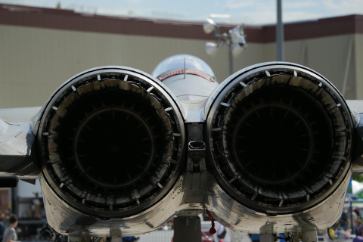
The escalating confrontation involving Iran, United States, and Israel is no longer a distant geopolitical tension—it is a defining crisis of our time. What began as targeted strikes and strategic retaliation has evolved into a dangerous, multi-front conflict with consequences that extend far beyond the Middle East.
At its core, this is not just a war of weapons, but a collision of interests, ideologies, and unresolved grievances. And as recent developments show, the path forward is becoming more uncertain—and more perilous.
A War Without Clear Limits
The failure of recent ceasefire talks underscores a troubling reality: diplomacy, at least for now, is struggling to keep pace with escalation. With the United States signaling a blockade of Iranian access to the Strait of Hormuz—a chokepoint for global oil supply—the conflict is no longer confined to military targets. It is now directly entangled with the lifeblood of the global economy.
Such a move is not merely tactical; it is transformative. It raises the stakes from regional confrontation to global disruption. When oil prices surge and supply chains tremble, the effects are felt not only in war zones but in everyday life—from transportation costs to food prices in countries thousands of miles away.
Parallel Wars, Converging Risks
Complicating matters further is the reality that this is not a single, unified conflict. Israel continues its military operations against Iran-backed forces such as Hezbollah in neighboring territories, effectively running a parallel war. Meanwhile, Iran maintains pressure through regional proxies and strategic maritime actions.
This fragmented battlefield increases the risk of miscalculation. A strike in one area could trigger retaliation in another, pulling more actors into the conflict. What we are witnessing is a slow but steady erosion of boundaries—geographical, political, and strategic.
The Nuclear Shadow
Hovering over the conflict is the unresolved issue of Iran’s nuclear ambitions. For the United States and its allies, the prospect of a nuclear-armed Iran is unacceptable. For Iran, nuclear capability is framed as a matter of sovereignty and security.
This impasse is more than a policy disagreement—it is a fundamental clash of red lines. And until it is addressed through credible negotiation, it will continue to fuel distrust and justify escalation on all sides.
The Cost of Prolonged Conflict
Beyond strategy and politics lies the human and economic toll. Thousands have already been affected, and the financial costs are mounting rapidly. Entire regions face instability, while global markets react with volatility and uncertainty.
Yet perhaps the most dangerous cost is normalization. The longer this conflict continues, the more it risks becoming just another “ongoing crisis”—accepted, managed, but never resolved. This complacency can be as dangerous as the conflict itself.
A Narrowing Path to Peace
The current trajectory points toward three possibilities: escalation into a broader regional war, a prolonged stalemate marked by periodic हिंसा, or a fragile diplomatic breakthrough. Of these, the first two appear far more likely in the immediate term.
But inevitability is a dangerous assumption. History has shown that even the most entrenched conflicts can shift when political will aligns with strategic necessity.
A Call for Restraint and Realism
What is needed now is not just restraint, but realism. Military superiority cannot guarantee lasting stability, and economic pressure alone cannot force sustainable peace. The solution, however difficult, must involve dialogue—direct, sustained, and backed by genuine compromise.
For the international community, this is a moment of اختبار. Silence or passive observation is no longer sufficient. The stakes—regional stability, global الاقتصاد, and the risk of wider war—demand active engagement.
Final Word
The Iran–U.S.–Israel conflict is no longer a regional issue; it is a global concern with far-reaching implications. Each خطوة toward escalation narrows the already fragile path to peace.
The world is watching—but more importantly, it is being affected. And in conflicts like this, the cost of inaction can be just as great as the cost of war.














Labore nonumes te vel, vis id errem tantas tempor. Solet quidam salutatus at quo. Tantas comprehensam te sea, usu sanctus similique ei. Viderer admodum mea et, probo tantas alienum ne vim.