The Golden Age of Performance
On the road, cycling has rarely been better.
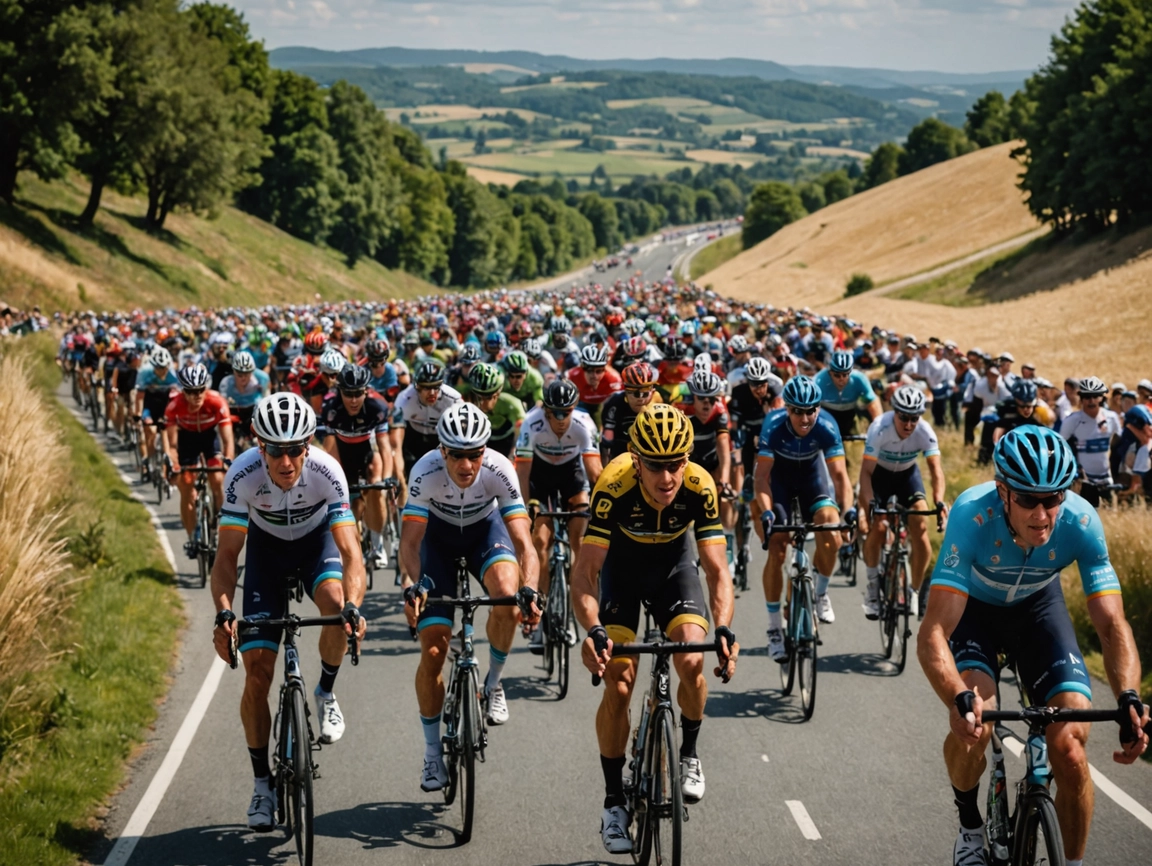
The current peloton is defined by extraordinary talent concentration and versatility. Riders like Tadej Pogačar and Jonas Vingegaard have elevated the sport into a new tactical and physiological frontier. The 2025 season alone saw dominance across Grand Tours and Monuments, with Pogačar winning multiple marquee races and leading the world rankings .
At the same time, racing itself has become more aggressive and unpredictable. The traditional conservatism of team strategies—waiting for the final climb or sprint—has given way to long-range attacks, data-driven pacing, and a willingness to take risks earlier in races. This has made events like the Monuments—cycling’s five most prestigious one-day races—even more compelling .
Technological innovation is also reshaping the sport. From aerodynamics to wearable safety systems, developments such as airbag skinsuits and AI-assisted performance analytics are beginning to redefine both safety and competition .
In short, the product on the road is world-class.
The Economic Contradiction
Off the road, however, cycling remains economically underdeveloped compared to other global sports.
Unlike football or basketball, professional cycling teams do not own the primary commercial asset: the races themselves. Events like the Tour de France are controlled by private organizers, meaning teams rely heavily on sponsorship rather than shared media revenues. This creates an unstable financial model where even top teams operate on relatively fragile budgets.
Recent reports highlight a fundamental issue: cycling struggles to monetize its broadcast rights effectively. Some major races still face difficulty securing lucrative TV deals, a stark contrast to the booming media rights market in other sports .
This imbalance has led the UCI to reconsider the sport’s entire economic structure, including calendar reform, revenue sharing, and commercial rights distribution .
Without reform, the sport risks entrenching a two-tier system: a handful of wealthy super-teams and a long tail of financially vulnerable squads.

Structural Instability and the Relegation System
The introduction of a promotion and relegation system in the WorldTour—designed to increase competitiveness—has had mixed results.
On one hand, it incentivizes performance and creates stakes beyond individual races. On the other, it has intensified financial pressure on mid-tier teams, forcing them into short-term strategies focused on points accumulation rather than long-term development.
Teams on the margins face existential threats: relegation can mean loss of automatic race invitations, reduced sponsor interest, and ultimately collapse. The system, while theoretically meritocratic, may be too volatile for a sport already lacking financial stability.
Governance and Fragmentation
Cycling has long struggled with governance issues, and little has fundamentally changed.
The relationship between the UCI, race organizers, teams, and riders remains fragmented. Each stakeholder controls a different piece of the ecosystem, and their interests are not always aligned. The result is a sport that often appears unified in competition but divided in strategy.
The UCI’s ongoing consultations with stakeholders in 2026 signal recognition of this problem, particularly around issues like calendar congestion, financial fairness, and fan engagement .
Yet reform in cycling is notoriously slow. The sport’s decentralized structure makes sweeping change difficult, and past conflicts—particularly over control of marquee races—suggest that consensus will be hard to achieve.
Integrity, Doping, and Credibility
Cycling’s historical baggage—particularly doping—still shadows the sport, but there has been measurable progress.
Recent data indicates a continued decline in doping cases, supported by one of the most extensive anti-doping programs in international sport . The UCI’s decision to delegate results management to the International Testing Agency further reinforces efforts toward transparency and credibility .
While skepticism remains among some fans, the current generation of riders competes under far stricter oversight than previous eras. The narrative of systemic doping, while not entirely erased, is no longer the defining feature of the sport.
The Rise of Women’s Cycling
One of the most encouraging developments in professional cycling is the rapid growth of the women’s peloton.
The UCI Women’s WorldTour has expanded in visibility, sponsorship, and calendar parity. Events like the Tour de France Femmes have significantly increased media attention and commercial interest.
However, disparities remain—particularly in salaries, race coverage, and team resources. Still, the trajectory is unmistakably upward, and women’s cycling may represent the sport’s most promising avenue for sustainable growth.
Globalization vs. Tradition
The WorldTour calendar reflects cycling’s attempt to globalize, with races spanning Europe, Asia, the Middle East, and Australia . Events like the UAE Tour and the Tour Down Under signal this expansion.
Yet the sport remains culturally anchored in Europe, particularly in Belgium, France, Italy, and Spain. The tension between tradition and globalization is ongoing: while new markets offer financial opportunities, they often lack the deep-rooted fan culture that defines cycling’s identity.
The success of initiatives like hosting the 2025 World Championships in Rwanda—the first in Africa—suggests that expansion can be meaningful, but it must be carefully balanced with the sport’s heritage .
The Fan Experience Problem
Despite its dramatic racing, cycling struggles to package itself for modern audiences.
Broadcast accessibility remains fragmented, with fans often needing multiple subscriptions to follow a full season . The lack of centralized media rights and consistent storytelling makes it harder for casual viewers to engage with the sport.
In an era dominated by digital content and short attention spans, cycling’s long race formats—often spanning five or six hours—pose an additional challenge. While purists see this as part of the sport’s charm, it complicates efforts to attract new fans.
Conclusion: A Sport at a Crossroads
Professional road cycling today is defined by a fundamental contradiction:
- On the road, it is thriving—faster, more competitive, and more exciting than ever.
- Off the road, it remains structurally outdated—financially fragile, politically fragmented, and commercially underexploited.
The Union Cycliste Internationale faces a pivotal moment. Its willingness to revisit the sport’s economic and governance models suggests awareness of the stakes. But awareness alone is not reform.
If cycling can align its stakeholders, modernize its commercial strategy, and preserve its unique identity, it has the potential to become a truly global major sport.
If not, it risks remaining what it has long been: a beautiful, chaotic, and perpetually unresolved spectacle—compelling on the road, but compromised everywhere else.