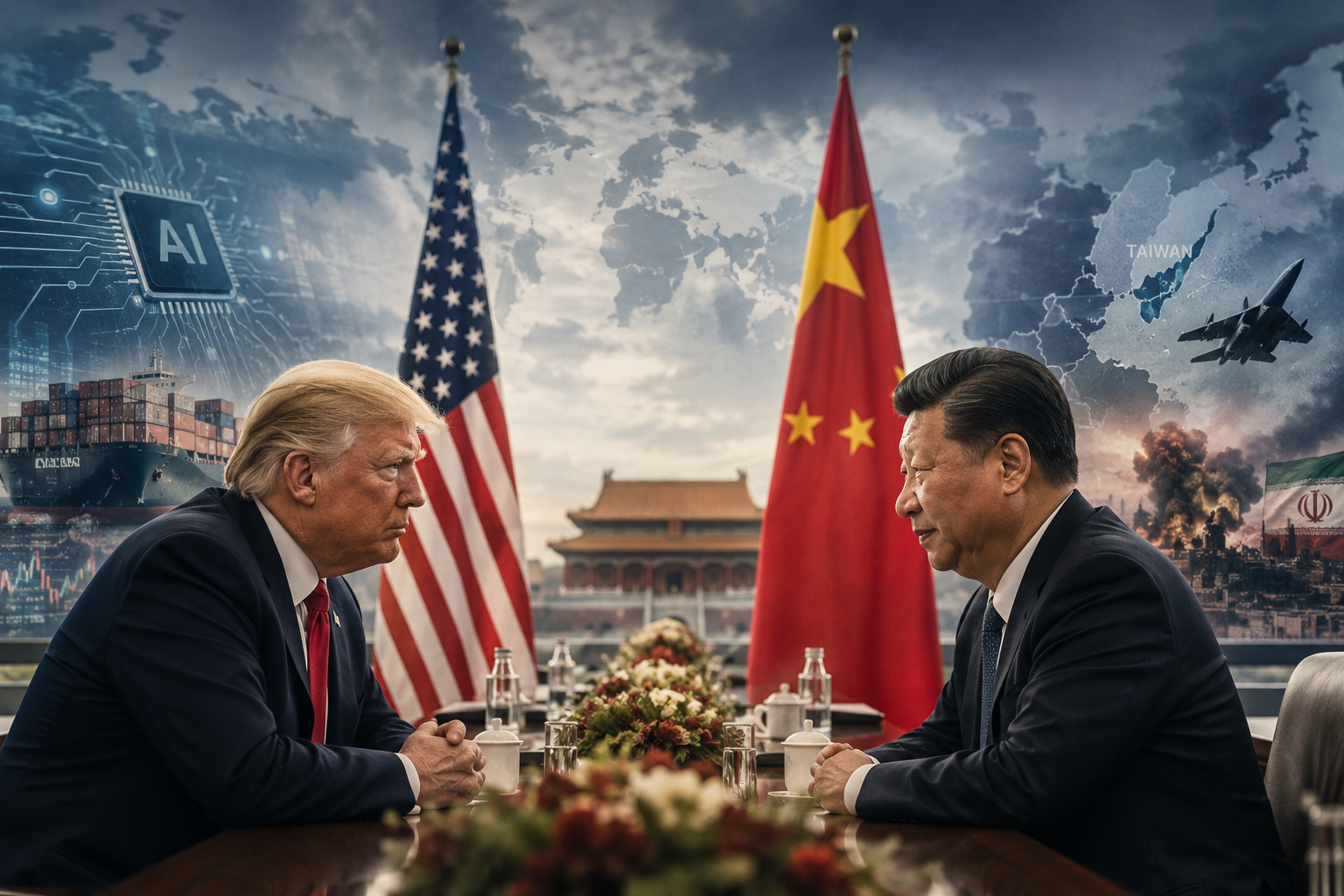
In an era defined by geopolitical rivalry, economic uncertainty, and international crises, meetings between world leaders are often measured not only by what is said, but by what is left unsaid. The latest summit between Donald Trump and Xi Jinping is one such moment. At first glance, it may appear as another high-profile diplomatic engagement between the leaders of two global powers. Yet beneath the ceremonial handshakes and carefully crafted statements lies a far more consequential reality: the future direction of global stability may hinge on the relationship between the United States and China.
This summit arrives at a time when the world appears increasingly fragile. Trade disputes continue to cast shadows over global markets. Tensions surrounding Taiwan remain unresolved. Wars and instability in the Middle East add layers of uncertainty, while technological competition has transformed into a struggle for strategic dominance. The Trump–Xi meeting, therefore, is not merely about bilateral diplomacy. It is a reflection of a broader contest over influence, power, and the rules that will shape the international order for decades to come.
Why the World Is Watching
Few relationships affect the modern world as profoundly as that between the United States and China. Together, they represent the two largest economies on the planet. Decisions made in Washington and Beijing ripple through international financial systems, supply chains, energy markets, and geopolitical alliances.
A disagreement between these nations does not remain confined to diplomatic circles. It can alter stock markets in Asia, manufacturing sectors in Europe, and commodity prices in developing nations. Countries across the globe are no longer passive observers of U.S.-China relations; they are stakeholders whose economic and security futures are tied to the outcomes of these interactions.
This meeting also comes during a particularly sensitive period. International tensions have intensified in recent years, creating growing concerns about a return to a Cold War-like environment. But unlike the twentieth-century rivalry between the United States and the Soviet Union, today’s competition is deeply intertwined economically. The United States and China are rivals, yet they remain economically dependent on each other in many ways. That complex reality makes confrontation more dangerous and cooperation more necessary.
Trade: The Old Battlefield Returns
Trade remains one of the central issues in relations between Washington and Beijing. During his previous administration, Trump adopted an aggressive trade strategy toward China, imposing tariffs and using economic pressure in an attempt to secure concessions and reshape what he viewed as an imbalanced relationship.
That approach reflected a belief that economic leverage could produce favorable outcomes for American industries and workers. Supporters argued that tougher policies were long overdue and that previous administrations had failed to address structural concerns. Critics, however, warned that prolonged trade conflicts risked harming businesses and consumers on both sides.
China, meanwhile, faces a difficult balancing act. It seeks to protect domestic economic interests while avoiding large-scale disruptions that could threaten growth and social stability. Beijing also understands that global confidence in its economy depends heavily on maintaining international trade relationships.
The broader question remains unresolved: Is competition between these powers inevitable, or can economic interdependence act as a restraining force? History has shown that economic relationships can reduce incentives for conflict, but history has also shown that national ambitions often outweigh financial considerations.
Taiwan: The Unspoken Tension in the Room
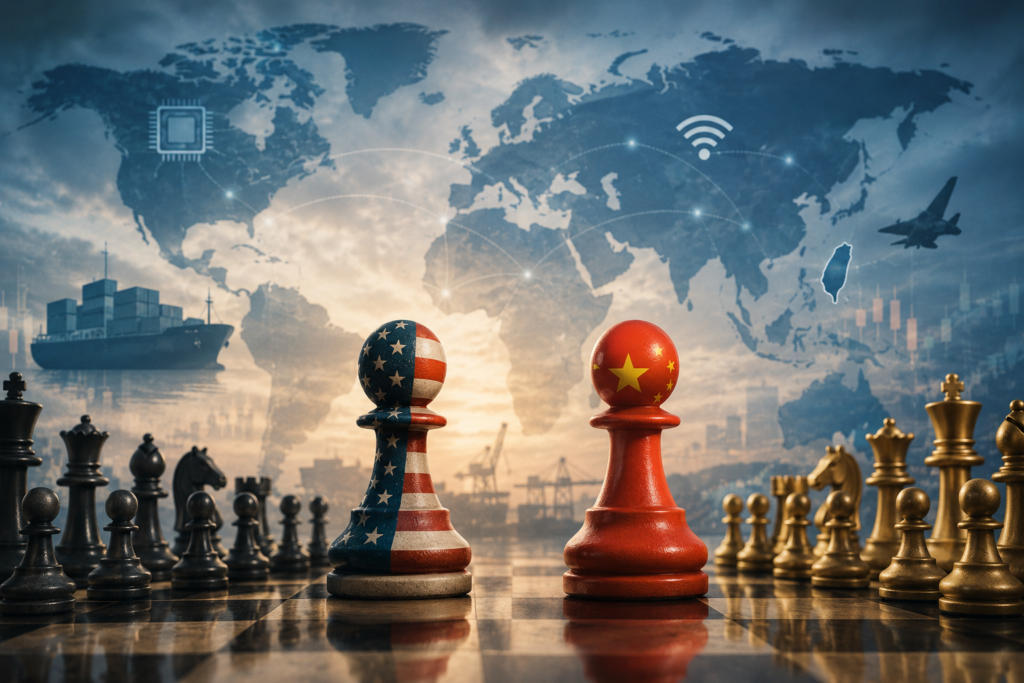
No issue embodies the delicate nature of U.S.-China relations more than Taiwan.
For China, Taiwan represents a deeply sensitive issue tied to sovereignty and national identity. For the United States, Taiwan holds strategic importance and remains closely linked to broader security interests in the Indo-Pacific region. American support and arms sales continue to be viewed by Beijing with suspicion and concern.
The danger lies not only in deliberate confrontation but in miscalculation. History offers many examples of conflicts that emerged not from carefully planned decisions but from misunderstandings and escalating reactions.
Diplomacy should never become a casualty of political posturing or nationalist sentiment. Strong rhetoric may generate domestic applause, but international crises require restraint and careful judgment. The costs of failure would extend far beyond regional boundaries.
Technology and Artificial Intelligence: The New Arms Race
The competition between the United States and China is no longer confined to traditional economic measures. Increasingly, the contest centers on technological leadership.
Artificial intelligence, advanced semiconductor manufacturing, and emerging technologies now represent strategic assets comparable to military capabilities. Control over innovation increasingly means control over economic strength, national security, and geopolitical influence.
The world is witnessing a transformation from trade wars toward technology wars. Export restrictions, investment limitations, and concerns over technological dependence reveal a growing fear that future power will be determined by technological superiority.
Yet this new competition raises difficult questions. Can innovation thrive under restrictive policies? Can countries simultaneously pursue collaboration and strategic protection?
Unlike previous rivalries fought with armies and territorial expansion, tomorrow’s global competitions may be fought with algorithms, data, and technological ecosystems. The consequences may prove equally transformative.
The Iran Factor and Expanding Global Stakes
The inclusion of Middle East concerns, particularly issues involving Iran, demonstrates how interconnected global diplomacy has become.
China maintains important relationships across the region, including ties with Tehran. The United States, meanwhile, continues to play a central role in regional security arrangements. As crises evolve, leaders increasingly recognize that major powers cannot isolate global problems within regional borders.
A conflict in one part of the world now affects economies and security structures elsewhere. Supply chains, energy markets, migration, and strategic alliances connect nations more tightly than ever before.
Superpowers can no longer afford the luxury of viewing international crises as isolated events. In a deeply interconnected world, instability travels quickly.
A Meeting of Pragmatism, Not Friendship
Expectations for dramatic breakthroughs from this summit remain limited. Long-standing disputes cannot be resolved through a single meeting, regardless of who occupies positions of power.
Still, there is value in communication itself.
Diplomacy does not always succeed through grand agreements or historic signatures. Sometimes its greatest achievement lies in reducing misunderstandings and preserving channels of dialogue.
In an age marked by polarization and increasing geopolitical tension, simply maintaining direct engagement may constitute progress.
The relationship between Trump and Xi has never been defined by friendship. It is built on negotiation, competing interests, and strategic calculation. Yet perhaps friendship is not the objective. Stability may be enough.
The Stakes Extend Beyond Trump and Xi
The significance of this summit reaches far beyond the individuals seated at the negotiating table. What is truly being tested is the future structure of global order itself.
The world does not need the United States and China to agree on every issue. Great powers rarely do. But the world does need them to recognize a fundamental truth: rivalry without restraint carries risks whose consequences extend beyond borders and generations.
History often remembers the wars nations fight. But it also remembers the meetings that prevented them.